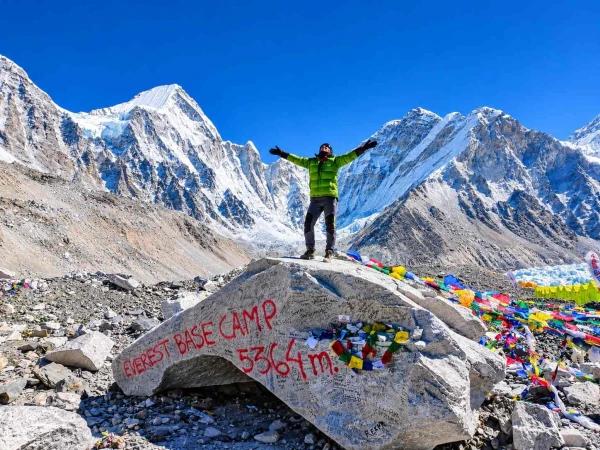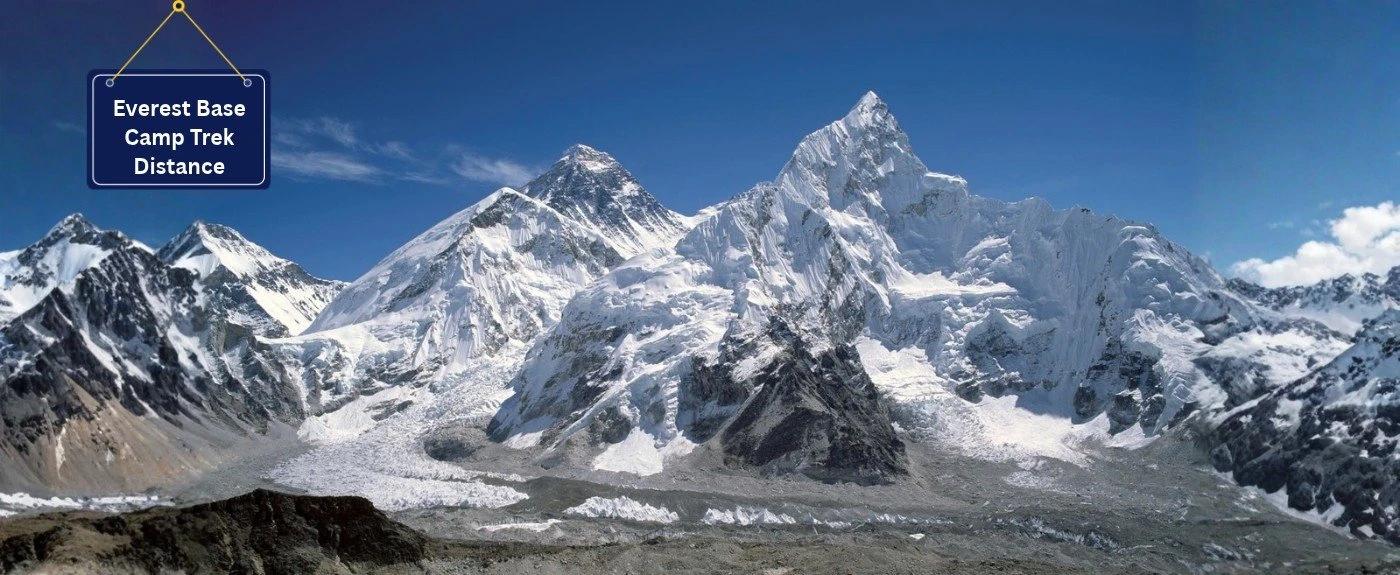

The walk from Lukla to Everest Base Camp is about 55 to 70 km one way, and the classic out-and-back trek is about 115 to 140 km. Most guides round these to 65 km and 130 km. With a helicopter return from Gorak Shep you walk roughly 60 to 75 km in total. Our Everest Base Camp with Gokyo Lake loop over Cho La Pass is about 150 km on foot over 14 days.
Distance is the easiest number to quote and the least useful one to plan around. On the same trail, 8 km can take three hours below Namche Bazaar or most of a day above 4,700 m. This guide gives the kilometres stage by stage, the walking hours from our own itineraries, and the reasons published totals disagree, so you can compare routes on equal terms.
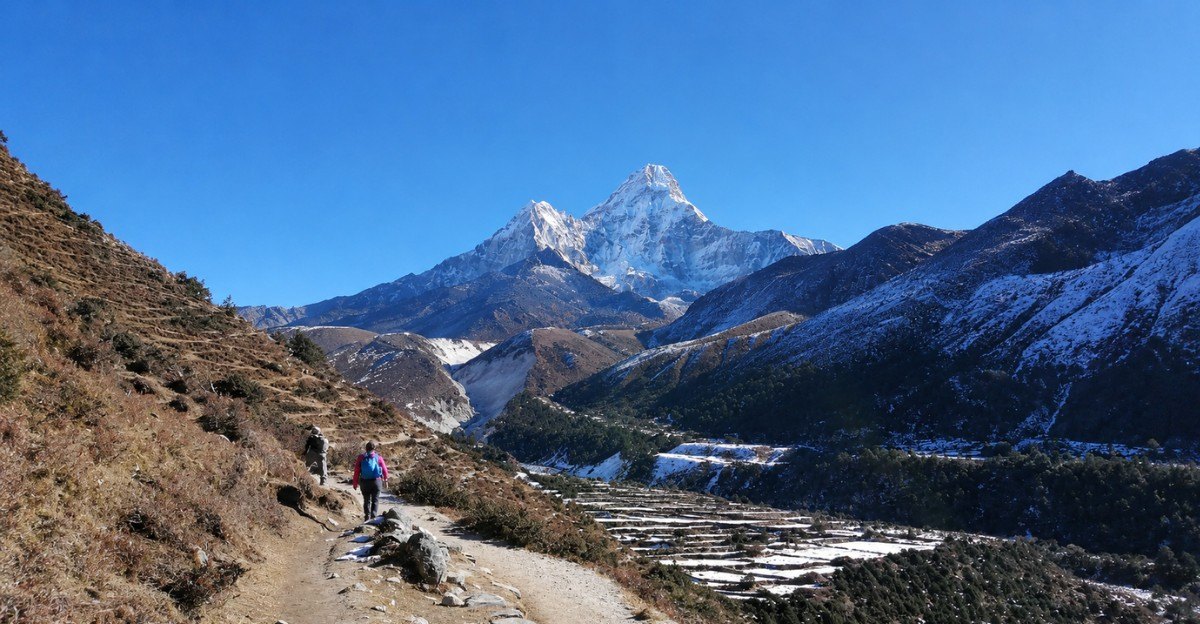
The distances are ranges drawn from published stage measurements and a trekker's GPS log, checked in November 2026. The walking times come from our current itineraries and include short rests. To see where each route goes, use our Everest Base Camp trek map.
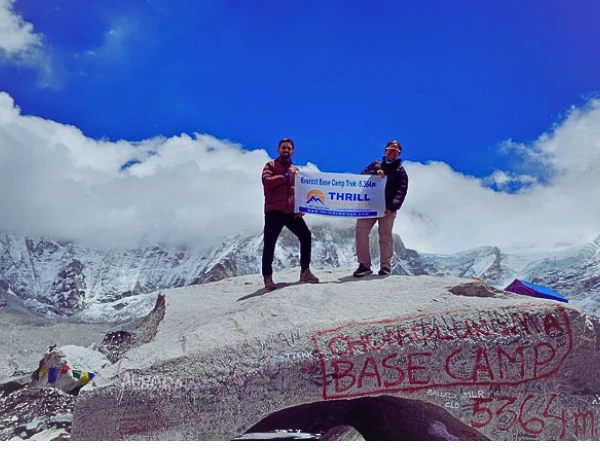
How Far Is the Everest Base Camp Trek?
How far you walk depends far more on how you come down than on how you go up. Every route below climbs the same trail from Lukla to Gorak Shep.
|
Route |
Walking distance |
Days on foot |
Where the walking ends |
|
Classic EBC, out and back from Lukla |
About 115 to 140 km (usually quoted as 130 km) |
11 to 13 in most itineraries |
Lukla |
|
EBC with helicopter return, our 13-day trip |
About 60 to 75 km, plus 10 to 14 km on two rest-day hikes |
9, including 2 rest days |
Gorak Shep, after Kala Patthar |
|
EBC with Gokyo Lakes via Cho La, our 17-day trip |
About 150 km (published figures range from 145 to 160 km) |
14 |
Lukla |
|
EBC with Gokyo, helicopter out of Gokyo |
About 100 to 110 km |
12 |
Gokyo, after Gokyo Ri |
One way, Lukla to Gorak Shep with the side trip to base camp is about 55 to 70 km. That is the part every route shares.
What Is the Walking Distance Each Day?
Most trekking days on these routes cover 8 to 15 km. The longest day by distance, Namche to Lukla at the end of a walk-out, is not the hardest; the hardest days are shorter and much higher.
Lukla to Everest Base Camp: every route
Day numbers are for our Gokyo loop, with the heli-return trip in brackets. The heli-return trip has an extra preparation day in Kathmandu, so its days run one later.
|
Day |
Stage |
Distance |
Walking time |
Overnight |
|
2 (3) |
Lukla to Phakding |
8 to 9 km |
3 to 4 h |
Phakding, 2,610 m |
|
3 (4) |
Phakding to Namche Bazaar |
10.5 to 11.5 km |
5 to 6 h |
Namche, 3,440 m |
|
4 (5) |
Rest day: hike to the Hotel Everest View ridge and back |
About 7 to 8 km |
3 to 4 h |
Namche, 3,440 m |
|
5 (6) |
Namche to Tengboche |
9 to 11 km |
5 to 6 h |
Tengboche, 3,860 m |
|
6 (7) |
Tengboche to Dingboche |
9 to 11 km |
5 to 6 h |
Dingboche, 4,410 m |
|
7 (8) |
Rest day: Nangkartshang ridge hike and back |
About 4 to 6 km |
3 to 4 h |
Dingboche, 4,410 m |
|
8 (9) |
Dingboche to Lobuche |
7 to 12 km |
5 to 6 h |
Lobuche, 4,940 m |
|
9 (10) |
Lobuche to Gorak Shep, Everest Base Camp and back to Gorak Shep |
11 to 15 km |
7 to 8 h |
Gorak Shep, 5,164 m |
|
10 (11) |
Kala Patthar at sunrise and back to Gorak Shep |
3.5 to 4.5 km |
2 to 3 h |
Continue the route, or fly |
The Dingboche to Lobuche figure varies most because published routes differ in how they climb past Thukla. The Kala Patthar time is a typical published figure; the climb gains about 380 m.
After base camp: the Gokyo loop over Cho La
|
Day |
Stage |
Distance |
Walking time |
Overnight |
|
10 |
Kala Patthar at sunrise, then Gorak Shep to Dzongla |
About 13 to 17 km, including Kala Patthar |
8 to 10 h |
Dzongla, 4,830 m |
|
11 |
Dzongla over Cho La Pass (5,420 m) to Thangnak |
8 to 12 km |
7 to 9 h |
Thangnak, 4,700 m |
|
12 |
Thangnak across the Ngozumpa Glacier to Gokyo |
About 4 to 4.5 km |
3 to 4 h |
Gokyo, 4,750 m |
|
13 |
Gokyo Ri at sunrise, then Gokyo to Machhermo |
About 11 to 13 km |
6 to 8 h |
Machhermo, 4,470 m |
|
14 |
Machhermo to Namche via Dole and the Mong La ridge |
About 15 to 19 km |
6 to 7 h |
Namche, 3,440 m |
|
15 |
Namche to Lukla |
18 to 20 km |
6 to 7 h |
Lukla, 2,860 m |
After base camp: the classic walk out
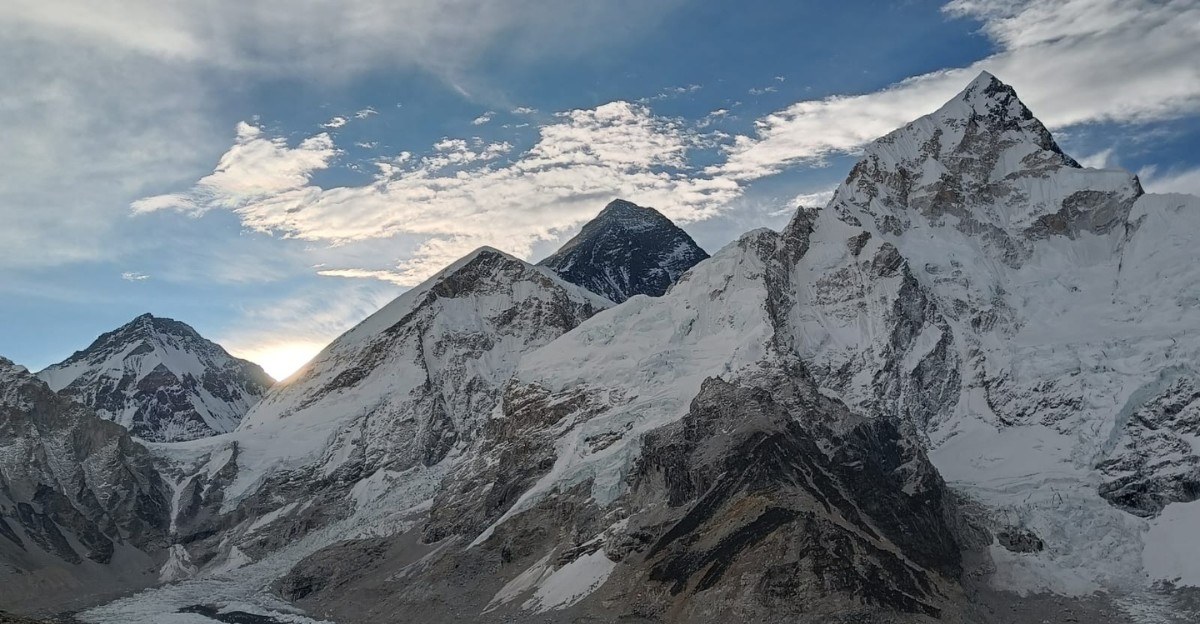
A classic out-and-back trek usually takes three days to come down. Kala Patthar and Gorak Shep to Pheriche is about 13 to 18 km, Pheriche to Namche about 14 to 16 km, and Namche to Lukla about 18 to 20 km.
Why the kilometres don't tell you how long a day takes
Compare two days of similar length on our own itinerary. Lukla to Phakding is 8 to 9 km and takes 3 to 4 hours, mostly downhill at 2,600 to 2,900 m. Thangnak to Gokyo is about 4 km and also takes 3 to 4 hours, because it crosses the rubble of the Ngozumpa Glacier at 4,700 m on a trail that shifts from season to season. Half the distance, the same time.
Cho La shows the same pattern. The crossing is 8 to 12 km, depending on who measured it, but it takes 7 to 9 hours: about 590 m of climbing from Dzongla, a short glacier near the top, then a steep, loose descent. It comes straight after two long days, so tired legs matter as much as the distance.
What one trekker's GPS recorded
A trekker who walked a Gokyo-first version of this loop in 12 days published their recorded figures: 158 km in total, about 54 hours of moving time, and a longest day of 19.45 km from Namche to Lukla. Their Cho La day, from Dragnag (Thangnak) to Dzongla, was 11.08 km with 4 hours 18 minutes of moving but 6 hours 34 minutes overall.
That gap between moving time and total time is normal on a pass day. Stops to breathe, drink, eat, check footing on ice and take photos add up. When you read a walking time, check whether it means moving time or the whole day.
Why Do Published Distance Totals Differ?
Published totals differ because they rarely measure the same walk. Before comparing two trek descriptions, check these five things.
- Side trips. Base camp itself is a return walk from Gorak Shep, about 7 to 8 km there and back. Kala Patthar, Gokyo Ri and each rest-day hike add roughly another 3.5 to 8 km. Some totals include all of these, some include none.
- Overnight stops. Coming down via Pheriche instead of Dingboche, or stopping at Pangboche instead of Tengboche, moves where one day ends and the next begins.
- Measuring method. A line drawn on a map usually comes out shorter than a GPS track of the same trail, because the map smooths out switchbacks. GPS units can also drift or cut corners in deep valleys.
- Copied figures. Many sites repeat each other's numbers, mistakes included. While researching this guide we found stage tables that add up to a different total from the one printed beside them, and the Thangnak to Gokyo stage listed at 8 km in one source and 3.7 to 5 km in three others.
- Round headline numbers. "65 km" and "130 km" are fair shorthand for the classic route. They don't describe a helicopter return or a loop.
When you compare packages, the total distance tells you less than three other figures: days on foot, the number of nights above 4,000 m, and what happens on the hardest day.
How Does a Helicopter Return Change the Walking Distance?
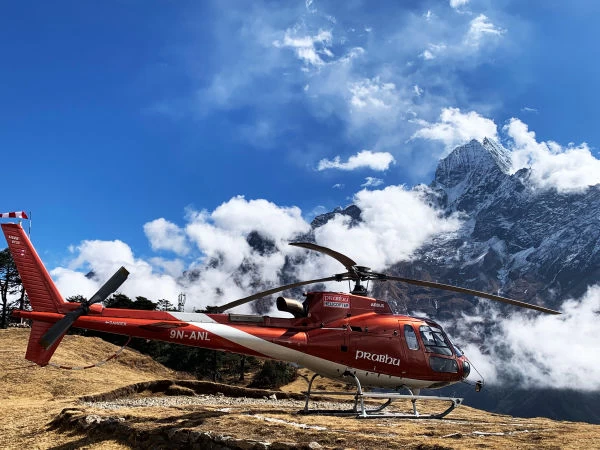
A helicopter return takes away the walk down, not the walk up. On our 13-day Everest Base Camp Trek with Heli Return, you walk the full route from Lukla to Gorak Shep, reach base camp on Day 10, and climb Kala Patthar at sunrise on Day 11. You then fly from Gorak Shep to Lukla on a shared helicopter, and to Kathmandu the next day.
Compared with walking out, that removes roughly 40 to 55 km and about three days of descent, including the long final day from Namche to Lukla. Your total walking drops to about 60 to 75 km, plus the two rest-day hikes.
What stays the same is every kilometre of the climb. You still reach 5,164 m on foot over the same days as on the classic trek, so the altitude is no lower. Whether that makes the trek easier for you is a separate question, and it depends on your knees as much as on your lungs.
How Much Walking Does the Gokyo–Cho La Route Add?
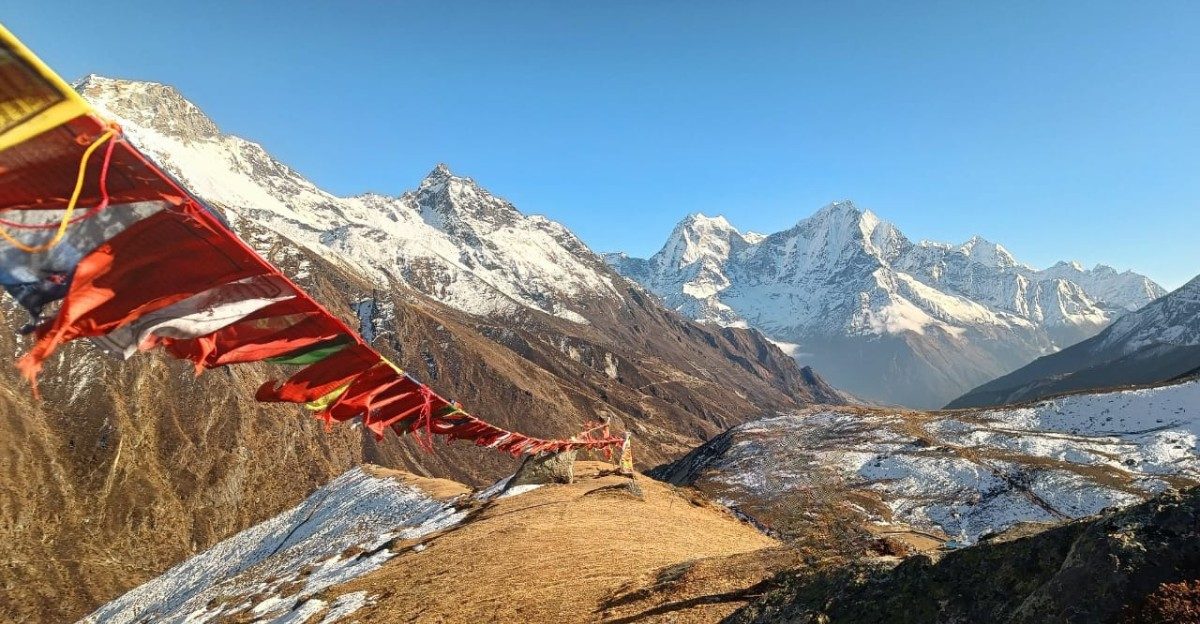
Our Gokyo loop is about 150 km, around 20 km more than a classic out-and-back, with two or three more days on foot. The extra effort comes from altitude and terrain more than distance.
The demanding stretch is Days 9 to 11 on our itinerary: base camp, then Kala Patthar and the walk to Dzongla, then Cho La. That is three long days in a row above 4,800 m, with 7 to 10 hours of walking each day. Day 13 adds another pre-dawn climb, up Gokyo Ri, before a full day's walk down to Machhermo.
Because the route is a loop, less of it repeats than on an out-and-back trek. You walk the lower trail between Lukla and Namche twice, the stretch from Gorak Shep back towards Lobuche, and the last part of the walk into Namche. Everything else is new ground.
If you would rather not walk the last three days, you can fly out of Gokyo after the Gokyo Ri sunrise. That skips about 40 to 50 km (Gokyo to Machhermo, Machhermo to Namche and Namche to Lukla) and shortens the trip to 14 days, with 12 on foot. The Everest Base Camp with Gokyo Lake Trek page has the current price and how the flight works.
If you're choosing between these routes, tell us how many days you can spend on foot and how you have handled long hill days before. We'll suggest the route that fits and send you the current itinerary and inclusions.
Everest Base Camp Trek Distance: Common Questions
How many miles is the Everest Base Camp trek?
The classic route is about 40 miles one way and 80 miles there and back. With a helicopter return you walk roughly 37 to 47 miles. Our EBC and Gokyo loop over Cho La is about 93 miles.
How far is Everest Base Camp from Kathmandu?
You don't walk from Kathmandu. Most trekkers fly to Lukla, about 135 to 140 km from Kathmandu by air, and start walking there. In the busiest weeks of spring and autumn, Lukla flights usually leave from Manthali Airport in Ramechhap, a 4 to 5 hour drive from Kathmandu.
Do you walk back on the same trail?
On the classic trek, mostly yes, although many itineraries descend through Pheriche rather than Dingboche. On our Gokyo loop, only the Lukla to Namche section and a short stretch near Lobuche repeat.
Explore all Thrill Himalaya trekking packages
- Annapurna Base Camp with Mardi Himal Trek
- Annapurna Base Camp Trek - 10 Days
- Annapurna Base Camp Trek
- 6-Day Annapurna Base Camp Trek for Beginners
- Annapurna Base Camp Trek for Seniors
- Annapurna Base Camp Trek with Family and Kids
- Annapurna Circuit Trek
- Everest Base Camp Helicopter Tour
- Everest Base Camp Trek
- Everest Base Camp Trek via Salleri
- Everest Base Camp Trek with Heli Return
- Everest Base Camp Trek with Island Peak Climbing
- Everest Base Camp with Gokyo Lake Trek
- Everest Three Passes Trek
- Ghorepani Poon Hill Trek
- Gokyo Lake Trek
- Island Peak Climbing
- Manaslu Circuit Family Trek
- Manaslu Circuit Trek
- Manaslu Circuit Trek with Tsum Valley
- Mardi Himal Trek
- Mera Peak Climbing
- Pikey Peak Trek
- Short Annapurna Base Camp Trek -- 5 Days
- Short Annapurna Base Camp Trek -- 7 Days
- Short Manaslu Circuit Trek
- Tsum Valley Trek
Related travel and trekking blogs
- 7 Off-the-Beaten Treks in Nepal
- Annapurna Base Camp Trek Difficulty
- Best Time for Manaslu Circuit Trek
- Best Time to Trek in Nepal
- Best Treks in Nepal
- Manaslu Circuit Trek Complete Guide
- Dashain Tika Time 2026
- Everest Base Camp Trek in November
- How Difficult Is Manaslu Circuit Trek?
- How Do I Prepare for a Trek to Everest Base Camp?
- Manaslu Circuit Trek Duration
- Manaslu Circuit Trek Permits
- Mount Everest Guide
- Is Nepal Safe After Flood?
- Langtang Valley Trek Distance
- Manaslu Circuit Trek: 14 Days Complete Itinerary from Kathmandu
- Manaslu Circuit Trek After Budhi Gandaki Flood
- Manaslu Circuit Trek Guide, Cost, Itinerary and Difficulty
- Manaslu Circuit Trek Nepal: Route, Highlights and Tips
- Manaslu Circuit Trek Guide
- Mount Everest Guide
- Nepal Premier League Cricket Travel Guide
- Nepal Travel Tips
- Tihar Festival in Nepal