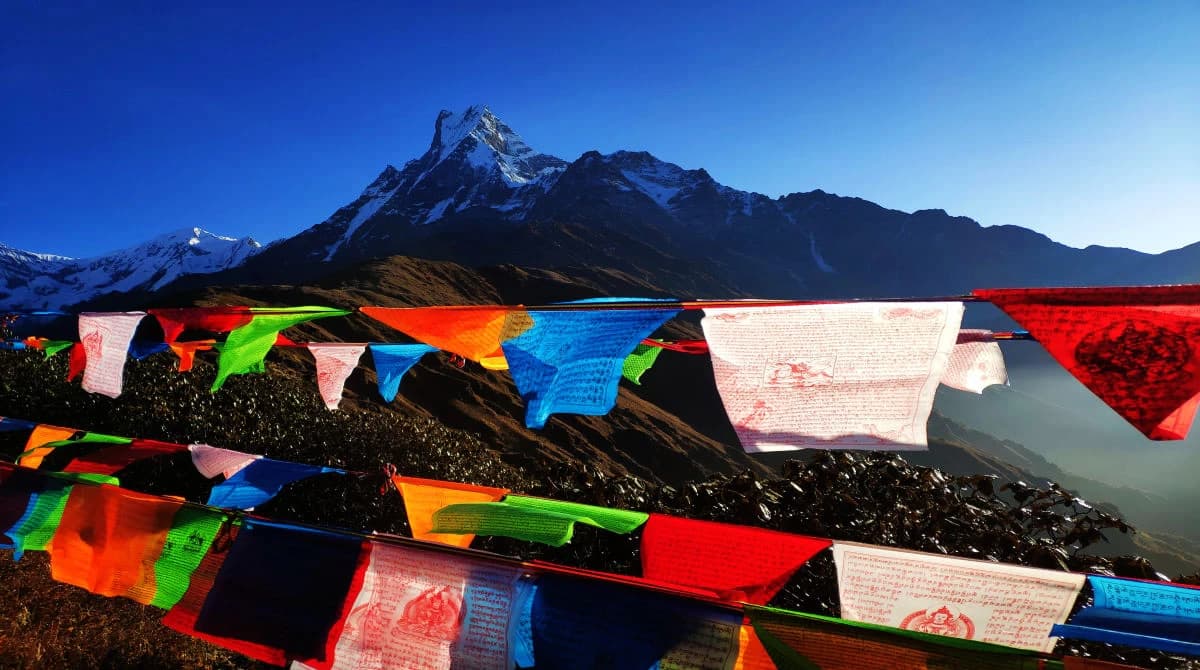
mt fishtail mardi trek
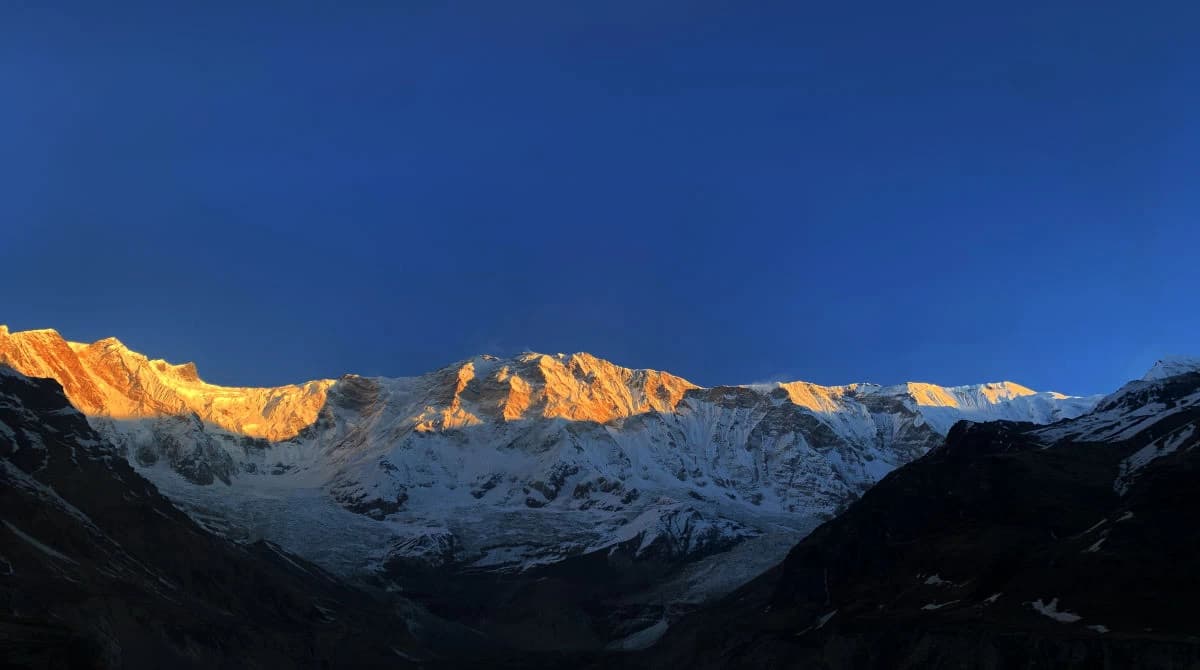
mt annapurna
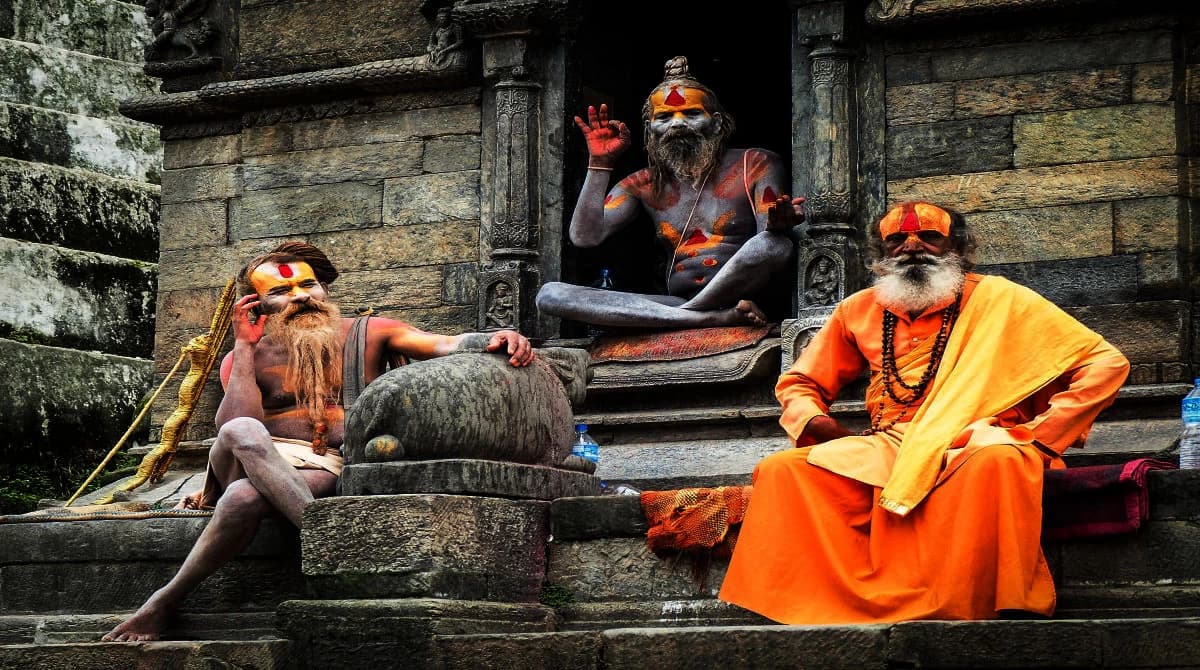
sadhu at pashupatinath temple

Mardi Himal Trek

40 reviews in TripAdvisor
Recommended by 99% of travelers

Mardi Himal Base Camp trek is one of the best trekking destinations in Nepal. It is short and 

a little bit challenging but exhilarating at the same time. At the beginning of the trek, there were fewer teahouses on the route to the base camp. In 2012, Nepal Government declared the initiation of trekking in the lap of Mardi Himal. Thereafter, more teahouses are available at the trekking stop points. 

The Mardi Himal Base Camp trek is also an alternative to the Annapurna Base Camp trek. It offers a dazzling view of Annapurna ranges; Annapurna I, Annapurna South, Machhapuchhre, Hiuchuli, Gangapurna, Tare Kang, Khangsar, and many more. Not only that, the panoramic view of Mardi Himal itself is breathtaking. The trail follows the route through rhododendron, oak, and maple forests. Several species of birds and animals are the inhabitants of the jungle. 

The base camp lies at an elevation of 4,500 m, presenting a dramatic view of mountain ranges. The feeling of standing in the lap of Mardi Himal is overwhelming. 

Mardi Himal stands at an altitude of 5,587 m from sea level just underneath the prestigious Mt. Machhapuchhre. Basil Goodfellow was the first to the summit in 1961. Mardi Himal is claimed to be one of the trekking peaks by the Nepal Government. 

Pokhara is the initial and end point for the trek. The journey begins from Kathmandu to Pokhara via bus or flight. After that, a drive follows a route to Kande from where the actual trek starts off. The trail is an uphill climb guiding to Pothana and Deurali soon after. With stunning views of Annapurna and Dhaulagiri ranges along with the wilderness, the route comes to Low Camp. 

Here onwards, the trail passes through the forests of rhododendron, leading to High camp. Now, the trekking journey is close to the destination. After reaching High camp, the base camp at an altitude of 4,500 m awaits ahead. The mesmerizing view from the base camp is worthwhile and rewarding. The time spent here is truly exceptional. Soon enough, the route leads back to the start point via different pathways, this time through Siding village. The trekking ends in Pokhara. 

The trek is not strenuous but somehow a bit rough. So, an individual's physical fitness determines the trek's success. The trail to the base camp follows through rocky sections at a high altitude from sea level. Therefore, an average level of fitness is required.

Highlights 

  • Drive through the banks of the Trisuli River. 
  • A short outing in the beautiful city of Pokhara. 
  • The astounding views of the Himalayas range of Dhaulagiri and Annapurna. 
  • Encounter the warm welcome and hospitality of traditional villages. 
  • Witness flora and fauna in the wilderness during the trek. 
  • Captivating sunrise view of mighty mountain ranges.
Itinerary
Trip PlanExpand all

Highlights: hotel pickup in Pokhara · Pokhara to Baglung highway · Kande road head · Australian Camp · Pothana ACAP checkpoint · Pitam Deurali · rhododendron and oak forest · Forest Camp (Kokar)

On Day 1 you drive from Pokhara to Kande in one to one and a half hours and trek through forested trails to reach Forest Camp at 2,600 m in five to seven hours. The morning starts with pickup at your Pokhara hotel, usually around seven, and the drive out along the Baglung highway is short and easy. Kande sits right on the road at about 1,770 m, so there is no long approach walk. You get out of the jeep and you start climbing, which is a blunt way to begin a trek and the reason we tell people to have a proper breakfast rather than a coffee.

From Kande the trail climbs steadily past Australian Camp, which is worth the ten minute detour for the view back over the Pokhara valley, and on to Pothana, where your guide registers the group at the ACAP checkpoint. Have your permits and passport accessible rather than buried, since this is a real stop and not a formality. After Pitam Deurali the route leaves the villages behind and enters the dense rhododendron and oak forest that gives Forest Camp its name. In March and April this entire section blooms red and pink, and there are stretches where the canopy closes overhead and the whole trail is coloured by it.

It is a solid first day with real climbing, close to 850 m of net gain, and we set the pace deliberately slow from the road head rather than saving the caution for the last hour. Eat well at lunch, which we usually take at Pitam Deurali or Deurali depending on how the morning has gone. Forest Camp, known locally as Kokar, is a small line of lodges in thick forest with no view at all. That catches people out until they realise the ridge is saving everything for tomorrow.

Good to know: Get your trekking poles out at Kande, not halfway up the first climb, and thread your hand up through the wrist strap from underneath so the strap takes your weight rather than your grip. Your guide will show you at the road head. It is the single adjustment that saves your forearms across five days.

Max Altitude: 2,600 m / 8,530 ftMeals: Lunch, DinnerMode of Transportation: Private Jeep / Van, then On Foot

Highlights: Rest Camp · Low Camp · treeline · first full view of Machhapuchhre · Annapurna South and Hiunchuli · open ridge walking · cloud below the lodges at Badal Danda

On Day 2 you climb from Forest Camp to Badal Danda at 3,210 m, walking five to six hours as the scenery changes from dense woods to open ridges and rolling cloud hills. The first two hours stay in forest through Rest Camp to Low Camp, and then, quite abruptly, the trees stop. What replaces them is the reason people come to Mardi. The trail runs along a narrow open spine with the Mardi Khola valley falling away on one side and the Modi Khola on the other, rhododendron scrub thinning to grass and then to bare ridge.

This is the day the mountains first appear properly: Machhapuchhre standing directly ahead of you at 6,993 m instead of somewhere above you, and Annapurna South and Hiunchuli away to the left. We usually stop at Low Camp for lunch, which is also the last place on the ridge where water and supplies are reasonably priced, since everything above here is carried up by porters. The final hour above the treeline is where this trek earns its reputation as the best ridge walk in the Annapurna region, and it is worth putting the camera away for some of it and just looking.

Badal Danda translates as cloud hill and it earns the name. On most afternoons you will sit outside the teahouse and watch cloud drift below you rather than above you, which is a strange and very good feeling on your second day out. It also means the morning is your reliable clear window up here, so we start early every day from now on and take the photographs when we have them. Your guide runs the first oximeter check this evening to establish your baseline, and it gets cold quickly once the sun goes off the ridge, so change into dry warm layers the moment you arrive.

Good to know: The ridge above Low Camp is exposed and the wind gets up in the afternoon, so this is a windproof shell day rather than a fleece day. Fill your water at Low Camp and treat it yourself rather than buying bottled higher up. Prices climb with the altitude and the plastic has to come back down on somebody's back.

Max Altitude: 3,210 m / 10,531 ftMeals: Breakfast, Lunch, DinnerAccommodation: Teahouse, Badal DandaMode of Transportation: On Foot

Highlights: open ridge trail · Machhapuchhre north face · Annapurna South · Hiunchuli · High Camp · optional sunset walk above the lodges · early night

On Day 3 you trek only three to four hours from Badal Danda to High Camp at 3,550 m, following a scenic ridge trail with panoramic views of Machhapuchhre, Annapurna South and Hiunchuli the entire way. The short day is deliberate and it is the most important scheduling decision in this itinerary. You gain 340 m of sleeping altitude, which is comfortably inside what altitude medicine recommends, and your body gets the whole afternoon to acclimatize before tomorrow's push to base camp. The itineraries that run this trek in four days skip exactly this margin, and it is why their clients arrive at base camp feeling rough.

The walking itself is the easiest of the trek and arguably the most beautiful. The ridge narrows, the drops on either side become obvious, and there are a few short sections where the path is exposed enough to keep your attention on your feet. Nothing here is technical and there is nothing to scramble. Most groups are at High Camp well before lunch.

Use the free afternoon properly. Your guide will take anyone who wants to go on a gentle thirty minute walk above High Camp toward the Upper Viewpoint trail for sunset, then straight back down. That light load and unload does more for your acclimatization than an afternoon in the dining room, and it lets us watch how each person is moving before we commit to tomorrow. Then get to bed early, because the alarm is going off in the dark. Dinner conversation at High Camp is always the same question, asked at every table: what time do we leave for base camp?

Good to know: Sleep with tomorrow's socks, base layer and camera batteries inside your sleeping bag. Anything left out in a High Camp room will be near freezing by morning, and lithium batteries lose most of their charge in the cold, which is a poor way to arrive at the best viewpoint of the trip.

Max Altitude: 3,550 m / 11,647 ftMeals: Breakfast, Lunch, DinnerAccommodation: Tea House, High CampMode of Transportation: On Foot

Highlights: pre-dawn start · Lower Viewpoint · Upper Viewpoint · Mardi Himal Base Camp · Mardi Himal at 5,587 m · Machhapuchhre north face · Annapurna I, Annapurna South and Hiunchuli · descent through High Camp and Badal Danda to Low Camp

On Day 4 you start before sunrise, hike to Mardi Himal Base Camp at around 4,500 m, and then descend all the way to Low Camp at 3,150 m, covering seven to nine hours in one spectacular day. This is the highest and hardest day of the trek and we will not pretend otherwise. Head torches on at four thirty or five depending on the season, and the reason for the dark start is simple: the Mardi views belong to the morning, and by ten or eleven the cloud comes up the valley and closes the whole thing down.

The trail from High Camp climbs steep, rocky ridgeline for three to four hours, first to the Lower Viewpoint and then the Upper Viewpoint at around 3,900 m, which is where trekkers on shorter itineraries typically turn around. Beyond it the path thins out across open ground to base camp itself. Your reward is the closest teahouse-trek view of Machhapuchhre that exists anywhere in Nepal, so close that it stops reading as a mountain and starts reading as a wall, plus Mardi Himal at 5,587 m, Annapurna I, Annapurna South and Hiunchuli in a single panorama. Very few walks in Nepal put you this close to a peak this size without a rope.

After photographs and hot tea at base camp we go down, and we go down a long way: back through High Camp for a proper meal, then the ridge descent through Badal Danda to Low Camp at 3,150 m. The last three hours are on tired legs, so poles stay out and the pace stays deliberate. More trekking injuries happen going down than going up, and today is the day that statistic is most relevant. Sleeping low at Low Camp after touching 4,500 m is exactly what your body wants, and it is why we do not stop back at High Camp. You will sleep hard tonight.

Good to know: It will be well below freezing at the start and warm enough for a base layer by mid-morning, so dress for shedding and keep your layers accessible rather than packed. Gloves, a warm hat and category 3 or 4 sunglasses are mandatory rather than optional. Glare off snow at 4,500 m burns you through cloud, and the underside of the nose and chin is where people get caught.

Max Altitude: 3,150 m / 10,335 ftMeals: Breakfast, Lunch, DinnerAccommodation: Tea House, Low CampMode of Transportation: On Foot

Highlights: descent off the ridge · quiet forest trail · Kalimati · terraced farmland · Sidhing village · jeep to Pokhara · Phewa lakeside · trekking certificate

On Day 5 you trek from Low Camp down to Sidhing village in five to six hours and then drive back to Pokhara, completing the Mardi Himal loop without repeating any trail. The route drops east off the ridge rather than retracing the Kande side, descending through quiet forest and then out into terraced farmland that most Mardi trekkers never see, because agencies running the shortest itineraries send clients back down the way they came. You will pass almost nobody. After two days of ridge walking with other groups around you, the contrast is the point.

The descent is steep in its first half and the forest holds moisture, so the trail can be greasy well into the morning, particularly in spring and monsoon. Plant the pole first, then the foot, on any section of wet rock or root. It costs nothing in time and it is the most effective thing you can do to stay upright on your last walking day, which is statistically when people get careless. Lower down the gradient eases, the villages start, and you finish through working farmland with the ridge you slept on visible behind you.

In Sidhing our jeep is waiting. This is where the porters and any assistant guides leave the group and head for their own villages, so it is the natural moment to thank them properly rather than doing it hurriedly in a hotel car park. The road out is rough for the first stretch and then joins tarmac, and you arrive in Pokhara by late afternoon. First order of business for everyone, without exception, is a long hot shower. Your guide hands over your trekking certificate at the hotel with your name and the date you stood at Mardi Himal Base Camp, and the evening is yours. The lakeside is a short walk away and there is no better place in Nepal to sit still with tired legs.

Good to know: Tipping for the guide and porters is customary and is best handled as a group in a single envelope at Sidhing, before the crew disperses at the road head. Your guide will never raise it, so ask the office at any point during the trek and we will tell you honestly what the usual range is for a group your size.

Max Altitude: 820 m / 2,690 ftMeals: Breakfast, LunchMode of Transportation: On Foot, Then Private Vehicle
Start planning today.
Our travel experts are here to help. Our travel experts are here to help. Our travel experts are here to help.
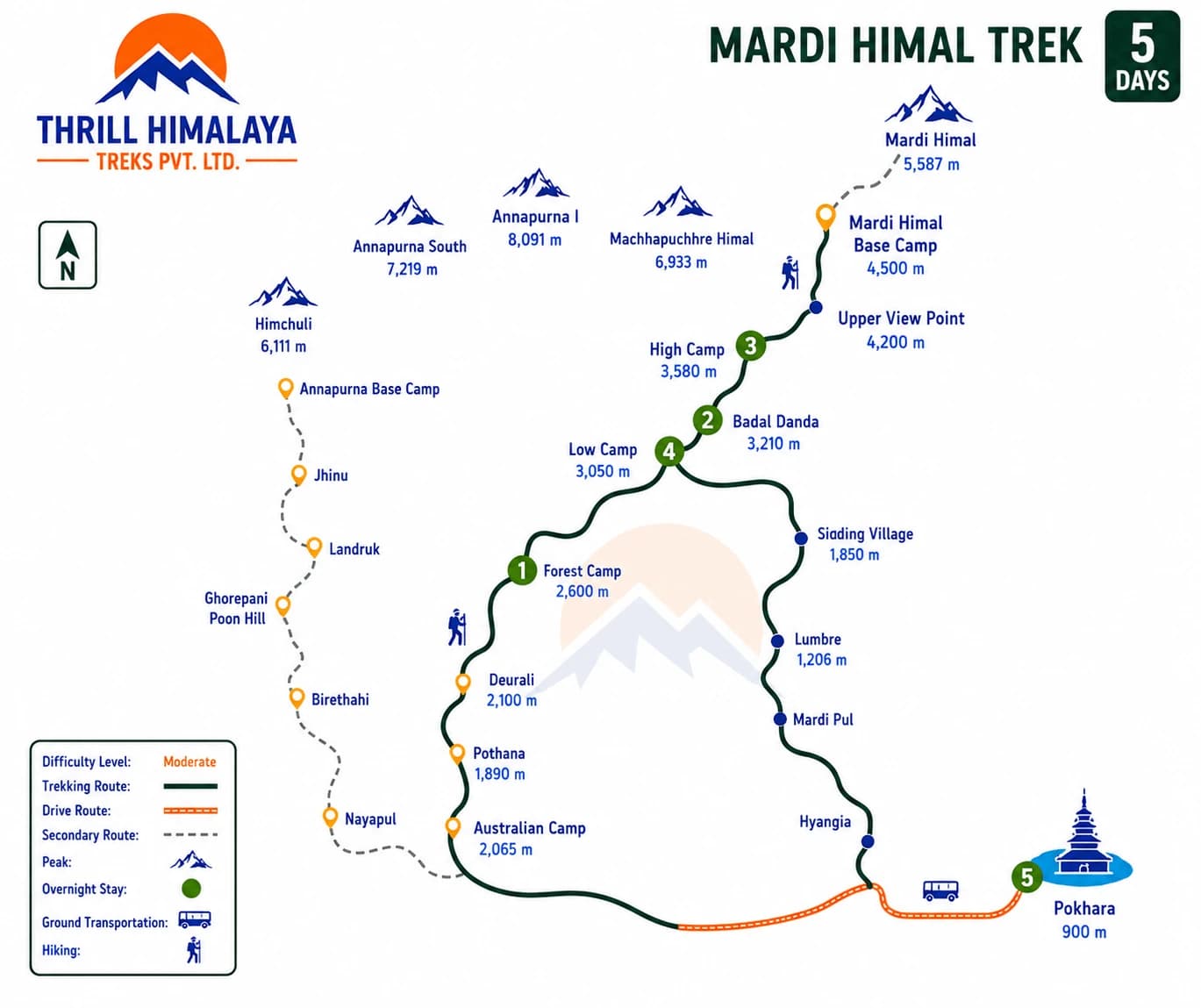
Route Map
Detailed Mardi Himal Trek route map in the Annapurna region of Nepal showing Forest Camp, Badal Danda, High Camp, Mardi Himal Base Camp, Upper View Point, and the trekking trail to Pokhara with Thrill Himalaya Treks
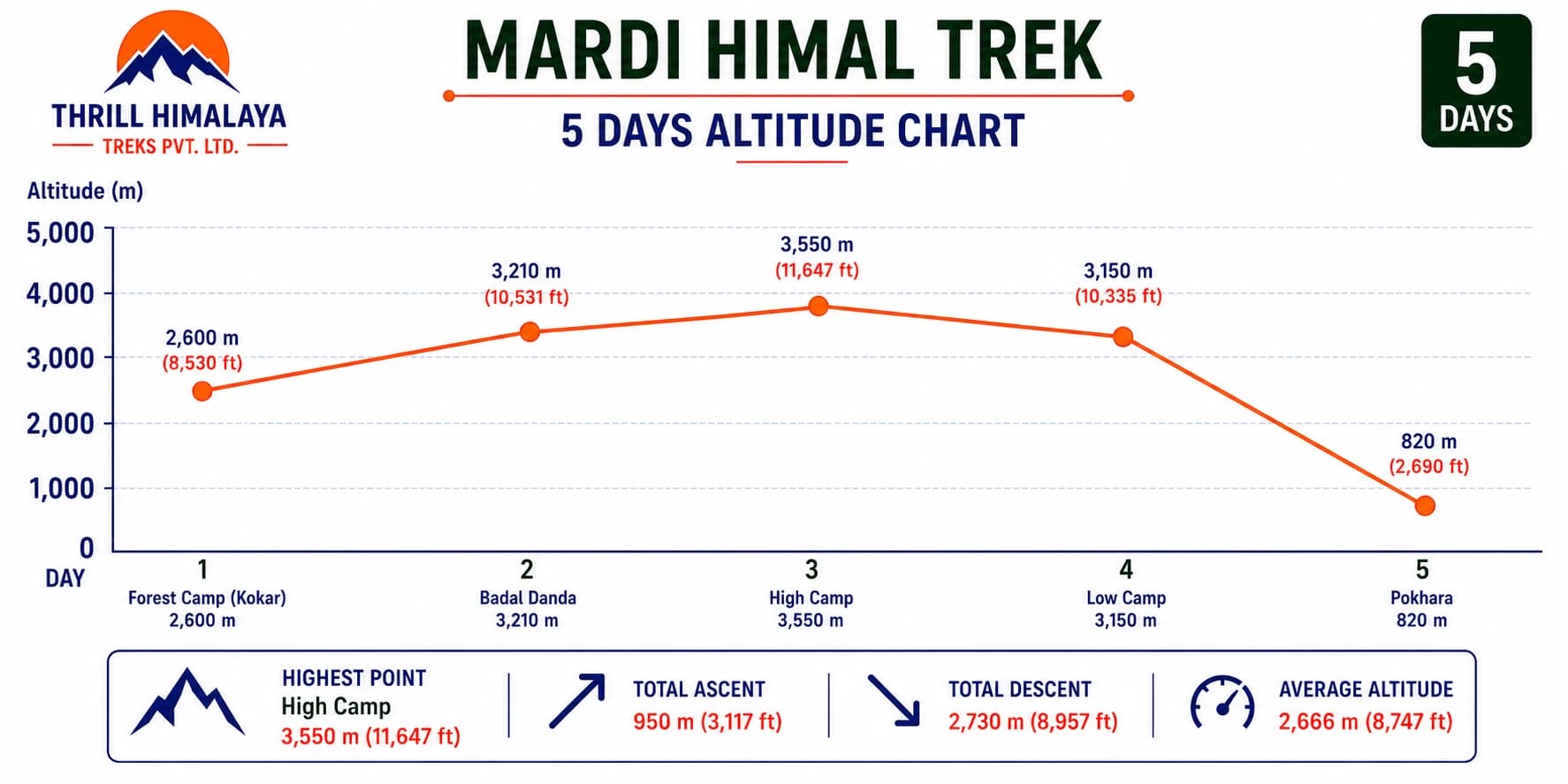
Altitude Chart
Mardi Himal Trek altitude profile for a 5-day itinerary in Nepal showing daily elevation gain from Forest Camp to High Camp at 3,550 meters and descent to Pokhara with Thrill Himalaya Treks
Cost Details
Includes
  • Private airport transfers.
  • Hotel accommodations in Kathmandu and Pokhara, including breakfast.
  • Ground transportation as per the itinerary.
  • Lodging in teahouses during the trek.
  • All meals (breakfast, lunch, and dinner) provided during the trek.
  • Services of a professional trekking guide and porters (one porter for every two trekkers).
  • Annapurna Conservation Area Permit (ACAP) and TIMS card.
  • First-aid kit and necessary safety equipment.
  • All government taxes and service charges.
Excludes
  • International airfare to and from Nepal.
  • Nepal entry visa fees.
  • Meals in Kathmandu and Pokhara (lunches and dinners).
  • Personal expenses, such as laundry, hot showers, and bottled water.
  • Travel insurance, which must cover emergency evacuations.
  • Tips for guides, porters, and drivers (optional but appreciated).
  • Unexpected expenses due to weather, strikes, or other unforeseen events.
  • Any services not explicitly mentioned in the "Included" section.
Essential Information

Best Time

The most promising time to trek the Mardi Base Camp is during autumn and spring. The weather during autumn is stable with appropriate temperatures. The clear sight of spectacular mountain ranges can be seen through clear skies. Due to this, autumn is considered to be the most preferred season for tours and trekking. Likewise, the temperature is moderate with fair weather during spring. Rhododendron blooms in the forests at this time which adds beauty to nature. Trekking can be enjoyed to its fullest. Despite this, the trek is possible in other seasons as well. However, the trek can be harsh during the monsoon season due to heavy rainfall leading to floods and landslides. 


Trekking Gear and Equipment

Clothing

  • Jackets (Windproof or Down)
  • Waterproof outerwear
  • Thermal wears
  • Woolen hat or cap
  • Pair of gloves
  • Shoes
  • Tracksuits and trouser
  • Trekking boot
  • Towel 


Gears

  • Bags
  • Sunglasses and sunscreen
  • Water bottle
  • Camera, binoculars and mobile phones
  • Extra batteries or power bank
  • Water purifier tablets
  • Headlamp and torch
  • Trekking Sticks
  • Lighters
  • Whistle 
  • Toilet papers and tissue papers
Mardi Himal Trek FAQs

You need a minimum of 4 to 5 days for the Mardi Himal Trek from Pokhara, and 5 days is the itinerary we recommend. Four-day versions exist but push the base camp day dangerously long. Trekkers wanting shorter walking days can extend to 6 or 7 days from Kathmandu.

The Mardi Himal Trek covers approximately 40 km over 5 days on the Kande to Sidhing loop. Daily distances range from 6 to 12 km, with the longest day being the Day 4 round trip to base camp.

The Mardi Himal Trek starts at Kande (1,770 m), about 35 km and 1 to 1.5 hours from Pokhara by road along the Baglung Highway. You can travel by private jeep, taxi, or local bus from Baglung Bus Park. The trek exits at Sidhing, where a jeep collects you for the drive back to Pokhara. Our 5-day package includes both transfers.

Mardi Himal Upper View Point sits at around 4,200 m and is roughly 2 hours above High Camp, while Mardi Himal Base Camp sits at around 4,500 m and takes 3 to 4 hours. Many itineraries advertised as "base camp" actually turn around at the View Point. Always confirm which point your operator means before booking.

Yes, the Mardi Himal Trek is one of the best beginner treks in Nepal for people with basic fitness. The moderate grading, low sleeping altitude, and short duration make it an ideal first Himalayan trek, as long as you prepare for the long Day 4.

The Mardi Himal Trek is graded moderate. You walk 5 to 7 hours on most days on steep stone staircases through forest, with no technical climbing, ropes, or mountaineering equipment required. The hardest section is Day 4: an 8 to 10 hour round trip to base camp with roughly 950 m of ascent and the full descent back to High Camp. Eight weeks of hill walking with a loaded daypack is ideal preparation.

The maximum altitude of the Mardi Himal Trek is around 4,500 m at Mardi Himal Base Camp, which you visit for one to two hours on Day 4. Your highest sleeping altitude is High Camp at 3,550 m, which keeps altitude sickness risk lower than on most Himalayan treks.

Mild altitude symptoms are possible on the Mardi Himal Trek, but serious altitude sickness is uncommon because you sleep no higher than 3,550 m. The ascent from Low Camp (2,970 m) to High Camp is gradual, and your time above 4,000 m is limited to a few hours on Day 4. Watch for headache, nausea, and disturbed sleep at High Camp, and descend if symptoms worsen.

Yes, a licensed guide is mandatory on the Mardi Himal Trek. Nepal's rule requiring foreign trekkers in conservation areas to walk with a government-licensed guide took effect in April 2023 and is actively enforced at Annapurna checkpoints. Note that "mandatory guide" does not mean joining a group tour. You can trek privately with only your guide for company.

Yes, the Mardi Himal Trek is safe for solo travelers booking a private guided trek. Solo trekkers can trek the Annapurna region with a licensed guide, and our solo package includes a private government-certified guide from Pokhara to Pokhara.

The Mardi Himal Trek requires the Annapurna Conservation Area Permit (ACAP), currently NPR 3,000 for foreign nationals and NPR 1,000 for SAARC nationals, plus a small Machhapuchhre Rural Municipality entry fee collected at a trail checkpoint. The old Green TIMS card for independent trekkers has been discontinued, and guided trekkers are issued the agency Blue TIMS card instead. Bring your passport and two passport photos, and we handle the paperwork in Pokhara.

Yes, travel insurance covering helicopter rescue and emergency medical evacuation is required for the Mardi Himal Trek. Standard travel policies often exclude trekking above 3,000 m, so check that your policy explicitly names high-altitude trekking and air evacuation. Policies without clear evacuation cover can be rejected at permit collection.

A 5-day guided Mardi Himal Trek from Pokhara typically costs USD 500 to 600 per person with a local operator, or USD 600 to 1,000 with an international agency. That range should include permits, a licensed guide, teahouse accommodation, meals on trek, and transfers. Group size is the biggest variable, and solo trekkers pay a supplement because guide costs are not shared.

No, there are no ATMs anywhere on the Mardi Himal Trek. The last reliable ATMs are in Pokhara Lakeside, and every teahouse above the trailhead is cash-only. Carry NPR 15,000 to 25,000 per person for a 5-day trek to cover drinks, snacks, wifi, device charging, hot showers, and tips.

The best time for the Mardi Himal Trek is March to May and late September to early December. Spring brings rhododendron forests in full bloom on the lower ridge, while autumn delivers the clearest mountain views and the most stable weather of the year. October and November are the peak months.

Yes, you can trek Mardi Himal from December to February, and winter offers the clearest air and emptiest trails of the year. Expect snow above Low Camp, unheated rooms, and night temperatures well below freezing at High Camp. Some High Camp lodges close or run reduced service, and microspikes are worth carrying for icy sections near base camp.

The Mardi Himal Trek is not recommended from June to August. Monsoon cloud hides the mountains for most of the day, forest sections carry leeches, stone staircases turn slippery, and the access road is landslide-prone. Conditions usually improve from late August, with reliable views returning by mid-September.

High Camp (3,550 m) drops to around freezing on autumn and spring nights, and to -10°C or colder in December and January. Teahouse rooms are not heated, so the dining hall stove is the only warm space in the evening. Dawn at base camp is significantly colder once windchill is factored in.

Teahouses on the Mardi Himal Trek are small family-run lodges with twin rooms, blankets, and shared bathrooms. Facilities get simpler with altitude, and High Camp is the most basic stop, with plywood cabins and cold sleeping rooms. Rooms cost roughly NPR 500 to 1,000 a night and are often heavily discounted if you eat dinner and breakfast at the same lodge.

Booking ahead matters at High Camp, which has only five or six lodges and fills up during October, November, March, and April. Lower stops like Forest Camp and Low Camp rarely sell out. Guided trekkers have an advantage here: your guide calls ahead each morning to hold rooms before the afternoon rush.

Mobile signal is patchy on the Mardi Himal Trek. NTC and Ncell work through the lower forest stops and around Low Camp, then weaken sharply above it. Teahouses sell wifi for roughly NPR 200 to 500 per device, but it runs on solar power and often fails in cloudy weather. Treat High Camp and base camp as offline, and carry a power bank since charging costs extra.

Do not drink untreated tap or stream water on the Mardi Himal Trek. Teahouses sell boiled and filtered water for roughly NPR 50 to 150 per litre, with prices rising as you climb. Bring purification tablets or a filter bottle to cut cost and plastic waste. Note that Low Camp has genuine water shortages, since supplies are carried uphill by hand, so skip the bucket shower there.

Pack a down jacket, fleece mid-layer, waterproof shell, thermal base layers, broken-in trekking boots, trekking poles, sun hat, warm hat, gloves, headlamp, sunglasses, sunscreen, water purification, a power bank, and a basic first aid kit including blister care. Keep your daypack under 8 kg. Anything you miss can be bought or rented cheaply in Pokhara Lakeside before you set off.

A sleeping bag is not strictly required on the Mardi Himal Trek since teahouses provide blankets, but we strongly recommend one for the High Camp night. A bag rated to around -10°C is right for autumn and spring. Renting in Pokhara costs about USD 2 to 4 per day, and a sleeping bag, down jacket, and duffel bag are included free with our 5-day package.

A porter is optional on the Mardi Himal Trek but makes the steep Day 2 and Day 4 climbs considerably easier. One porter carries up to 20 to 25 kg, typically shared between two trekkers, for around USD 25 to 30 per day. Most trekkers with reasonable fitness manage the 5-day route carrying their own daypack.

Thrill Himalaya is a Kathmandu-based, government-registered trekking company (NTB Reg. No. 3303/81/82) and a TAAN member operating out of Thamel. Every Mardi Himal departure is led by a government-licensed guide with direct, first-hand experience on this exact Kande to Sidhing itinerary, backed by an insured porter and standard emergency-evacuation planning. The 5-day package is arranged door to door: Pokhara hotel pickup, private jeep to the Kande trailhead, ACAP and TIMS processing, every teahouse night and meal on trek, and jeep collection at Sidhing are all handled as one booking, so you do not have to organize a single transfer yourself. Other reasons trekkers book this trip with us: a complimentary sleeping bag, down jacket, and duffel bag; 24/7 WhatsApp contact with our Kathmandu office throughout your trip; an eco-friendly approach that briefs every group on Leave No Trace principles and prioritizes family-run local guesthouses over large commercial lodges; and transparent, itemized pricing sent within 24 hours of enquiry rather than a vague "from" price. We are rated 5.0/5 on TripAdvisor from client reviews and hold a 2026 Travelers' Choice award.

Need Help?
Feel free to call or WhatsApp our expert.
Need Help? Call Us.+977 9851017941