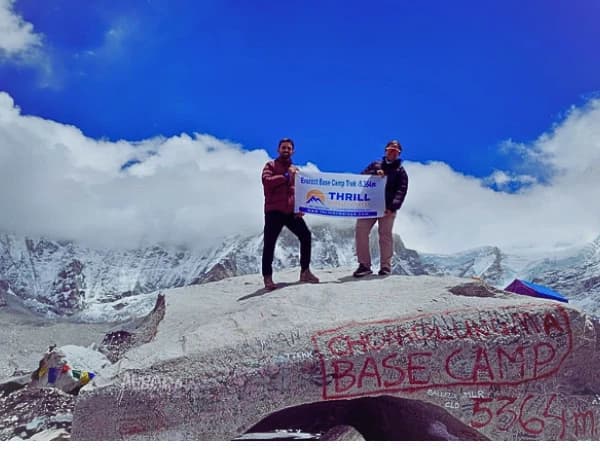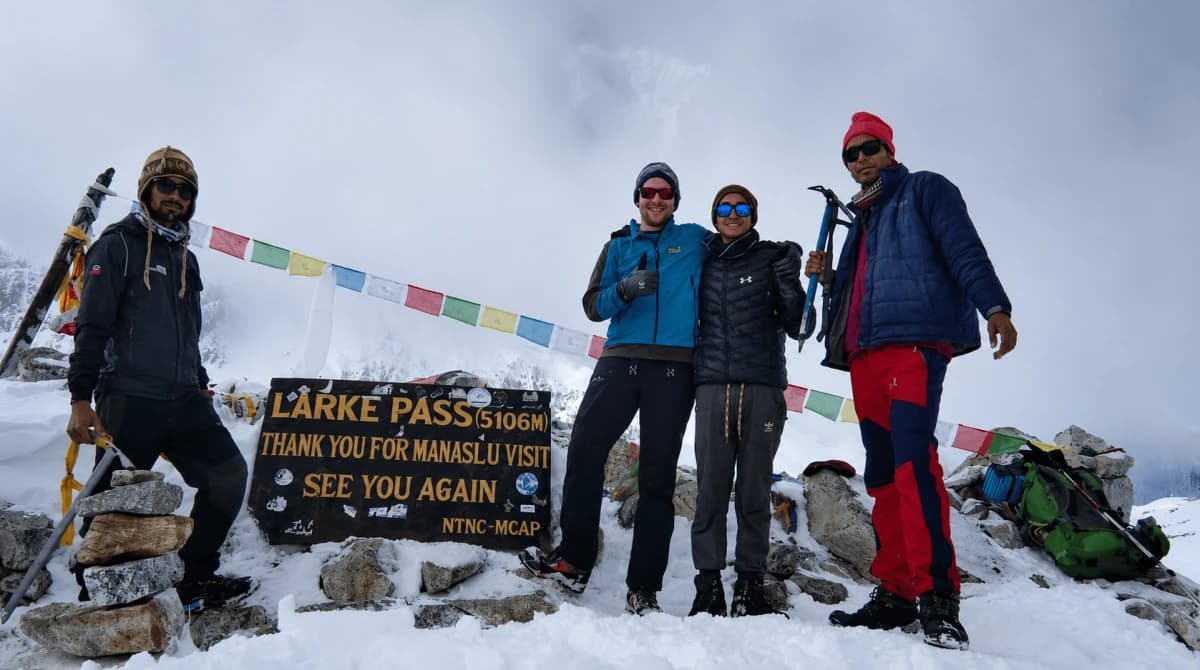
Trekkers with Thrill Himalaya Treks standing at the snowy Larkya La Pass summit (5,106m) decorated with colorful Buddhist prayer flags on the Manaslu Circuit Trek in Nepal.
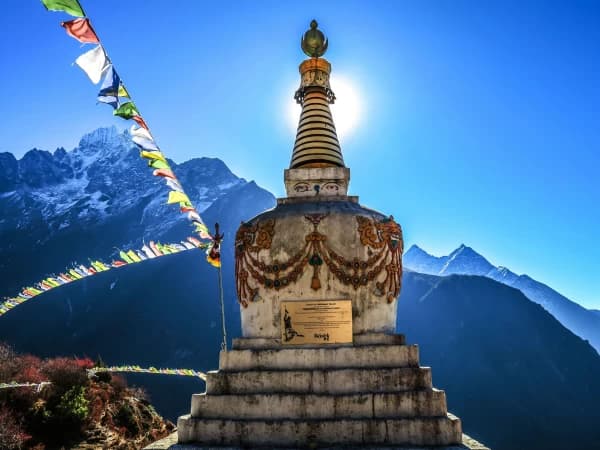
A stunning, clear panoramic view of Mount Manaslu's snow-capped peaks against a bright blue sky, captured during a guided Thrill Himalaya trek.
Short Manaslu Circuit Trek 10 Days

Short Manaslu Circuit Trek 10 Days

40 reviews in TripAdvisor
Recommended by 99% of travelers
Duration10 Days
Trip GradeModerate
Maximum Altitude5,106 m (Larkya La Pass)
Group SizeMinimum 2 trekkers
StartsKathmandu
EndsKathmandu
ActivitiesHigh-altitude Trekking & Cultural Exploration
Best TimeSpring (March–May) & Autumn (September–November)

Can you trek the Manaslu Circuit in 10 days? Yes. The short Manaslu circuit trek 10 days takes you over Larkya La Pass at 5,106 meters on a compressed but properly planned itinerary. We built this route for trekkers who are fit, have some prior high altitude experience, and simply do not have two weeks to spare.

The short Manaslu circuit trek is the fastest honest way to complete the full circuit around Mount Manaslu, the world's eighth highest mountain. You walk through the Nubri and Tsum valleys, cross Larkya La Pass, and come down into the Annapurna side near Dharapani, finishing your trip in Kathmandu or Pokhara. You skip nothing that matters. You just walk a bit longer each day and cut the extra rest days that a slower itinerary would include.

We have guided this route for years, and we will tell you straight: 10 days is achievable, but it is not the relaxed version of Manaslu. If you want the full story on cost, the real day-by-day plan, and whether this pace is right for you, keep reading.

Quick Facts: 10-Day Manaslu Circuit Trek

  • Duration: 10 days (Kathmandu to Kathmandu)
  • Max altitude:Larkya La Pass, 5,106 m
  • Trek difficulty: Moderately hard to hard, fast pace
  • Group size: Minimum 2 trekkers (restricted area rule)
  • Guide requirement: Mandatory, licensed guide included
  • Best season: March to May, September to November
  • Starting cost: From USD 950 per person (group joining)
  • Accommodation:Teahouse, twin sharing
  • Trek type:Restricted area, tea house trekking 

Why Choose the 10-Day Manaslu Route

Most trekkers ask us the same question first: why would I do this in 10 days instead of 12 or 14? The honest answer is time and budget. Fewer days on the trail means fewer nights of lodging, fewer meals, and lower guide and porter fees, so the total short Manaslu circuit trek cost comes down noticeably compared with the classic route.

This version suits you if you have already trekked above 4,000 meters before, you are comfortable walking 6 to 7 hours a day back to back, and you would rather spend 10 days on a full Himalayan circuit than two full weeks. If that is not you, we usually steer clients toward our 18 dayManaslu Circuit Trek with Tsum Valley or the 14 days Manaslu Circuit Trek instead, since they build in extra acclimatization at Samagaon.

Alternatively, if you are attempting this route as a multi-generational adventure with teenagers, we recommend checking out our specialized Manaslu Circuit Family Trek to ensure a safe, manageable pace for younger hikers.

10-Day short  Manaslu Circuit Trek Highlights

  • Trek around Mt. Manaslu (8,163m), the world's 8th highest mountain, on one of Nepal's most authentic and less-crowded trekking routes
  • Cross the dramatic Larkya La Pass (5,106m), the trek's toughest and most rewarding day
  • Walk through the remote, restricted Manaslu Conservation Area, home to rare wildlife like snow leopards and Himalayan tahr
  • Experience rich Tibetan-influenced culture in villages like Samagaon and Samdo, with monasteries, mani walls, and prayer flags
  • Looking to explore the region's hidden Buddhist culture without crossing a grueling 5,000-meter alpine pass? Check out our standalone Tsum Valley Trek 11 Days
  • Enjoy close-up views of Manaslu, Himlung Himal, Cheo Himal, Kang Guru, and Annapurna II
  • Cross the scenic Budhi Gandaki Gorge, with suspension bridges, waterfalls, and dramatic cliffside trails
  • Fewer crowds than Everest or Annapurna, giving a more peaceful, off-the-beaten-path experience
  • Restricted area permit required – you must trek with a licensed agency and at least 2 trekkers (group requirement)
  • No TIMS card needed in 2026, but Manaslu RAP, Manaslu Conservation Area Permit (MCAP), and Annapurna Conservation Area Permit (ACAP) are mandatory
  • New Chumnubri Rural Municipality Fee (NPR 1,000–2,000) collected at Jagat as of 2026
  • Ideal for trekkers seeking a high-altitude, culturally rich alternative to Everest Base Camp or Annapurna Circuit
  • Best trekked in spring (March–May) and autumn (September–November) for clear mountain views and stable weather

How Much Does a 10-Day Manaslu Circuit Trek Cost? (2026–2027 Price Guide)

A 10-Day Manaslu Circuit Trek with Thrill Himalaya Treks costs USD 785 to USD 1,250 per person, depending on group size, season, and service level. This price includes all Manaslu Conservation Area and Chumnubri Rural Municipality permits, a licensed government-certified guide, teahouse accommodation, three meals a day on trek, and ground transport from Kathmandu. Larger groups pay closer to $785 per person, while solo trekkers or small private groups pay closer to $1,250 due to mandatory guide and permit costs being split between fewer people.

  • Group SizePrice per Person (USD)Why
  • Solo / 1 person$1,150 – $1,250Fixed permit and guide costs are not shared
  • 2 people$950 – $1,050Costs split two ways
  • 3–4 people$850 – $950Better cost-sharing on jeep/guide
  • 5+ people$785 – $850Best per-person rate, shared logistics

Short Manaslu Circuit Trek Cost Breakdown

Here is what actually goes into your short Manaslu circuit trek cost, itemized so you can see where your money goes instead of just trusting a single headline number.

  • Manaslu Conservation Area Permit (MCAP): $30
  • Restricted Area Permit (RAP), per week: $70-100 depending on season
  • Chumnubri Rural Municipality fee: $8
  • Licensed guide (10 days): $250-300
  • Porter (10 days): $200
  • Teahouse lodging and full board meals: $250-350
  • Kathmandu to Machha Khola transport (shared jeep): $25-40 per person
  • Dharapani to Kathmandu/Pokhara transport: $25-40 per person
  • Total package price (group joining): USD 950-1,150 per person

These numbers assume a group joining departure with a shared jeep and standard teahouse rooms. Private departures with a dedicated jeep and guide run higher, usually USD 1,400-1,800 per person. We will always tell you the real number for your dates and group size before you pay a deposit, not after.

Budget Short Manaslu Circuit Trek: How to Cut Costs Without Cutting Safety

If your priority is keeping this as a budget trip, there are real ways to save money here, and we will tell you which ones we actually recommend.

  • Join a group departure instead of booking private. Sharing a guide and jeep across 6-10 trekkers is the single biggest cost saver, often cutting your total by 30-40%.
  • Use shared jeep transport, not a private vehicle. A private jeep to Machha Khola can cost $400-450 total, split six ways that is under $75 per person versus $150+ if you book it alone.
  • Stick to basic teahouse rooms. Twin-sharing standard rooms are already included in most packages. Paying extra for a private room or attached bathroom adds up fast at higher altitude.
  • Travel in shoulder season. Late November or early March permit fees and lodging rates run slightly lower than peak October dates.
  • Skip optional extras you do not need. Down jacket rental, extra porters, and daily hot showers are nice, but they are the first place to trim if you are watching your budget.

What we do not recommend cutting: your guide, your permits, or your acclimatization day. Those are not places to save money on a restricted, high altitude route.

Current Short Manaslu Trek Permit Requirements & Solo Rules for 2026 and 2027

You need three permits to legally trek this route, and we arrange all of them for you as part of your package. First, the Manaslu Conservation Area Permit (MCAP). Second, the Restricted Area Permit (RAP), which is priced per week and costs more in autumn than in winter. Third, the Chumnubri Rural Municipality fee, a smaller local fee added in recent years. As of 2026, TIMS cards are no longer required for this route, but the RAP and MCAP remain mandatory.

One rule that catches people off guard: solo trekking is not allowed on Manaslu. You need a minimum of two trekkers and one licensed guide at all times. If you are traveling alone, we can pair you with our group joining departures so you still meet the requirement without needing to find your own trekking partner.

Who Is the Short Manaslu Circuit Trek 10 Days Suitable For

We would rather guide you to the right trek than sell you the wrong one. Here is exactly who this itinerary is built for, so you can book with confidence.

This trek is a great fit for you if:

  • You are an experienced trekker who enjoys a faster, more efficient pace on the trail
  • You can comfortably walk 6-7 hours a day for several consecutive days
  • You have limited vacation time and want to make every day count
  • You want the full Larkya La Pass experience, without extra rest days slowing you down

If that sounds like you, this itinerary delivers Manaslu's best scenery and biggest pass in the shortest time possible, and we would love to help you plan it.

Want a more relaxed pace instead? We have you covered.

  • If this would be your first high-altitude trek
  • If you would enjoy extra buffer days for a gentler pace and easier acclimatization
  • If you want time to properly explore Samagaon or add the Tsum Valley side trip

Our 14-day Manaslu Circuit Trek or the combined Manaslu-Tsum Valley itinerary give you the same incredible pass and views, with more room to breathe, acclimatize, and take it all in.

Not sure which one fits you? Talk to a Manaslu trekking specialist on WhatsApp, tell us your fitness level and travel dates, and we will recommend the right itinerary for you, free of charge.

Short Manaslu Circuit Trek Cost and Itinerary Overview

Before you commit, you need two things clear in your head: what you are paying for and what each day actually looks like. We cover both below in full detail, with real numbers, not vague ranges pulled from a brochure.

Is 10 Days Enough to Safely Trek Manaslu in 2026 / 2027?

Yes, for the right trekker. The standard Manaslu Circuit runs 12 to 18 days when you include extra acclimatization days at Samagaon and a Manaslu Base Camp side trip. The 10 day version keeps every major highlight, including Larkya La Pass, Samagaon, and the Nubri villages, but removes the second rest day and tightens the walking schedule. You will walk longer stretches on some days, and your body has less buffer time to adjust to altitude, so we only recommend this pace to trekkers who already know how their body responds above 3,500 meters.

Looking for an Extra Acclimatization Day? (Highly Recommended)

If you want to add a buffer day to rest and adjust to the altitude, you can extend this itinerary by one extra day for just USD 55 per person.

  • We strongly recommend adding this rest day at Samagaon on Day 6.
  • Samagaon sits at 3,530 meters, making it the perfect strategic location to prepare your body before climbing higher. On this day, you can enjoy a scenic side trip to Manaslu Base Camp at 4,400 meters or hike up to the stunning Birendra Lake for breathtaking, close-up views of Mount Manaslu.

Best Months to Cross Larkya La Pass: 2026 & 2027 Weather Guide

October is your best month for crossing Larkya La Pass, followed closely by April. Both give you clear skies and a stable, safe pass crossing.

Autumn (September–November)- Clearest Views

We send most of our groups through in October. You get crystal-clear mountain views and the most predictable weather of the year. Late September works well too, with quieter trails and lush scenery. November stays clear but turns cold and windy at altitude, so pack accordingly.

Spring (March–May) -Warmer Days, More Color

April is our pick for spring. Rhododendrons bloom through the lower valley, and the pass is open and stable. March runs quieter, though you may still hit some lingering winter snow. May brings the warmest temperatures, but afternoon clouds can block your long-range mountain views near the pass.

Why Trek Manaslu with Thrill Himalaya

  • Local Nepali-owned agency: your money stays in the communities that make this trek possible.
  • Government-certified guides: trained, licensed, and WFR-certified for restricted areas like Manaslu.
  • Small group sizes: your guide knows your name, your pace, and how you're acclimatizing.
  • Safety-first protocols: emergency evacuation plans and oxygen access at Larkya La Pass (5,106m).
  • Honest difficulty guidance: we tell you if a trek isn't right for you, before you book.
  • NTB registered & TAAN member: a verified, regulated operator, not a middleman.
  • Personal Kathmandu briefing: route, permits, and altitude prep, before you set off.
  • Free airport transfers: private pick-up and drop-off, included.
  • Free sleeping bag and down jacket: no extra gear rental or shopping needed.
  • 24/7 WhatsApp support: real answers before, during, and after your trek.

Talk to a Manaslu trekking specialist on WhatsApp: get a personalised quote within 24 hours.

Ready to Trek Manaslu with a Team You Can Trust?

Manaslu is a restricted area so you need the right permits, the right guide, and an agency that has actually done this route, not just listed it on a website. That's exactly what Thrill Himalaya brings.

Talk to a Manaslu trekking specialist on WhatsApp to get a personalised itinerary and quote within 24 hours.

How to Book the Short Manaslu Circuit Trek 10 Days

Booking is simple. You send us your preferred dates, we confirm availability and group size, and you secure your spot with a 20% deposit paid by bank transfer or international card. The remaining balance is due on arrival in Kathmandu, in cash or card, before you set out on the trail.

  • Deposit: 20% of total package cost, refundable up to 30 days before departure

  • Payment methods: bank transfer, Visa/Mastercard (small processing fee applies), cash on arrival for the balance

  • Cancellation policy: full refund of deposit if cancelled 30+ days out, 50% refund between 15-29 days, non-refundable inside 14 days

  • Last minute booking: we can often confirm a spot within 48-72 hours if a group departure has open seats, message us on WhatsApp to check

Once you book, we send you a pre-departure pack with your final itinerary, packing checklist, and a briefing call or in-person meeting when you land in Kathmandu.

Itinerary
Trip PlanExpand all

Your guide picks you up early from your Kathmandu hotel, usually by 7am, for the drive out to Machha Khola, the trailhead for this short Manaslu circuit trek. Transport is by local bus as standard, though a private jeep can be arranged on request for an added cost if you would rather skip the shared bus and travel with more space, flexibility, and fewer stops. The route runs through Naubise and Malekhu on smooth blacktop for the first few hours, tracing the Trishuli River before turning north at Dhading Besi into Gorkha district, the ancestral home of Nepal's Shah kings and the epicenter of the 2015 earthquake. Past Dhading Besi the road narrows and roughens, winding along the hillside through Arughat and Soti Khola before the final stretch to Machha Khola, where the paved road runs out and the Budhi Gandaki River comes into view for the first time. It is a long, bumpy day in the vehicle either way, broken up by a lunch stop en route, but it drops you right at the edge of the Manaslu Conservation Area by evening. Machha Khola itself is a small riverside village of stone and tin roofed lodges, a fitting low key start before the trail climbs into the mountains the next morning.

Max Altitude: 900m / 2,953ftMeals: Lunch, DinnerAccommodation: Teahouse / LodgeMode of Transportation: Local Bus

From Machha Khola the trail hugs the Budhi Gandaki River, crossing it on the first of many suspension bridges you will use over the next week. You pass through Khorlabesi and a string of small landslide prone sections before reaching Tatopani, where a natural hot spring sits right beside the trail and makes a genuinely good excuse for a midday break. Past Tatopani the path climbs through a forested ridge and drops again through Dobhan, with occasional glimpses of waterfalls feeding into the gorge below. The final stretch into Jagat runs through a narrow valley before the trail opens up at this stone paved village, which doubles as the first official checkpoint on the route, where your permits are checked and logged before you are allowed further into the restricted area. Jagat's flagstone streets and solid stone houses are a preview of the more Tibetan influenced architecture you will see higher up the valley.

Max Altitude: 1,410m / 4,626ftMeals: Breakfast, Lunch, DinnerAccommodation: Teahouse / LodgeMode of Transportation: On Foot Trekking

Leaving Jagat, the trail climbs and drops repeatedly through Salleri and Sirdibas, where Shringi Himal appears above the ridgeline on a clear morning. A long suspension bridge crossing leads into a steep, sustained climb to Philim, one of the larger Gurung villages on the route and a good spot to rest before the trail narrows again. Just beyond Philim, a side trail splits north toward the Tsum Valley, while the main route continues west through Ekle Bhatti and a series of smaller settlements, with waterfalls dropping down the valley walls on both sides. The path threads through a narrowing gorge for the final few hours, and the forest thickens noticeably as you gain elevation. By the time you reach Deng, a small cluster of stone houses tucked into the hillside, the valley feels noticeably more remote, and the crowds from the lower trail have thinned out.

Max Altitude: 1,860m / 6,102ftMeals: Breakfast, Lunch, DinnerAccommodation: Teahouse / LodgeMode of Transportation: On Foot Trekking

The day opens with a steep, direct climb out of Deng that gets the legs working early, rewarded by wide views back down the valley once you gain some height. The trail eases past Rana and Bihi Phedi, tracing the Budhi Gandaki back and forth over a couple of exposed suspension bridges, then continues through the small settlement of Ghap, home to one of the valley's older monasteries. From Ghap, mani stones carved with Tibetan script begin to line the trail in earnest, a clear marker that you have crossed into Tibetan influenced Nubri territory. Namrung itself is a compact, fort-like village of stacked stone houses and is the second permit checkpoint on the route, as well as a genuinely good viewpoint for Shringi Himal, Ganesh Himal, and Himalchuli to the south. If you still have energy in the afternoon, the side trip to Prok village across the valley adds around two hours round trip and is worth it for a quieter, less touristed perspective on the Manaslu massif.

Max Altitude: 2,630m / 8,629ftMeals: Breakfast, Lunch, DinnerAccommodation: Teahouse / LodgeMode of Transportation: On Foot Trekking

This is the day Manaslu finally reveals itself. The trail climbs steadily through pine and birch forest to Lihi, a village known for its barley terraces and chortens, then continues to Sho before reaching Lho, where the valley opens up and Mt Manaslu appears in full for the first time. Lho is home to Ribung Gompa, a well known monastery just above the village with prayer flags strung across the hillside and, on a clear day, one of the best close-range views of the mountain on the entire route. From Lho the trail undulates gently to Syala, a high pasture village that offers another dramatic angle on Manaslu, Himalchuli, and Ngadi Chuli. The final approach to Samagaon crosses open grazing land where yaks and horses are often out to pasture, before settling into the village itself, the largest and most culturally significant stop on the circuit, and the base most trekkers use for side trips to Pungyen Gompa or the glacial Birendra Lake.

Max Altitude: 3,530m / 11,581ftMeals: Breakfast, Lunch, DinnerAccommodation: Teahouse / LodgeMode of Transportation: On Foot Trekking

A short, gentle day that works well as a soft acclimatization stage before the altitude really sets in. The trail crosses the Budhi Gandaki on a wooden bridge just outside Samagaon, then climbs gradually through open yak pastures and past a scattering of mani walls and chortens, with Manaslu's north side dominating the skyline for most of the walk. Samdo itself is a Tibetan refugee settlement established by families who crossed the border in the late 1950s and early 1960s, and it sits close enough to the old Nepal-Tibet trade route that yak caravans still occasionally pass through. Because the trekking day is short, the afternoon is free, and the optional climb up the ridge above the village toward the Tibetan border viewpoint is a smart way to gain some extra altitude exposure before tomorrow's push higher, on top of being a good look at the Samdo valley from above.

Max Altitude: 3,890m / 12,762ftMeals: Breakfast, Lunch, DinnerAccommodation: Teahouse / LodgeMode of Transportation: On Foot Trekking

Also known as Larkya Phedi, this short day exists mainly to position you close to the pass without gaining too much altitude too fast. The trail crosses the Budhi Gandaki one last time on a long suspension bridge, then pushes out of the tree line into a stark, open landscape of scree, moraine, and glacial debris, with the vegetation thinning to almost nothing by the time you arrive. There are no teahouses at this altitude, only a handful of basic stone and tin shelters, so your crew carries in food, fuel, and cooking supplies for the night. Once you arrive, usually by early afternoon, a short acclimatization walk above camp is worth doing while there is still daylight, both for the altitude benefit and for the view back down the valley. Temperatures drop fast once the sun disappears behind the ridge, so it is worth having your down jacket and warm layers out and accessible rather than buried in your bag, and most groups turn in early to be ready for the pre-dawn start the next morning.

Max Altitude: 4,460m / 14,633ftMeals: Breakfast, Lunch, DinnerAccommodation: Teahouse / LodgeMode of Transportation: On Foot Trekking

This is the single biggest day of the short Manaslu circuit trek, both in distance and in altitude gain. You start walking in the dark, usually between 3am and 4am, with headlamps on, since the goal is to be over Larkya La before the wind picks up in the late morning. The climb crosses a series of moraines and false summits, and the final approach can hold snow and ice well into the trekking season, so trekking poles and, in some conditions, microspikes make a real difference. The top of the pass is marked by a cairn and a dense cluster of prayer flags, and on a clear day the summit view takes in Larkya Peak, Manaslu, Ratna Chuli, Cheo Himal, and a long stretch of the Annapurna range to the west. The descent is long, rocky, and unrelenting on the knees, dropping past a frozen glacial lake and through loose moraine before the trail finally levels out and the first hardy juniper and rhododendron scrub reappears. Bhimthang itself sits in a wide, open valley with a clear view back toward Manaslu's western face, a welcome sight after the long descent.

Max Altitude: 3,700m / 12,139ftMeals: Breakfast, Lunch, DinnerAccommodation: Teahouse / LodgeMode of Transportation: On Foot Trekking

After yesterday's effort, this day feels almost easy. The trail drops through rhododendron and oak forest, growing lusher with every hundred meters you descend, and crosses the Dudh Khola on a sturdy suspension bridge partway down. You pass through the small settlements of Gho and Karche, where the terraced fields and warmer air are a welcome contrast to the bare rock of the past two days, before reaching Tilije, a mixed Gurung and Tibetan village close to Dharapani, where the Manaslu circuit trail joins the Annapurna Circuit route. From here, the trek officially ends and you switch to a shared jeep for the drive down to Besisahar, a rough, winding road that follows the Marsyangdi River through Chamje, Tal, and Ngadi. It is a jarring change of pace after more than a week on foot, but Besisahar has real guesthouses, phone signal, and hot showers, which feel very welcome after Dharmasala and the pass.

Max Altitude: 2,560m / 8,399ftMeals: Breakfast, Lunch, DinnerAccommodation: Teahouse / LodgeMode of Transportation: On Foot Trekking

The last day is a straightforward drive back to Kathmandu on a proper paved road, a stark contrast to the jeep track of the previous afternoon. The route follows the Marsyangdi and then the Trishuli River valleys through Dumre and Mugling, before joining the Prithvi Highway through Malekhu and Naubise for the final approach into the Kathmandu valley. Traffic around Mugling and the entrance to Kathmandu can add an hour or more on a bad day, so it is worth treating the arrival time as approximate rather than fixed. It closes out ten days of walking with a hot shower, a proper bed, and the noise and comfort of the city waiting at the end, a fitting bookend to a trek that started on this same road nine days earlier.

Max Altitude: 1,400m / 4,593ftMeals: BreakfastMode of Transportation: Local Bus
Start planning today.
Our travel experts are here to help. Our travel experts are here to help. Our travel experts are here to help.
Cost Details
Includes

What is Included in the 10-Day Manaslu Circuit Trek Price?

  • All Required Permits:Manaslu Restricted Area Permit (RAP), Manaslu Conservation Area Permit (MCAP), and Annapurna Conservation Area Permit (ACAP).

  • Local Government Fees:Chumnubri Rural Municipality local trekking tax.

  • Expert Trekking Team: Government-licensed, English-speaking local guide (including their daily wage, insurance, food, and lodging).

  • Ground Transportation: Shared local bus logistics from Kathmandu to Machha Khola (trek start) and Dharapani back to Kathmandu/Pokhara (trek end). (Private jeep available upon request for an extra cost).

  • Teahouse Accommodation: 9 nights of twin-sharing standard teahouse accommodation along the circuit trail.

  • Full Board Meals:3 freshly prepared meals a day (Breakfast, Lunch, and Dinner) during the trek, plus seasonal fresh fruits.

  • Water Safety: Complimentary water purification tablets provided daily throughout the trek.

  • Post-Trek Celebration: An official Trekking Certificate awarded upon successful completion, followed by a complimentary Farewell Dinner in Kathmandu.

  • Complimentary Trekking Gear: Free use of high-quality down jackets, warm sleeping bags, and a company duffel bag (to be returned after the trek).

  • First Aid & Safety: Comprehensive medical kit carried by the guide and 24/7 satellite emergency support coordination.

Excludes

What is Excluded from the 10-Day Manaslu Circuit Trek Price?

  • International Travel: Flights to/from Kathmandu and your Nepal Entry Visa fee.

  • Transportation Upgrades:Private jeep upgrades from Kathmandu to Machha Khola or Dharapani back to Kathmandu (available at an extra cost).

  • Travel Insurance: Mandatory travel insurance that explicitly covers emergency high-altitude helicopter evacuation up to 5,500 meters.

  • Personal Trekking Porter: Available upon request if you prefer not to carry your own main backpack.

  • Teahouse Add-ons & Comforts:Wi-Fi access fees, device charging costs, hot showers, and electronic charging along the trail.

  • Beverages & Snacks:Bottled water, boiled drinking water, soft drinks, alcohol, coffee, and personal snacks/energy bars.

  • Tips & Gratitude:Tips for your trekking guide, porters, and drivers at the end of the trip (highly appreciated).

Essential Information

Extend or Customize Your Manaslu Circuit Trek 10 Days

Want more time in the region? We can extend your trip with a Tsum Valley add-on (4-5 extra days) for deeper access to remote monasteries, or build a fully private, customized itinerary with your own pace, extra rest days, or a different start and end point. Group joining keeps costs lowest, but private departures give you full control over yourschedule.

Culture, People and Monasteries Along the Short Manaslu Circuit Trek

The short Manaslu circuit trek is not only a mountain route, it is a walk through some of the last untouched Tibetan Buddhist communities in Nepal. Once you pass Jagat, the villages along the trail belong to the Nubri and Tsum people, who follow Tibetan Buddhist traditions closely tied to the Bon religion that predates it. You will see mani walls, chortens, and red-painted shrines lining nearly every stretch of trail from Namrung onward.

Samagaon, your acclimatization stop, is the cultural heart of the route. The village sits below Manaslu itself and is home to Pungyen Gompa, a monastery with deep ties to local mountaineering history. Local families here still follow a way of life shaped by trade routes to Tibet, herding, and subsistence farming, largely unchanged by outside tourism because of the restricted area status.

We always tell our clients to slow down here, even on a 10 day schedule. A short visit to a monastery or a conversation with a teahouse family gives you more insight into this region than any guidebook, and it is one of the reasons Manaslu still feels genuinely remote compared to more commercial routes like Everest or Annapurna.

Flora, Fauna and the Manaslu Conservation Area

The Manaslu Conservation Area (MCAP) protects one of the most biodiverse corridors in Nepal, and you will notice the shift almost daily as you climb. Day one and two pass through subtropical forest and terraced farmland around 900 to 1,800 meters, where you will see banana trees, rice paddies, and dense green hillsides. By Namrung and Lho, the trail moves into pine and Rhododendron forest, spectacular in spring bloom between March and April.

Above Samagaon, the landscape turns to high alpine terrain, with juniper scrub, glacial moraine, and sparse grassland leading up to Larkya La. The conservation area is home to snow leopards, Himalayan tahr, musk deer, and over 110 species of birds, though most trekkers spot yaks, blue sheep, and mountain birds rather than the rarer predators.Because Manaslu sees a fraction of the trekkers that Everest or Annapurna does, wildlife here is noticeably less disturbed. If you care about walking through a living conservation area rather than a heavily trafficked trekking corridor, this is one of the strongest reasons to choose Manaslu over the more crowded routes.

Short Manaslu Circuit Trek 10 Days: Packing List

Pack in layers. Temperatures swing from 30C in the lower valleys to well below freezing at Larkya La Pass, so your gear needs to handle both extremes.

  • Down jacket and fleece mid-layer for cold evenings and the pass crossing
  • Waterproof shell jacket and pants for wind, snow, or rain
  • Broken-in trekking boots plus camp shoes for evenings
  • Sleeping bag rated to -15C, teahouse blankets are not enough above Samagaon
  • Trekking poles, useful on the Larkya La descent
  • First aid kit with altitude medication (Diamox, if approved by your doctor)
  • Headlamp, power bank, and water purification tablets
  • Sunscreen and sunglasses, UV exposure is intense at altitude

Short Manaslu Circuit Trek 10 Days: How to Prepare

The compressed 10 day schedule means less buffer time, so proper preparation matters more here than on the 12 or 14 day version.

  • Train for 6-8 weeks before departure with hill walking, stair climbing, and cardio 3-4 times a week
  • Prior trekking above 3,500m is a real advantage, not mandatory but strongly recommended
  • Get a health check and confirm travel insurance covers evacuation up to 6,000m
  • Break in your boots on at least 3-4 long walks before you fly
  • Arrive in Kathmandu a day early to rest and complete permit paperwork with us
     

Short Manaslu Circuit Trek 10 Days: Is It Right for Beginners, Couples and Solo Travelers?

Yes, this trek welcomes a wide range of trekkers, including first-timers who prepare well. Here is exactly who thrives on this route and what we recommend for each type of traveler.

  • First-time trekkers and beginners: absolutely doable, and many of our first-time trekkers complete it successfully every season. The 10 day pace is faster than our 12 or 14 day options, so we ask beginners to commit to solid pre-trek training and we keep a closer eye on your acclimatization each day. If you want the most comfortable introduction to high altitude trekking, our 12 or 14 day itinerary gives you extra buffer, but if you are fit, motivated, and ready to prepare properly, the 10 day version is well within reach.
  • Couples: this trek is a fantastic shared challenge for couples, especially those who enjoy an active, adventurous trip together. Rooms are twin-share by default, and we can arrange a private room at most teahouses for a small extra cost if you want more privacy.
  • Solo travelers: you will never trek truly alone here. Nepali law requires a minimum group size of two on this restricted route, so we automatically place solo trekkers into one of our group departures. Most solo travelers tell us this turns into one of the best parts of the trip, since you end up trekking alongside a small group of like-minded people.
  • Families and older trekkers: there is no strict age cutoff. We assess fitness and any prior altitude experience case by case for children under 12 or trekkers over 65, and we are happy to talk through what to expect before you book.

Talk to a trekking specialist on WhatsApp if you are unsure whether the 10 day pace fits your experience level. We will give you an honest read on your readiness, not just a sales pitch.


Health, Medicine and Safety on the Short Manaslu Circuit Trek 10 Days

Carry Diamox (acetazolamide) as a preventive measure if your doctor approves it, starting a day before you reach altitude.Our guides carry a pulse oximeter, basic first aid, and emergency oxygen, and we check your oxygen saturation daily above 3,000 meters.

  • Vaccinations: no mandatory vaccines for Nepal, but hepatitis A, typhoid, and routine boosters are commonly recommended by travel clinics
  • Toilets and showers: squat toilets are standard above Samagaon, with hot showers available for $2-5 at most teahouses up to Samdo
  • Emergency evacuation: covered by your travel insurance, arranged immediately by your guide if symptoms of altitude sickness worsen

Visa, Cash and Documents for the Manaslu Circuit Trek 10 Days

You can get a Nepal tourist visa on arrival at Kathmandu airport for most nationalities, paid in cash or card in USD. Bring enough Nepali rupees for the trek itself, since ATMs disappear after Machha Khola and card payments are not accepted on the trail.

  • Currency exchange: available at the airport and in Thamel, Kathmandu, at competitive rates
  • ATMs: last reliable ATM is in Kathmandu, plan your trekking cash before you leave
  • Gear rental: down jackets, sleeping bags, and trekking poles are available to rent in Thamel for a fraction of buying new

Short Manaslu Circuit Trek 10 Days Elevation Profile and Route Map

The route climbs from 900m at Machha Khola to 5,106m at Larkya La Pass, then drops back down to under 2,000m by Dharapani or Tilije. The steepest single-day gain happens on the pass-crossing day, while the rest of the trek climbs gradually, giving your body time to adjust before the final push.

We recommend adding a downloadable elevation chart and GPX route file here for trekkers who want to preload the route onto a GPS watch or phone app before departure.

Short Manaslu Circuit Trek 10 Days Month by Month: October, April and November

October: the busiest and most reliable month, with clear skies and stable pass conditions, though teahouses fill up faster.

April:Rhododendrons bloom through the lower forest sections, and daytime temperatures are milder, though afternoon cloud can build up higher on the route.

November: still a strong choice with clear views, but nights get noticeably colder at Samdo and Dharmasala as winter approaches.

Short Manaslu Circuit Trek 10 Days FAQs

Yes, but it takes careful planning to do it right. The classic Manaslu Circuit Trek normally runs 12 to 14 days, and the 10-day Short Manaslu Circuit Trek compresses that by combining lower-valley walking stages and using a private jeep on the drive segments instead of local buses. We still build in one dedicated acclimatization day, but the daily walking distances are longer and there's less buffer if weather or altitude symptoms slow you down. Because of that trade-off, we recommend the 10-day version to trekkers who are reasonably fit or have done at least one high-altitude trek before, not to first-time trekkers looking for the most relaxed pace.

For a group of two or more, expect to pay roughly US$1,050 to US$1,350 per person with Thrill Himalaya. This covers your Manaslu restricted area permit, MCAP and ACAP conservation fees, a licensed guide and porter, teahouse lodging, three meals a day on trek, and ground transport between Kathmandu and the trailhead. It doesn't include your Nepal visa, international flights, travel insurance, alcoholic or bottled drinks, hot showers and Wi-Fi at teahouses, tips, or extra nights in Kathmandu if your flight schedule changes. The exact price shifts with group size, whether you upgrade to a private jeep, and the season you travel in, so we always send a line-by-line quote rather than a single flat number.

You need three permits: the Manaslu Restricted Area Permit (RAP), which can only be issued through a registered trekking agency with a licensed guide; the Manaslu Conservation Area Project (MCAP) permit; and the Annapurna Conservation Area Project (ACAP) permit, since the route exits toward the Annapurna side near Dharapani. As of 2026, the TIMS card is no longer required for Manaslu. There's also a newer local charge, the Chumnubri Rural Municipality Fee (NPR 1,000 to 2,000), collected at Jagat, which some trekkers get caught off guard by if their agency doesn't mention it upfront. We handle all of this paperwork before you arrive.

The 10-day version is noticeably harder on your body, not because the terrain changes, but because you cover the same ground in fewer days. Where the 14-day itinerary spreads walking into 4 to 6-hour days with two acclimatization stops, the 10-day trek often pushes 6 to 8-hour days with a single rest day before the Larkya La Pass crossing. That's a real difference for your legs and your lungs. We're upfront with clients about this: if you want the safest, most comfortable pace, book the 14-day trek. If you're already trek-fit and short on vacation days, the 10-day version gets you there, just with less margin for error.

No. Manaslu is a restricted area, and Nepal's rules (reaffirmed with the solo trekking regulation update on March 22, 2026) require every trekker in restricted regions to travel in a group of at least two people with a licensed guide arranged through a registered agency. This applies regardless of itinerary length, so even the compressed 10-day route needs a guide by law, not just by recommendation. If you're a solo traveler, we regularly pair you with another trekker or provide a private guide so you can still book as an individual.

Most 10-day itineraries start at Machha Khola or Soti Khola, roughly a 7 to 8-hour drive from Kathmandu, and finish at Dharapani, where you connect by jeep toward Besisahar and back to Kathmandu. Some versions shave a day off by starting slightly further up the valley if road conditions allow. We confirm the exact start and end points with you once we lock in your dates, since seasonal road access into the lower Manaslu valley changes year to year.

Spring (March to May) and autumn (September to November) give you the clearest skies and the most stable weather window for crossing Larkya La, which matters even more on a tight 10-day schedule where you can't easily wait out a storm. Winter (December to February) is possible but comes with real risk of the pass being snowbound (see question 22). We'd steer you away from the monsoon months (June to August), when trails turn slippery, leeches are out in force, and low cloud cover blocks the views the trek is known for.

It can be, if you're a fit beginner with solid general cardio fitness and no underlying heart or lung conditions, but we'll be honest with you: the compressed schedule is objectively riskier for first-time trekkers than the standard 12 or 14-day itinerary, simply because there's less time built in to acclimatize before the Larkya La Pass. If this is your first Himalayan trek, we'd rather point you toward the longer version or a lower-altitude trek like Mardi Himal, and save the 10-day Manaslu route for once you have a trek or two under your belt.

The main risk zone is the stretch above Samagaon (3,530m) heading toward Samdo and Larkya La Pass (5,106m), and the shorter timeline gives your body less time to adjust before you're up there. Watch for headache, nausea, dizziness, and unusual fatigue, all classic early AMS signs. Our guides carry a pulse oximeter and check oxygen saturation daily above 3,000m, know when to slow the itinerary or recommend a rest day even if it means adjusting your onward plans, and are trained in Wilderness First Aid with a clear evacuation protocol if symptoms don't improve with rest and descent.

Most days run 5 to 7 hours of actual walking, though your longest day, typically the Samdo-to-Dharamsala stretch or the Larkya La crossing day itself, can stretch to 8 or 9 hours including the descent on the far side of the pass. We build the daily pace around your group's fitness during the trek and adjust breaks accordingly, but on a 10-day itinerary there's less room to split a long day into two shorter ones the way we sometimes do on the 14-day trek.

As a general guideline, budget around US$8 to 12 per day for your guide and US$6 to 8 per day for your porter, per trekker, which works out to roughly US$150 to 250 total for the trip if you're tipping both at the end. Groups often pool tips and hand them over together on the last day rather than tipping daily. Cash, either Nepali rupees or US dollars, is easiest since there's no card payment option once you're on the trail.

Yes, we build in one acclimatization day at Samagaon (3,530m), which is the standard rest point before pushing higher toward the pass. That's one fewer rest day than our 14-day itinerary typically includes, which is the main reason the 10-day version demands better baseline fitness. We won't pretend one rest day is equivalent to two for altitude adjustment, and we say so clearly when clients are choosing between itineraries.

Start 4 to 6 weeks out with regular cardio, running, stair climbing, or cycling, three to four times a week, and add hikes with a loaded daypack on hilly terrain if you can. Leg strength work (squats, lunges, step-ups) helps on the steep descents as much as the climbs. Because the 10-day itinerary compresses distance into fewer days, we'd recommend arriving fitter than you might for the standard trek, rather than treating training as optional.

The high point is Larkya La Pass at 5,106 metres, the same elevation as on the standard itinerary since the route itself doesn't change, only the number of days you take to walk it.

Yes, Nepal's immigration rules require a minimum of two trekkers to issue the Manaslu Restricted Area Permit; solo permits aren't issued for this region. If you're traveling alone, we can either match you with another trekker heading out around the same dates or arrange the permit under a small private group booking.

Pricing depends on the season. From September to November, the Restricted Area Permit costs US$100 per person for the first seven days, plus US$15 per day after that. From December to August, it drops to US$75 for the first seven days plus US$10 per day. On top of that, budget roughly US$30 per person for the MCAP permit and another US$30 for ACAP, both one-time fees. On a 10-day itinerary, you'll typically spend around 7 to 8 days inside the restricted zone itself.

You'll stay in basic teahouses with twin-share rooms, usually just a bed, blanket, and a small table, with shared squat or Western-style toilets down the hall. Attached bathrooms are rare and cost extra where available. We provide a complimentary sleeping bag and down jacket since teahouse blankets alone aren't enough at higher elevations. Rooms get more basic the higher you go, with thinner walls and no in-room heating at places like Samdo and Dharamsala, so most of the evening warmth comes from the shared dining room stove.

Expect the trekking staples: dal bhat (the reliable, refillable local plate), noodle soups, fried rice, momos, basic pasta dishes, Tibetan bread, porridge, and eggs. Menus get shorter and prices rise as you climb, since everything above Samagaon is carried in on foot or by mule. The Manaslu route sees far fewer trekkers than Everest or Annapurna, so teahouse kitchens are simpler; our guides know which lodges along the route serve the freshest food and steer groups there.

You'll cover roughly 90 to 100 kilometres on foot, depending on your exact start and end points and whether jeep transport is used to shorten the lower valley sections.

Budget around NPR 3,000 to 4,000 (roughly US$25 to 30) per day for personal extras: hot showers (US$3 to 5), device charging (US$2 to 4), Wi-Fi (US$2 to 5) where available, bottled or boiled water, snacks, and a tipping reserve. There are no ATMs once you leave the road, so bring what you need in cash before the trek starts.

Our package covers all permits and conservation fees, your guide and porter's wages, insurance, and meals, teahouse lodging and three meals a day for you while on trek, ground transport between Kathmandu and the trailhead, a complimentary sleeping bag and down jacket, airport transfers, and a first aid kit with a pulse oximeter carried by your guide. It doesn't cover your international flights, Nepal visa, travel and rescue insurance, alcoholic or bottled drinks, hot showers, Wi-Fi, or charging fees at teahouses, tips, personal trekking gear, or extra nights in Kathmandu.

You can, but we recommend caution. Larkya La Pass can get snowbound after heavy winter storms, some teahouses close for the season, and night temperatures at the high camps can drop to -15°C to -20°C. If you book a winter departure, we check pass conditions closely in the days before your crossing and build in flexibility, but flexibility is exactly what a fixed 10-day schedule doesn't have much of. If winter dates are your only option, we'd honestly suggest adding a buffer day or two rather than sticking rigidly to 10 days.

Yes, in the lower villages between Machha Khola and Samagaon, most teahouses offer paid charging, Wi-Fi, and hot showers. Options thin out fast above Samdo, and near the Dharamsala camp before the pass, there's little to none of any of it. Most of what's available runs on solar power, so expect it to be intermittent rather than guaranteed, especially on cloudy days.

Standard transport is by local public bus, a 9 to 10-hour ride to Soti Khola or Machha Khola, included in your package price. A private jeep (7 to 8 hours) is available on request for extra cost if you'd rather skip the crowded bus. On the return leg, you'll typically travel by jeep from Dharapani toward Besisahar, then by tourist bus or private vehicle back to Kathmandu.

Pack broken-in, sturdy trekking boots (this is not the trek to test new boots on), moisture-wicking base layers, a waterproof shell, trekking poles, a headlamp, sunglasses rated for glacier glare near the pass, gloves and a warm hat, a power bank, water purification tablets or a filter, and basic first-aid items. We provide the down jacket and 4-season sleeping bag, so you don't need to bring your own. Given the faster daily pace, pack lighter than you think you need to; every extra kilo matters more on longer walking days.

Mornings are typically clear in both autumn and spring, with temperatures around -10°C to -15°C at first light and strong winds picking up by late morning. That's exactly why guides aim to cross the pass before 10 to 11am, while conditions are calmest. Both seasons offer the most reliable weather windows of the year for this crossing.

The ones people miss most often are teahouse extras (charging, Wi-Fi, hot showers, boiled water), which add up to more than trekkers expect; the newer Chumnubri Rural Municipality Fee (NPR 1,000 to 2,000) collected at Jagat, which some agencies forget to mention; rescue-inclusive travel insurance if you haven't already arranged it; tips for your guide and porter; and any extra nights in Kathmandu if a flight delay pushes your schedule. We list every one of these upfront in your quote so there are no surprises on the trail.

Your guide monitors your oxygen saturation daily above 3,000m with a pulse oximeter and carries a satellite phone or radio for the sections without mobile signal. If symptoms don't improve with rest and descent, or in the case of injury, the guide coordinates a helicopter evacuation from the nearest safe landing zone, typically Samagaon or Bimthang. We confirm before departure that your travel insurance covers high-altitude helicopter rescue up to 6,000m, and our team is reachable over WhatsApp 24/7 to help coordinate directly with the insurance and rescue providers if it's ever needed.

Absolutely, and we'd often recommend it. We can extend the trip to 12 or 14 days for a more comfortable acclimatization schedule, add a Tsum Valley extension, adjust your start or end point, upgrade to a private jeep for the entire drive, or combine the trek with a few days in Kathmandu or Pokhara. Send us your travel dates and group size and we'll put together a personalised quote within 24 hours.

Need Help?
Feel free to call or WhatsApp our expert.
10-day Manaslu Circuit Trek

I joined the 10-day Manaslu Circuit Trek with two friends through Thrill Himalaya Treks, and it was an amazing experience. The team was reliable, the guide was knowledgeable and patient, and everything was arranged smoothly. We enjoyed every day of...

read more +
Lee You Wan, Singapore
Lee You Wan, Singapore- Singapore
May 21, 2026
Manaslu circuit Trekking

Manaslu Circuit Trek
Our Manaslu Circuit Trek with Thrill Himalaya Treks was an unforgettable adventure and one of the best trekking experiences in Nepal. The trail is beautiful, peaceful, and less crowded, with amazing views of Mt. Manaslu, Himalchuli, Ganesh Himal, and traditional Tibetan-style villages.

read more +
Narayan P.
Narayan P.- United Kingdom
November 11, 2025
Need Help? Call Us.+977 9851017941