Tsum Valley Trek 11 Days

40 reviews in TripAdvisor
Recommended by 99% of travelers

The Tsum Valley Trek 11 Days is the shortest complete itinerary to Nepal's hidden Buddhist valley, reaching Mu Gompa at 3,700m near the Tibetan border. It covers about 170 km round trip, costs from USD 699per person, needs two permits and a licensed guide, and involves no high pass crossing.

What Is the Tsum Valley Trek 11 Days?

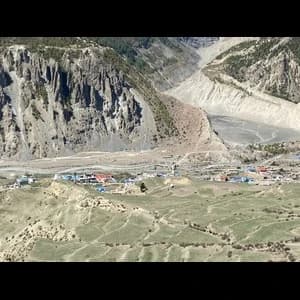
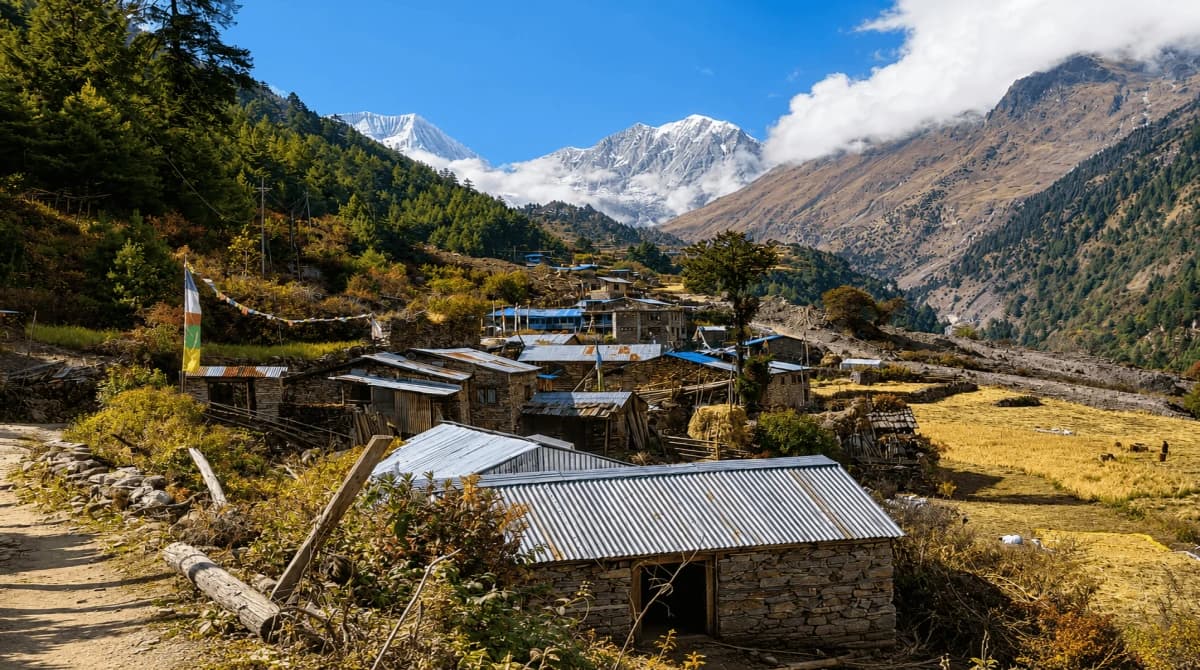
Tsum Valley sits north of the main Manaslu trail, sealed off from the outside world until 2008 and still visited by only a few hundred trekkers each season. This 11-day itinerary takes you up the Budhi Gandaki gorge, through the valley's Tibetan Buddhist villages to Mu Gompa, and back the same way. No flights, no high pass, no circuit logistics.

Eleven days is the honest minimum for doing Tsum properly. Shorter itineraries exist on paper, but they either skip Mu Gompa or push altitude gains that invite sickness. Our guide Pemba Sherpa is blunt about it: "People rush Tsum and see the trail. Eleven days, you see the valley."

Quick Facts: Tsum Valley Trek (11 Days)

Duration 11 days, Kathmandu to Kathmandu
Total distance About 170 km round trip, 10 to 18 km per day
Highest point Mu Gompa, 3,700m. No high pass
Difficulty Moderate. Long walking days, modest altitude
Cost From USD 699 per person, group discounts apply
Permits Tsum Valley RAP + MCAP. No ACAP, no TIMS
Guide Licensed guide mandatory (restricted area rule)
Best time March to May, late September to November
Start / End Kathmandu to Machha Khola by jeep, both ways

Why Choose the 11 Days Tsum Valley Trek?

Tsum Valley Trek 11 Days Highlights

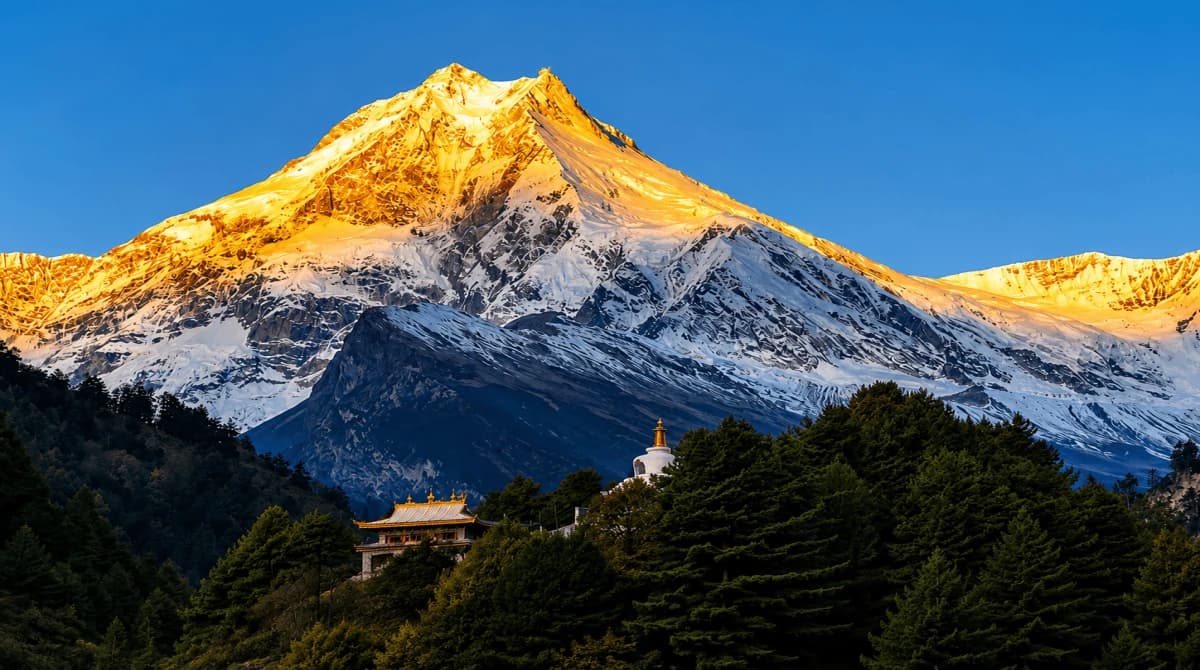
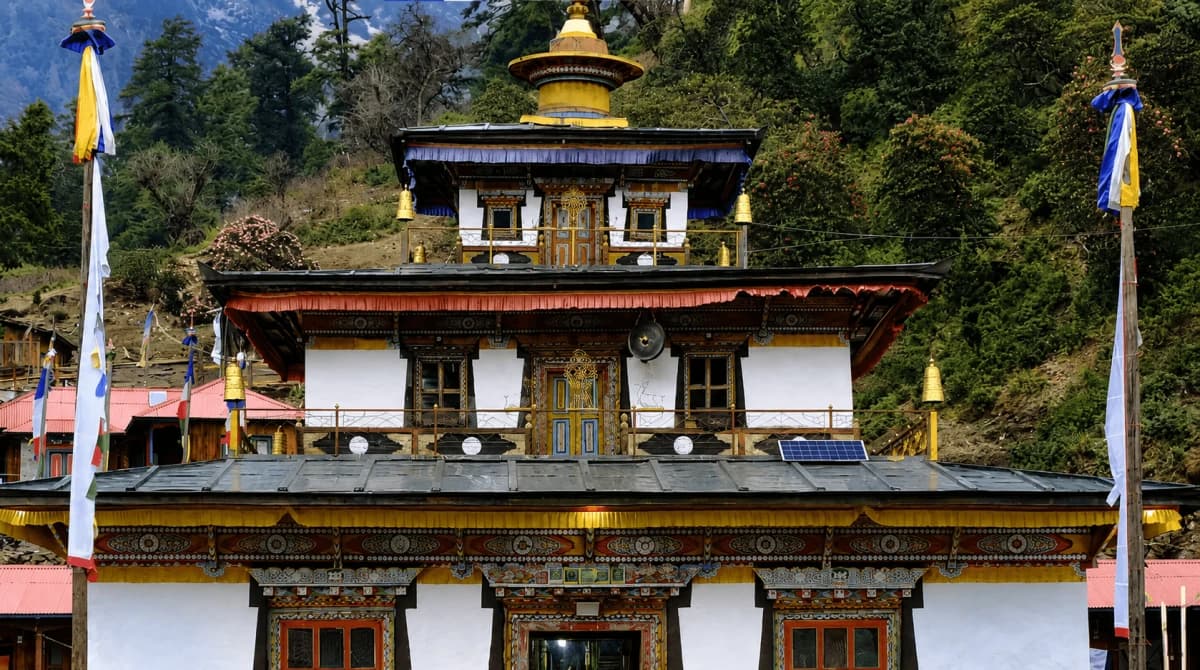
  • Mu Gompa (3,700m), a working monastery of around 100 monks near the Tibetan border, the highest and most remote point of the trek
  • Rachen Gompa, a large nunnery on the valley floor where morning prayers echo across glacial fields
  • Milarepa's Cave (Piren Phu), the meditation cave of Tibet's most famous poet-saint, with ancient carvings still visible in the rock
  • The Shyagya tradition, a community-wide non-violence vow that has banned hunting and animal slaughter in Tsum for over a century
  • Views of Ganesh Himal, Sringi Himal, and Boudha Himal framing the valley on three sides
  • Trails with fewer than 10 trekkers on most days, even in peak October
  • maximum altitude of 3,700m, which keeps altitude sickness risk far lower than any circuit trek

How Much Does the Tsum Valley Trek 11 Days Cost?

Our Tsum Valley trek cost starts at USD 699 per person for the full 11-day package. Larger groups pay less per person because guide, porter, and jeep costs are shared.

Group size Price per person (USD)
Solo trekker $845
2 to 4 people $775
5 to 8 people $729
9 or more

$699


Why Does Group Size Change the Price?

A private jeep to and from the trailhead, a licensed guide's daily wage, and permit paperwork cost roughly the same whether you travel alone or with nine other trekkers. Split across more people, those fixed costs shrink per head. Solo trekkers pay more because they cover the full jeep hire and guide day rate on their own, not because we charge a solo penalty.

Which Permits Do You Need for the Tsum Valley Trek?

Only two, and we arrange both. This is one of the biggest cost advantages of trekking Tsum on its own. You skip the Manaslu RAP and the ACAP that circuit trekkers must buy, and a TIMS card is not required in this region at all.

Permit Autumn (Sep to Nov) Other months
Tsum Valley Restricted Area Permit USD 40 first week, USD 7 per extra day USD 30 first week, USD 7 per extra day
Manaslu Conservation Area Permit (MCAP) NPR 3,000

The Chumnubri Rural Municipality also collects a local fee of NPR 1,000 to 2,000 at Jagat, paid on the spot. A word of caution: several trekking websites publish permit tables that mix up the Tsum Valley and Manaslu permit fees, or list the ACAP you do not need on this route. Check figures against the Department of Immigration before trusting any blog, including ours if you are reading this long after publication.

Can you trek Tsum Valley solo? Yes, with a private guide. Since March 22, 2026, Nepal's Department of Immigration no longer requires a two-person minimum for restricted area permits, but a licensed guide remains mandatory.

How Difficult Is the Tsum Valley Trek 11 Days?

Moderate, and refreshingly so. The maximum altitude of 3,700m sits right at the threshold where altitude sickness usually begins, and you sleep there just one night before descending. There is no pass crossing, no 3 am start, and no snow travel in normal seasons.

What makes it moderate rather than easy: the walking days. You cover 10 to 18 km daily for nine straight days on rocky, sometimes steep trails, with two long 8 to 9 hour jeep rides bookending the trek. Teahouses in Upper Tsum are basic, with shared bathrooms and simple menus.

This trek is right for you if

  • You can walk 5 to 7 hours a day and have done at least some multi-day hiking
  • You want Tibetan Buddhist culture as the centrepiece, not a side note
  • You have around two weeks of holiday including travel to Nepal
  • You want a restricted area trek without high pass risk

Choose a different trek if

Phone Signal, WiFi, and Charging in Tsum Valley: Village by Village

This is the question every trekker asks us at the briefing and almost no website answers properly. Here is what our guides report from the trail, village by village. Treat it as a guide, not a guarantee. Himalayan networks change with the weather.

Village Mobile signal WiFi Charging
Machha Khola, Jagat NTC and Ncell, usable data Most teahouses, paid In room or dining hall, small fee
Lokpa, Chumling Patchy NTC, calls better than data Some teahouses, slow, paid Dining hall only, solar dependent
Chhokangparo, Nile Weak to none, ridge spots only Rare Solar, evenings only, NPR 300 to 500
Mu Gompa None. Enjoy it None Very limited solar

Our practical advice: buy an NTC SIM in Kathmandu (it outperforms Ncell in the Budhi Gandaki), download offline maps before day 2, carry a 20,000 mAh power bank, and tell family to expect silence between days 5 and 8. Your guide carries a phone that finds signal at known ridge points for genuine emergencies, and teahouses keep landlines.

One more thing no packing list mentions: there are no ATMs beyond the trailhead. Withdraw all your personal cash in Kathmandu. Budget NPR 1,000 to 1,500 per day for drinks, showers, and charging, in small notes, because teahouses rarely change a 1,000 rupee bill.

Can You Time Your Trek with a Tsum Valley Festival?

Yes, and it transforms the trip. Tsum's festivals are village celebrations, not tourist performances, and trekkers who land on the right dates get invited in. Three are worth planning around:

  • Lhosar (Tibetan New Year), usually February to early March. Homes open, chhang flows, and masked dances run at the larger gompas. Cold trekking, unforgettable culture
  • Saka Dawa, May to early June. The month honouring Buddha's birth and enlightenment. Expect processions, extra prayers at Rachen and Mu Gompa, and the Shyagya non-violence vows publicly renewed
  • Dhachyang, the Tsum horse festival, usually August. Riders race decorated horses between villages in Upper Tsum. It falls in monsoon, so trails are wet, but the spectacle is unique to this valley

Festival dates follow the lunar calendar and shift every year. Tell us your travel window and we will check whether a festival falls inside it before you book. That is a two-minute WhatsApp message that can upgrade your whole trek.

Check dates and availability for your season. Message +977 9851017941 on WhatsApp and get festival dates plus a personalised quote within 24 hours.

When Is the Best Time for the Tsum Valley Trek?

Late September to November is the best time for the Tsum Valley Trek. Post-monsoon skies stay clear, harvest fills the terraced fields of Upper Tsum, and daytime temperatures are comfortable up to Mu Gompa. March to May comes a close second, with rhododendrons blooming below Chumling and Saka Dawa falling in late spring.

Because the trek tops out at 3,700m, Tsum handles the shoulder seasons better than circuit treks. Early December and late February are genuinely workable for trekkers who accept cold nights. Monsoon (June to mid-September) brings leeches, landslide risk on the road, and clouded views, though the Dhachyang festival gives August a reason some travellers accept the trade.

Tsum Valley 11 Days vs Our Other Tsum Treks

  11 Days (this trek) 14 to 16 Days Monastery Trek 12 to 14 Days
Best for Limited holiday time, fit walkers Full valley immersion, side hikes Pilgrimage and monastery focus
Extras included Core route to Mu Gompa Gumba Lungdang, rest days Overnight monastery stays
Daily pace Faster, 5 to 7 hrs Relaxed, 4 to 6 hrs Relaxed, gompa time built in
Cost from $699 $899 $999
Page You are here Tsum Valley Trek Monastery Trek

Still weighing Tsum against the full circuit? The Manaslu Circuit Trek with Tsum Valley covers both in 18 days if your holiday allows it.

also add bullet point with one line explain

Why Book the Tsum Valley Trek with Thrill Himalaya?

We are a local, Nepali-owned trekking agency based in Kathmandu, registered with the Nepal Tourism Board (Reg. No. 3303/81/82) and a TAAN member, with many years of experience running treks in the Manaslu region. Several of our guides grew up in the Budhi Gandaki villages this route passes through, which is exactly why the connectivity table and festival dates on this page come from firsthand knowledge of the trail, not copied from other websites.

  • Locally owned and registered – A Kathmandu-based agency licensed by the Nepal Tourism Board and TAAN, not a foreign booking platform reselling local operators.
  • Guides from the region – Several guides grew up in the Budhi Gandaki villages you'll walk through, not just trained on the route.
  • Firsthand trail knowledge – Connectivity, festival dates, and teahouse details on this page come from our own guides walking the trail, not from other websites.
  • Years of regional experience – Many years of focused experience running treks specifically in the Manaslu and Tsum Valley region.
  • Direct, no-layer support – You deal directly with us before and during the trek, with 24/7 WhatsApp contact, not a third-party call center.

How Do You Book the Tsum Valley Trek 11 Days?

  1. Send an enquiry on WhatsApp or email with your dates and group size
  2. Get your personalised quote within 24 hours, including festival date checks for your window
  3. Confirm with a deposit, and we lock in your guide and transport
  4. Send your passport scan and photos so both permits are ready before you land
  5. Arrive in Kathmandu for airport pickup and your personal pre-trek briefing



Itinerary
Trip PlanExpand all

Highlights: Trishuli River valley · Terraced hillside villages · First views of the Budhi Gandaki · Arrival in the Manaslu region

Your trek begins with a drive west out of Kathmandu along the Prithvi Highway, following the Trishuli River before turning north through Dhading Besi. The road narrows and roughens past Arughat, running alongside the Budhi Gandaki River for the final stretch into Machha Khola, a small riverside village that marks your entry into the Manaslu region.

Good to know: If you are driving in a private jeep, ask your driver to stop wherever a view, a temple, or a tea break catches your eye. The road itself is part of the experience, with jungle, terraced fields, and glimpses of Ganesh Himal along the way.

Note: A private jeep is available on request for this transfer if you prefer a more comfortable and flexible ride than the public bus.

Max Altitude: 930m / 3,051ftMeals: Lunch, DinnerAccommodation: Teahouse, Machha KholaMode of Transportation: Local Bus

Highlights: Suspension bridge crossings · Tatopani hot spring · Dobhan riverside lunch stop · Jagat permit checkpoint

Your first day on the trail eases you in with rolling terrain along the Budhi Gandaki. After crossing your first suspension bridge, the trail climbs gently to Tatopani, where a natural hot spring bubbles up beneath the cliffs, a good excuse for a short soak if you have the time. From here you continue along the river to Dobhan for lunch, then cross the Yaru Khola and follow easier ground into Jagat, a neatly flagstoned Gurung village where your permits are checked and the municipality fee for the Manaslu Conservation Area is collected.

Good to know: Jagat is the official checkpoint for the Manaslu Conservation Area, so keep your permits accessible in your daypack rather than buried in your duffel. Your guide handles the paperwork, so this is usually a quick stop.

Max Altitude: 1,340m / 4,396ftMeals: Breakfast, Lunch, DinnerAccommodation: Teahouse, JagatMode of Transportation: On Foot Trekking
Max Altitude: 2,240m / 7,349ftMeals: Breakfast, Lunch, DinnerAccommodation: Teahouse, LokpaMode of Transportation: On Foot Trekking

Highlights: Steep forested climb to Sardi Danda · First alpine forest views · Chumling's stone-paved village · Panago and Gurwa Gompas

Today is short in distance but firm in effort, climbing steadily through dense forest to the ridge at Sardi Danda before descending into Chumling. Stone-paved paths, traditional Tibetan-style houses, and two of the valley's older monasteries, Panago Gompa and Gurwa Gompa, make Chumling a memorable first overnight inside Tsum Valley proper.

Good to know: You will usually arrive in Chumling with plenty of daylight left. It is worth the short walk up to Gurwa Gompa in the afternoon light, when the village and the surrounding peaks are at their most photogenic.

Max Altitude: 2,386m / 7,825ftMeals: Breakfast, Lunch, DinnerAccommodation: Teahouse, ChumlingMode of Transportation: On Foot Trekking
Max Altitude: 3,031m / 9,944ftMeals: Breakfast, Lunch, DinnerAccommodation: Teahouse, ChhokangparoMode of Transportation: On Foot Trekking

Highlights: Lamagaon village · Rachen Gompa nunnery · Tibetan-style architecture · Panoramic views of Ganesh, Shringi, and Kipu Himal

Heading further into Upper Tsum, the trail passes through Lamagaon before reaching Rachen Gompa, a working nunnery and monastery school where around 300 young monks and nuns study. It is one of the most active religious sites in the valley and well worth an unhurried visit before continuing on to Nile, a small, picturesque village that opens up to panoramic views of Ganesh Himal, Shringi Himal, and several other peaks along the Tibetan border.

Good to know: Rachen Gompa welcomes respectful visitors, and mornings often catch the nunnery in the middle of its daily prayer routine. Ask your guide about the best time to stop by.

Max Altitude: 3,361m / 11,024ftMeals: Breakfast, Lunch, DinnerAccommodation: Teahouse, NileMode of Transportation: On Foot Trekking

Highlights: Mu Gompa, the largest monastery in Tsum Valley · Ancient wall murals · Views toward the Tibetan border · Resident monks and daily prayer

A relatively easy uphill walk along the river brings you to Mu Gompa, the highest point of this trek and the spiritual heart of Tsum Valley. Home to dozens of monks, the monastery is filled with centuries-old murals of Tara and Guru Padmasambhava, and its position near the Tibetan border gives it a genuinely remote, high-altitude feel. After exploring the monastery grounds and, if timing allows, joining a prayer session, you retrace your steps back down to Nile for the night.

Good to know: Since you return to Nile rather than sleeping at Mu Gompa, you get to enjoy the full high point of the trek without carrying your overnight gear up. Pack a light daypack and take your time at the monastery.

Max Altitude: 3,700m / 12,139ftMeals: Breakfast, Lunch, DinnerAccommodation: Teahouse, NileMode of Transportation: On Foot Trekking

Highlights: Milarepa's Cave (Piren Phu) · Views back across Upper Tsum · Chhokangparo · Long, steady descent through forest

Heading back down valley, the trail passes near Milarepa's Cave, where the revered 11th century yogi and poet is said to have meditated during his travels between Nepal and Tibet. From here, the trail continues down through Chhokangparo and keeps descending through forest and farmland all the way to Chumling, retracing familiar ground in a completely different light heading downhill.

Good to know: It is a long day by distance, but the descent means it moves faster underfoot than the numbers suggest. The afternoon light on this stretch, especially around Chhokangparo, is some of the best for photography on the entire trek.

Max Altitude: 2,386m / 7,825ftMeals: Breakfast, Lunch, DinnerAccommodation: Teahouse, ChumlingMode of Transportation: On Foot Trekking

Highlights: Descent through Lokpa · Cliffside trail in reverse · Chisapani viewpoint · Return to the main Manaslu trail at Philim

The trail retraces its way down through Lokpa and along the same cliffside stretch you climbed on Day 3, though the views feel new heading downhill. Past Chisapani, you rejoin the main Manaslu Circuit trail at Philim, officially marking your exit from the restricted Tsum Valley area.

Good to know: Philim has a small market where you can pick up snacks or souvenirs, and its Tsum permit checkpoint means this is your last formal stop inside the restricted zone.

Max Altitude: 1,570m / 5,151ftMeals: Breakfast, Lunch, DinnerAccommodation: Teahouse, PhilimMode of Transportation: On Foot Trekking

Highlights: Jagat · Familiar riverside trail · Tatopani hot spring · Final night on the trail

This is the longest trekking day of the itinerary, but it is almost entirely downhill or flat along the Budhi Gandaki, retracing your route through Jagat, Dobhan, and Tatopani back to Machha Khola. If your legs are willing, the hot spring at Tatopani is a well-earned stop before the final stretch into Machha Khola for your last night on the trail.

Good to know: Because the elevation loss does most of the work today, this long distance covers ground faster than a climbing day of the same length. Starting early gives you a relaxed pace with time to enjoy the hot spring along the way.

Max Altitude: 930m / 3,051ftMeals: Breakfast, Lunch, DinnerAccommodation: Teahouse, Machha KholaMode of Transportation: On Foot Trekking

Highlights: Final views of the Budhi Gandaki valley · Arughat and Dhading Besi · Return to Kathmandu · Farewell dinner and Trekking Certificate

Your final day retraces the drive back through Arughat and Dhading Besi to Kathmandu, giving you one last look at the hills and valleys you trekked through on your way in. Once you arrive in Kathmandu, the rest of the day is yours to rest, explore Thamel, or simply unwind before the evening. In the evening, join your guide for a farewell dinner to celebrate eleven days in one of the least visited corners of the Himalayas, where Thrill Himalaya Treks presents you with your official Trekking Completion Certificate, a lasting memory of the journey.

Note: A private jeep is available on request for this return transfer as well, for a smoother and faster ride back into the city.

Max Altitude: 1,400m / 4,593ftMeals: Breakfast, Lunch, Farewell Dinner
Start planning today.
Our travel experts are here to help. Our travel experts are here to help. Our travel experts are here to help.
Cost Details
Includes

What the Price Includes

  • Both permits: Tsum Valley Restricted Area Permit and MCAP
  • Nepal government-certified guide with wilderness first aid training, plus porters (one per two trekkers)
  • All teahouse accommodation and three meals a day on the trek
  • Private jeep from Kathmandu to Machha Khola and back
  • Complimentary sleeping bag, down jacket, and duffel bag for the trek
  • Water purification tablets for the full trek
  • Airport transfers and a personal briefing in Kathmandu before departure
  • 24/7 WhatsApp support and emergency coordination
  • Trekking completion certificate
  • Farewell dinner in Kathmandu
Excludes

What It Does Not Include

  • International flights and Nepal visa
  • Travel insurance with helicopter evacuation cover (mandatory, we check it at your briefing)
  • Drinks, hot showers, charging, and WiFi in teahouses (budget USD 5 to 10 per day)
  • Tips for your guide and porters
Essential Information

Accommodation on the Tsum Valley Trek

You stay in family-run teahouses every night, not hotels. Expect a simple twin room with a wooden bed, a thin mattress, and a blanket that is rarely warm enough alone, so bring a proper sleeping bag. Bathrooms are shared and usually a squat toilet, with attached bathrooms only in Machha Khola, Jagat, and a few Chekampar lodges. Hot showers and charging cost extra almost everywhere.

Rooms are decent and roomy in the lower villages, Machha Khola, Jagat, and Lokpa, then get more basic as you climb into the valley proper. Chumling and Chekampar are simple but comfortable. Mu Gompa, the highest overnight stop, has the most basic lodging on the route, with limited beds, so we recommend booking early in peak season. Rooms are not pre-booked bed by bed; your guide calls or walks ahead to reserve space at each stop.

Food and Meals During the Trek

Dal bhat, rice with lentil soup, vegetable curry, and pickle, is the trek's staple meal, and most teahouses offer free refills, which matters on long trekking days. Alongside it, menus offer noodles, fried rice, thukpa, momo, potatoes, and porridge or eggs for breakfast.

Choice narrows the higher you climb. Machha Khola and Jagat have the widest menus. By Chekampar and Mu Gompa, expect two or three simple options rather than a full menu, since ingredients above Chumling have to be carried in on foot or by mule. Meat is available lower down, but we recommend vegetarian dishes once you enter Tsum Valley proper, both because fresh meat storage gets less reliable at altitude and because Tsum Valley itself follows a Buddhist non-violence tradition where local killing of animals for food is not practiced.

Vegetarian and vegan trekkers are well catered for since dal bhat is naturally plant-based. Tell us about allergies when you book so we can brief teahouse owners in advance. Bring a few energy bars or trail mix for variety, but plan to eat the bulk of your meals at your teahouse, since lodge owners rely on food sales, not room rates, to make a living.

Drinking Water and Hydration

Aim for 3 to 4 litres of water a day. Dehydration makes tiredness and headaches worse at altitude, so this matters even on a trek that tops out lower than the Manaslu Circuit.

Do not drink untreated tap or stream water anywhere on this route. It looks clean but is not tested. Your options are boiled water bought from the teahouse, a water filter or purification tablets, or a UV steriliser pen. Bottled water is sold along most of the route but gets expensive higher up and adds to plastic waste in a valley with no rubbish collection. We recommend a refillable bottle plus tablets or a filter as your main system.

Safety Tips

Tsum Valley is remote. Once you pass Jagat there is no road, no hospital, and rescue depends on a helicopter being able to fly, which weather does not always allow. That reality shapes how we run this trek.

Trek with a licensed guide at all times, which is legally required in this restricted area and also simply safer, since your guide knows the trail, the teahouses, and how to read a change in your condition. Buy travel insurance that covers high-altitude trekking and helicopter evacuation, since standard travel insurance usually excludes it. Carry copies of your permits and passport at every checkpoint. Watch footing on exposed sections of the lower Budhi Gandaki gorge, particularly just after rain. And tell your guide immediately if you feel unwell, since small problems caught early rarely become large ones.

Altitude and Acclimatization

This is one place the Tsum Valley Trek genuinely has an edge over its neighbours. The highest point is Mu Gompa at 3,700m, well below the Manaslu Circuit's 5,106m pass, so the altitude-related risk here is meaningfully lower. That does not mean acclimatization is optional. You still gain height steadily from 900m to 3,700m over a week, and the built-in acclimatization day at Nile before the Mu Gompa push gives your body time to adjust.

Ascend slowly, drink plenty of water, and avoid alcohol above 3,000m. Mild headache, tiredness, or poor appetite are common and usually settle with rest. A worsening headache despite rest, confusion, or shortness of breath at rest are signs to descend, and your guide is trained to make that call.

Weather and Packing Essentials

Daytime temperatures on a clear day feel pleasant in the lower villages, often 15 to 20°C. Nights get cold fast once you climb past Chumling, and Mu Gompa can drop well below freezing even in good months. Pack in layers for both extremes in the same day.

Bring moisture-wicking base layers, a fleece or light insulation layer, and a down jacket for evenings. Add a waterproof, windproof outer shell, a warm hat, gloves, and UV-protection sunglasses. For footwear, broken-in waterproof hiking boots, warm socks, and camp shoes for evenings. For sleep and comfort, a sleeping bag rated to at least -10°C, trekking poles, and a headlamp with spare batteries. For sun and hygiene, SPF 50 sunscreen, hand sanitiser, wet wipes, and a personal first-aid kit. And for power and money, a power bank of 20,000mAh or more, a universal adaptor, and enough Nepali cash for the whole trip, since there are no ATMs past the trailhead.

Common Health Risks and How to Avoid Them

Altitude sickness is possible above 3,000m even at Tsum's lower ceiling: ascend gradually, hydrate, and descend at the first serious symptom. Dehydration creeps up in thin mountain air: drink 3 to 4 litres daily. Waterborne illness comes from untreated water: boil, filter, or purify every time. Sunburn and glare are stronger than they feel at altitude: use SPF 50 daily and wear proper sunglasses. Blisters and knee strain come from new boots and steep descents: break in your boots beforehand and use trekking poles. Colds and stomach upsets spread through shared teahouse spaces: wash or sanitise your hands before eating and stick to freshly cooked food.

Know Before You Go

There are no ATMs once you leave the trailhead, so bring enough Nepali cash for the full trek including tips. WiFi and mobile signal are patchy from Lokpa onward and mostly absent at Mu Gompa. Hot showers and device charging almost always cost extra above Machha Khola. Meals and rooms are usually billed together at your overnight teahouse. Pack a soft-sided duffel bag for your porter, no wheels or hard frames, plus a daypack for what you carry yourself. And start cardio and stair or hill training at least four to six weeks before you fly, since Tsum's daily walking hours add up even without a high pass.

What Thrill Himalaya Does That Most Agencies Don't

1. A Home-Village Stop with Your Guide
Several of our guides grew up in the Budhi Gandaki villages this route passes through, not just trained to walk it. Where the itinerary allows, we build in a short stop at or near a guide's home village, a cup of tea with family, a real conversation about how life in Tsum has changed. Most agencies assign a guide who knows the trail. We can put you in an actual local's own valley, which no outside operator, however experienced, can offer.

2. A Morning Room Confirmation, Every Day
Bed numbers get tight at Chekampar and especially Mu Gompa in peak season, and most agencies simply tell you to "book early" and hope. Our guide calls or messages ahead each morning to confirm your room at the next stop before you set off, not the night before, not on arrival. You get real confirmation before you start walking, not a surprise when you reach a full teahouse after a seven-hour day.

Need Help?
Feel free to call or WhatsApp our expert.
Need Help? Call Us.+977 9851017941