Everest Base Camp Trekking
Everest Base Camp Trek Itinerary
Everest Base Camp

Everest Base Camp Trek - 14 Days

40 reviews in TripAdvisor
Recommended by 99% of travelers
Duration14 Days
Trip GradeModerate
Maximum Altitude5545m
Group SizeMin. 2 pax
StartsKathmandu
EndsKathmandu
ActivitiesTrekking and Hike
Best TimeMar-May & Sep-Dec

The Everest Base Camp Trek (EBC Trek) is one of the most sought-after trekking adventures in the world. Every year, thrill-seekers and trekking enthusiasts from across the globe set out to conquer the trails that lead them to the base of Mount Everest. As you embark on this journey, one question dominates


Quick Overview: Everest Base Camp Trek (2026/2027)

Before diving into the details, here is a summary of the essential trek facts to help you plan your journey with Thrill Himalaya:

  • All-Inclusive Cost: USD 1,250 – 1,600 (Standard 14-day group)
  • Duration: 12–14 Days (Recommended for safe acclimatization)
  • Max Altitude: 5,545m / 18,192ft (Kala Patthar Viewpoint)
  • Trek Distance: 130 km (80 miles) round trip from Lukla
  • Best Seasons: Spring (Mar–May) & Autumn (Sep–Nov)
  • Permits Required: Khumbu Pasang Lhamu & Sagarmatha National Park
  • 2026 Regulation: Licensed Guide Mandatory (No solo trekking)

Overview of the Everest Base Camp Trek Experience: What to Expect in the Khumbu Region (2026/2027)

The Everest Base Camp Trek offers more than just a physical challenge; it’s a life-changing Himalayan adventure. Your journey begins with a legendary flight to Lukla—the gateway to the giants. In 2026/2027, most peak-season flights depart from Manthali (Ramechhap) to ensure reliability, and our team handles all the logistics for this transition.

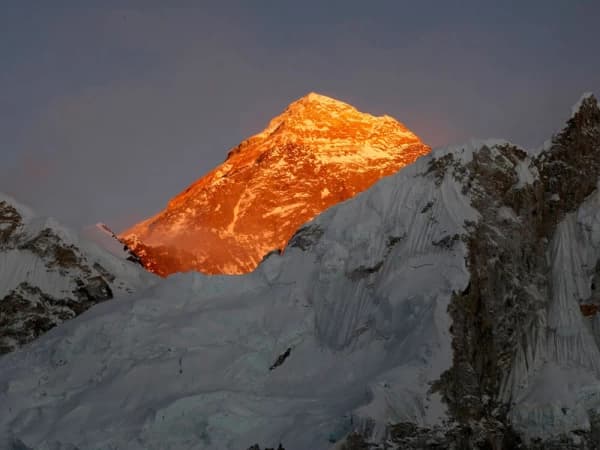
The trail takes you through vibrant Sherpa hubs like Namche Bazaar, across high-suspension bridges draped in prayer flags, and through the ancient rhododendron forests of Sagarmatha National Park. As you navigate the route, you’ll gradually ascend to iconic viewpoints like Kala Patthar (5,545m) for the world's most famous sunrise over Mt. Everest.

Beyond the landscapes, you'll experience the deep spiritual beauty of the Khumbu, the camaraderie of fellow trekkers, and the safety of our mandatory government-licensed guides. Whether you’re pushing your physical limits or soaking in the breathtaking views, this is an unforgettable journey that continues to draw thousands of adventurers to the roof of the world.


What’s Included in the Everest Base Camp Trekking Cost?

At Thrill Himalaya, we believe in transparent pricing. Our 2026/2027 packages are designed to cover all essential logistics so you can focus on the trail.

  • Flights & Shared Transport: Round-trip Lukla flight tickets. During peak seasons, this includes sharing-basis transport (Tourist Bus or Hiace) from Kathmandu to Manthali (Ramechhap) Airport.
  • Expert Support Team:A Government-Licensed Guide (as per 2026 regulations) and strong porters (1 porter for every 2 trekkers) to assist and ensure your safety.
  • Permits & Paperwork: All entry fees, including the Khumbu Pasang Lhamu Rural Municipality Permit and the Sagarmatha National Park Entry Permit.
  • Accommodation: 2 nights in a 3-star Kathmandu hotel and 11 nights in comfortable, hand-picked teahouses along the trek.
  • Meals: Full board (Breakfast, Lunch, and Dinner) during the trek, including seasonal fruits.
  • Safety Standards: Daily health checks with an oximeter and a comprehensive first-aid medical kit carried by your guide.

How Much Does the Everest Base Camp Trek Cost in 2026/2027?

For 2026 and 2027 (EBC Trek Nepal), the cost of a standard 14-day Everest Base Camp Trek generally falls between $1,250 and $1,600 per person. This all-inclusive package with Thrill Himalaya Treks covers round-trip Lukla flights, 2026-mandated permits, government-licensed expert guides, and comfortable teahouse accommodations along the route.

Key Factors Affecting Your 2026  EBC Trek Budget

Mandatory Guide Rule:Under the strict 2026 Nepal Tourism Board regulations, solo trekking is no longer permitted. All foreign trekkers must be accompanied by a licensed guide. Our itineraries fully comply with this rule, ensuring both legal access to the Khumbu region and enhanced safety throughout the trek.

Peak Season Flight Logistics: During the main trekking seasons—Spring (March–May) and Autumn (September–November)flights to Lukla typically operate from Manthali (Ramechhap) instead of Kathmandu. To keep expenses predictable, we include shared transport (tourist bus or Hiace) from Kathmandu.

Group vs. Private Trek: Joining a group trek allows us to offer the lower $1,250 starting price, while private or customized treks for solo travelers or small groups fall toward the higher end of the cost range.

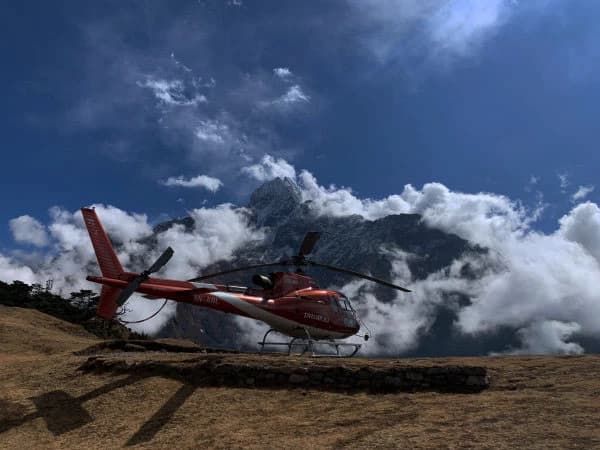
Optional Upgrade: Luxury add-ons such as private rooms with attached bathrooms in Namche Bazaar or a helicopter return from Gorak Shep will increase the overall investment.

Whether you’re evaluating 2026 regulation updates or deciding on the best time to visit Everest Base Camp, Thrill Himalaya delivers a safe, well-organized, and transparently priced trekking experience.


Everest Base Camp Trek Route 2026: The Classic Path to the Top

The Everest Base Camp (EBC) Trek route is a legendary 130 km round-trip journey through Nepal’s iconic Khumbu region. The adventure begins with a dramatic mountain flight to Lukla (2,860 m). From Lukla, the trail gradually climbs through the protected landscapes of Sagarmatha National Park, a UNESCO World Heritage Site known for towering Himalayan peaks, glaciers, and time-honored Sherpa culture.

The 14-Day EBC Route at a Glance (2026)

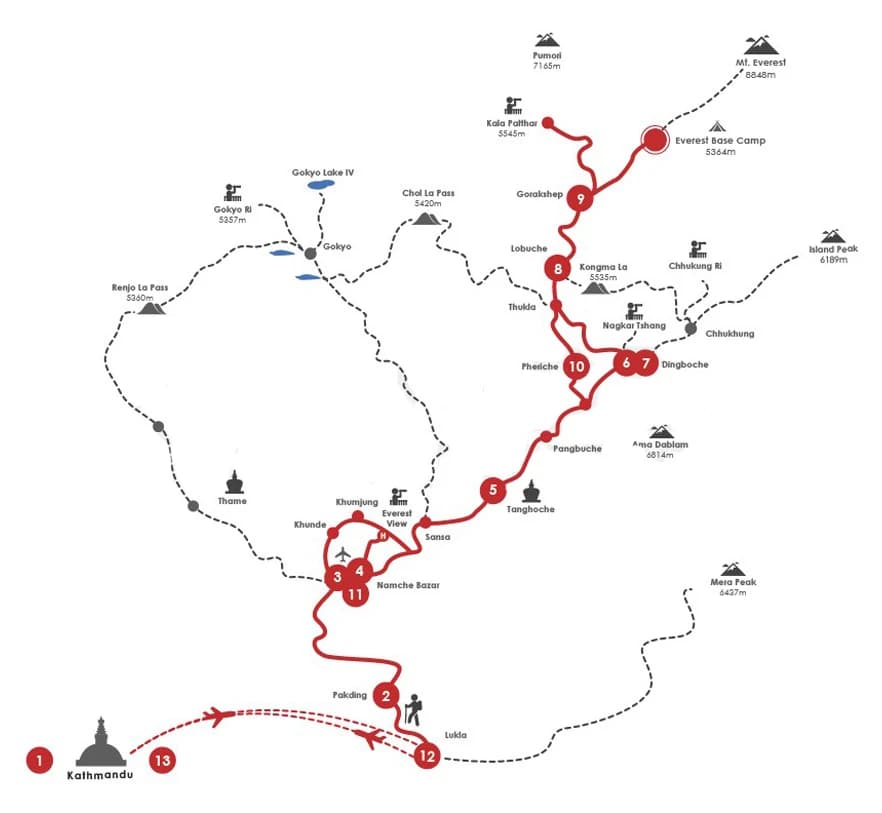
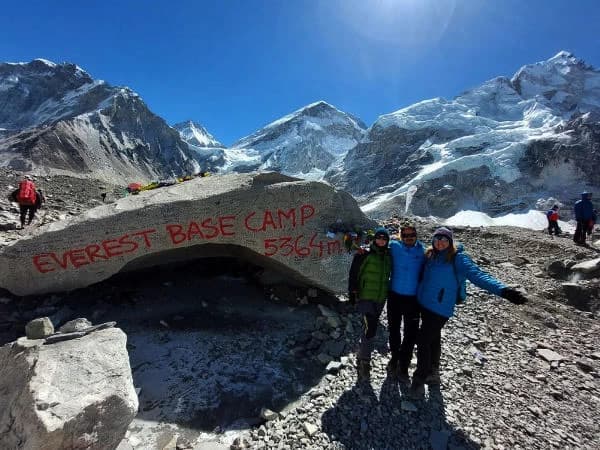
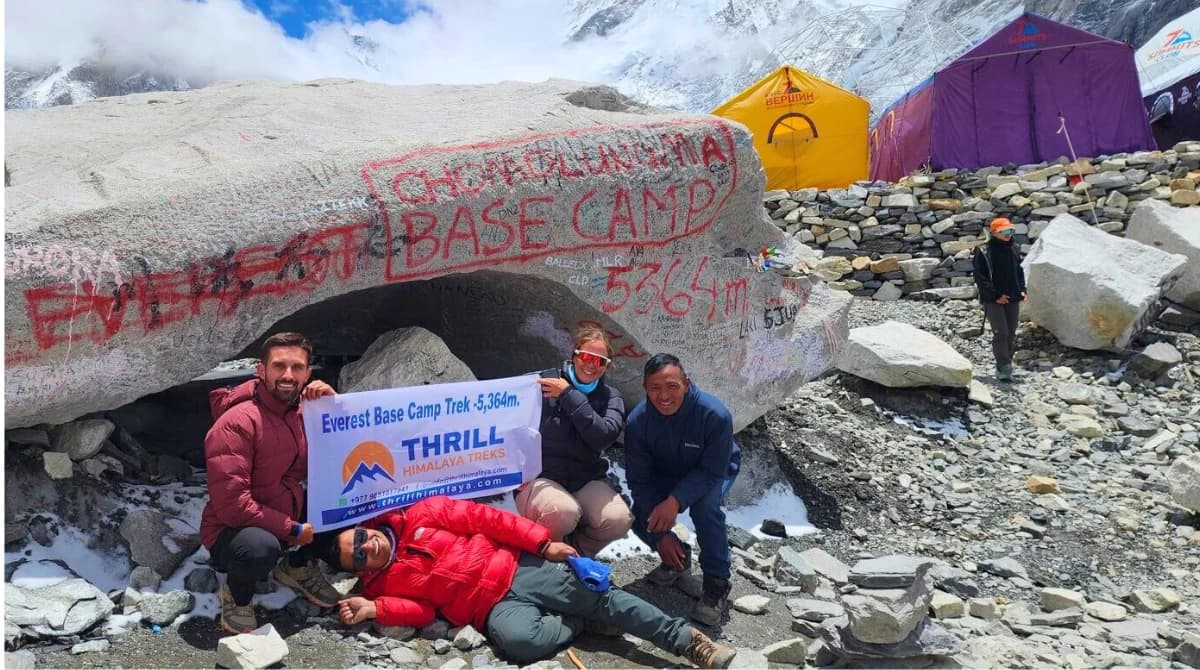
The classic route follows a world-renowned Sherpa trail designed for safe acclimatization and steady altitude gain. The first day reaches Phakding, an easy walk that helps your body adjust. The trail then climbs to Namche Bazaar (3,440 m), the cultural heart of the Khumbu and your first acclimatization stop. From there, you continue to Tengboche, home to the region’s most famous monastery and sweeping mountain views. The route then leads to Dingboche, a key village for adapting to thinner air before the final push. The journey culminates at Everest Base Camp (5,364 m), the historic goal of the trek, followed by the climb to Kala Patthar (5,545 m) for iconic sunrise views of Everest and Lhotse.

2026 Logistics Alert

During peak trekking seasons (March–May and October–November), flights to Lukla are often diverted to Manthali (Ramechhap) due to weather and air-traffic regulations. Thrill Himalaya manages all round-trip ground transfers from Kathmandu, ensuring the trek remains smooth, organized, and stress-free even during busy periods.

How Difficult Is the Everest Base Camp Trek?

The Everest Base Camp Trek difficulty is officially rated moderate to strenuous. No technical climbing or mountaineering skills are required. The challenge comes from consistent high-altitude walking, reduced oxygen levels, and daily endurance rather than from technical terrain.

Most trekking days involve 5–7 hours of walking, handled with a slow, steady pace to conserve energy. Altitude increases gradually to 5,545 meters at Kala Patthar, supported by two mandatory acclimatization days and daily oximeter health checks. While the trail includes rocky paths and steep moraines, expert government-licensed guides lead the way, keeping the route safe, manageable, and well supported from start to finish.


When is the Best Time to Trek Everest Base Camp?

 Picture Everest glowing at Kala Patthar sunrise—that's your 2026 goal. Two Golden Windows make it happen:

Autumn (Sep–Nov): Sharpest views post-monsoon. Crisp skies, dry trails. Early Nov = quieter magic.

Spring (Mar–May): Rhododendron bloom, warm days (10-15°C). April = perfect balance.


Everest Base Camp Trek Cost 2026: The Complete Price Breakdown

Planning your 14-day Everest Base Camp (EBC) Trek in 2026 should be simple and transparent. With Thrill Himalaya Treks, there are no hidden fees. The Everest Base Camp Trek costdecreases per person as group size increases, while safety standards, Sherpa-guided expertise, and all-inclusive service quality remain consistent—from solo trekkers to 15-person groups.

EBC Trek 2026 Prices (Per Person | USD | All-Inclusive)

  • 1 Person (Solo): $1,489 – Private licensed guide + dedicated porter (1:1)
  • 2 People: $1,379 – Private guide + shared porter (1:2)
  • 3–6 People: $1,349 – Group rate with lead guide & assistant
  • 7–10 People: $1,289 – Reduced group pricing with full support crew
  • 11–15 People: $1,239 – Best-value group rate with multiple assistant guides

Save up to $250 per person when trekking in larger groups—while enjoying the same premium Sherpa service, domestic flights, trekking permits, teahouse accommodation, and meals included across all pricing tiers.

Secure your 2026 Everest Base Camp adventure with Thrill Himalaya Treks—Kathmandu’s trusted local experts for all-inclusive, high-safety mountain expeditions.

Everest Base Camp Trek (EBC Trekking) Permits & Fees 2026/2027

Trekkers require two mandatory permits for the Everest region. For your convenience, Thrill Himalaya Treks includes both in your all-inclusive package price:

  • Sagarmatha National Park Permit: Grants access to the protected UNESCO World Heritage area (NPR 3,000).
  • Khumbu Pasang Lhamu Local Permit: A local government fee for trail and bridge maintenance (NPR 3,000).

Note: The TIMS card is no longer required for the Everest region. We handle all paperwork and digital registrations—just provide a passport copy and two photos upon booking.

14-Day Everest Base Camp Trekking Outline Itinerary | EBC Trek Nepal

Day 1: Arrive Kathmandu (1,300m) – hotel, briefing, gear check.​

Day 2: Fly Lukla (2,860m), trek Phakding (2,610m) – 3-4hr easy.​

Day 3: Phakding to Namche Bazaar (3,440m) – 6hr park entry.​

Day 4: Acclimatize Namche – Everest View hike, Sherpa culture.​

Day 5: Namche to Tengboche (3,860m) – 5-6hr monastery views.​

Day 6: Tengboche to Dingboche (4,360m) – 5-6hr ascent.​

Day 7: Acclimatize Dingboche – 5,000m viewpoint hike.​

Day 8: Dingboche to Lobuche (4,940m) – 5hr memorials.​

Day 9: Lobuche to Gorakshep/EBC (5,364m) – Base Camp visit.​

Day 10: Kala Patthar (5,545m) sunrise to Pheriche (4,240m).​

Day 11: Pheriche to Namche Bazaar (3,440m) – 7hr retrace.​

Day 12: Namche to Lukla (2,860m) – 8hr downhill.​

Day 13: Fly Lukla to Kathmandu – debrief, free time.​

Day 14: Depart Kathmandu – airport transfer.​

Itinerary
Trip PlanExpand all

Walking distance: Optional (1–2 km) | Time: Flexible | Altitude gain: Minimal

As soon as you land, our Thrill Himalaya Treks representative meets you at the airport and transfers you to your hotel in Thamel. We keep the day relaxed to help your body recover from travel. You attend a detailed trekking briefing covering the Everest Base Camp trek route, daily distances, altitude safety, and emergency planning based on real field experience. Gear is checked carefully, and rentals are arranged if needed.

Max Altitude: 1350 m/4429 ftAccommodation: Overnight: Hotel

Distance: 8 km | Time: 3–4 hours | Net descent: ~250m

You take an early scenic flight into the mountains, landing at Lukla—gateway to the Everest region. From here, your Everest Base Camp trek officially begins. The trail follows the Dudh Koshi River with gentle ups and downs, crossing suspension bridges and passing Sherpa villages. This easy walking day allows your legs and lungs to adjust naturally.

Max Altitude: 2860 m/9350 ftMeals: Breakfast, Lunch, and DinnerAccommodation: Teahouse

Distance: 11 km | Time: 5–6 hours | Ascent: ~830m

Today introduces real uphill trekking. You enter Sagarmatha National Park and cross several suspension bridges, including the famous Hillary Bridge. The final climb to Namche is steady and demanding, but rewarding. On clear days, you catch your first glimpse of Mount Everest, a powerful moment for every trekker.

Max Altitude: 3440 m/11286 ftMeals: Breakfast, Lunch, and DinnerAccommodation: Teahouse

You hike higher during the day and return to sleep lower, following the proven acclimatization rule. The walk toward Everest View Hotel offers stunning views of Everest, Lhotse, and Ama Dablam. This day plays a crucial role in making your Everest Base Camp trek safe and successful.

Max Altitude: 3440 m/11286 ftMeals: Breakfast, Lunch, and DinnerAccommodation: Teahouse

Distance: 10 km | Time: ~5 hours | Ascent/Descent: +420m / −300m

You walk along scenic ridges with wide mountain views, then descend before climbing again through forested trails. Tengboche welcomes you with its famous monastery and dramatic Ama Dablam backdrop. The atmosphere here feels calm, spiritual, and deeply Himalayan.

Max Altitude: 3860 m/12660 ftMeals: Breakfast, Lunch, and DinnerAccommodation: Teahouse

Distance: 15 km | Time: 6–7 hours | Ascent/Descent: +800m / −250m

The trail descends through Pangboche and crosses the Imja Khola before opening into a wide alpine valley. Trees thin out, winds increase, and the altitude becomes more noticeable. Dingboche sits in an exposed setting, clearly marking your entry into high-altitude trekking.

Max Altitude: 4410 m/14464 ftMeals: Breakfast, Lunch, and DinnerAccommodation: Teahouse

Distance: 4 km | Time: ~3 hours | Ascent/Descent: ~690m

You hike slowly uphill toward Nagarjuna Hill, focusing on breathing and pacing. Island Peak and nearby glaciers come into view. Guides monitor oxygen levels and overall condition closely, ensuring your body adapts properly before moving higher on the Everest Base Camp trek.

Max Altitude: 4410 m/14464 ftMeals: Breakfast, Lunch, and DinnerAccommodation: Teahouse

Distance: 7 km | Time: 4–5 hours | Ascent: ~530m

You pass the Thokla Pass memorials honoring climbers who lost their lives on Everest. The trail follows the rocky moraine of the Khumbu Glacier. The air is colder, the landscape harsher, and every step now requires focus and steady breathing.

Max Altitude: 4910 m/16105 ftMeals: Breakfast, Lunch, and DinnerAccommodation: Teahouse

Distance: 12 km | Time: 6–7 hours | High point: 5,364m

You carefully cross glacial terrain to reach Everest Base Camp itself. Prayer flags, expedition tents, and the roaring Khumbu Icefall surround you. After taking time to absorb the achievement, you return to Gorak Shep for overnight rest.

Max Altitude: 5180 m/16990 ftMeals: Breakfast, Lunch, and DinnerAccommodation: Teahouse

Distance: 12 km | Time: ~6 hours | Ascent/Descent: +381m / −1,305m

You climb Kala Patthar for the closest and clearest view of Mount Everest. The effort is intense but short. Afterward, a long descent brings immediate breathing relief as altitude drops, helping your body recover quickly.

Max Altitude: 5545 m/11283 ftMeals: Breakfast, Lunch, and DinnerAccommodation: Teahouse

Distance: 20 km | Time: 7–8 hours | Descent: ~1,200m

You retrace familiar trails as forests return and oxygen levels increase. Walking feels easier, energy improves, and villages feel lively again. Reaching Namche brings comfort after days spent at extreme altitude.

Max Altitude: 3440 m/11286 ftMeals: Breakfast, Lunch, and DinnerAccommodation: Teahouse

Distance: 19 km | Time: ~7 hours | Descent: ~580m

Your final trekking day follows familiar bridges and valleys. The pace is steady, giving you time to reflect on the entire Everest Base Camp trek. Arrival in Lukla officially marks the completion of your journey.

Max Altitude: 2850m/9350ftMeals: Breakfast, Lunch, and DinnerAccommodation: Teahouse

Flight time: ~35 minutes

You fly back over the Himalayas, watching the mountains slowly fade behind you. The transition back to Kathmandu feels rewarding after everything you’ve achieved on the trail.

Max Altitude: 1350 m/4429 ftMeals: Breakfast & Farewell DinnerAccommodation: 3 Star Hotel in Kathmandu

Airport transfer is arranged according to your flight schedule. Your Everest Base Camp trek officially ends, but the experience stays with you for life.

Meals: Breakfast
Start planning today.
Our travel experts are here to help. Our travel experts are here to help. Our travel experts are here to help.
Route Map
Everest Base Camp Trek Map
Cost Details
Includes
  • Airport Pick-Up & Drop-Off (Kathmandu): Private vehicle transfers for both arrival and departure to ensure a seamless transition.
  • Kathmandu Hotel Stay (2 Nights): Standard boutique hotel accommodation (twin-sharing) with breakfast included before and after your trek.
  • Domestic Flights (KTM ↔ Lukla): Round-trip flight tickets including required transfers (operates via Ramechhap in peak seasons per aviation regulations).
  • Teahouse Accommodation: 11 nights of twin-sharing rooms in hand-picked local trekking lodges along the Everest route.
  • Full Board Meals: Nutritional support including Breakfast, Lunch, and Dinner provided every day during the trek.
  • Experienced Trekking Guide: A government-licensed, English-speaking Himalayan expert to lead your journey and ensure safety.
  • Porter Support: Professional porters to carry main luggage (shared basis) including full insurance and gear for the staff.
  • Trekking Gear : High-quality Down Jacket and Sleeping Bag provided for use during the trek (to be returned after the trip).
  • Trek Permits & Entry Fees: All-inclusive Sagarmatha National Park entry and Khumbu Pasang Lhamu Rural Municipality permits.
  • Safety Support: Comprehensive first-aid kit and daily health monitoring (pulse oximeter) to track oxygen levels for safe acclimatization.
  • Achievement Certificate: An official Everest Base Camp Trek Completion Certificate to commemorate your successful journey.
  • Government Taxes: Transparent pricing with all VAT and service charges included—no hidden operational fees.
Excludes
  • Travel Insurance: Mandatory policy covering high-altitude rescue and helicopter evacuation.
  • Visa & Flights: Nepal entry visa ($30–$50) and international airfare.
  • City Meals: Lunch and dinner in Kathmandu.
  • Personal Gear: Trekking boots, poles, and personal clothing.
  • Trail Luxuries: Hot showers, Wi-Fi, battery charging, and laundry fees.
  • Beverages: Bottled water, soft drinks, and alcohol.
  • Tips: Gratuity for guide and porters (expected but optional).
  • Contingencies: Costs due to flight delays, weather, or changes not mentioned in the itinerary.
Essential Information

Useful Information About Everest Base Camp Trek – Thrill Himalaya Treks

Start your Everest Base Camp trek with Thrill Himalaya Treks for a safe and exciting adventure backed by a 100% success rate on 500+ expeditions and 5⭐ TripAdvisor reviews. This guide covers Everest Base Camp trek cost, best time for Everest Base Camp trek, Everest Base Camp trek difficulty, and everything you need for Everest Base Camp trek 2026.

How High is Everest Base Camp?

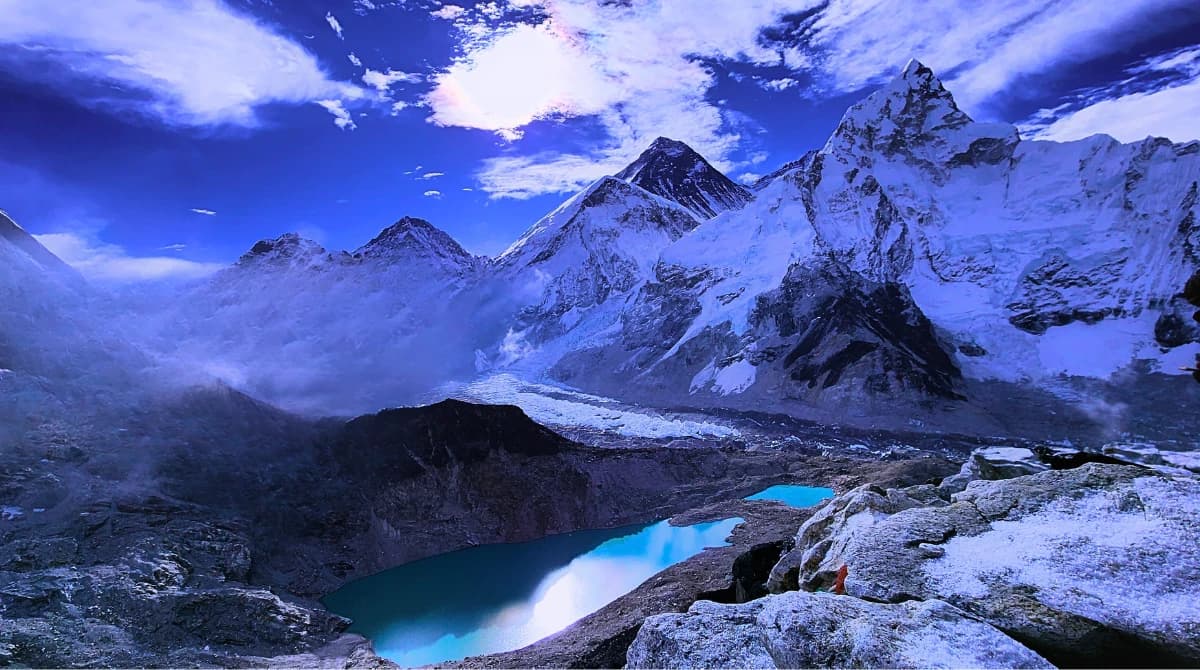
The Everest Base Camp elevation is 5,364 meters (17,598 feet). The highest point of the trek is Kala Patthar at 5,555 meters (18,225 feet), offering stunning views of Mount Everest, Nuptse, Lhotse, and the Khumbu Glacier on clear days.

Accommodation During Everest Base Camp Trek

The standard Everest Base Camp trek includes 2 nights in 3‑star hotels in Kathmandu and 11 nights in teahouses along the trail. Rooms are usually twin‑sharing with blankets. Rooms with attached bathrooms are available in Lukla, Phakding, and Namche at an extra cost.

Kathmandu accommodation is usually in Thamel, close to restaurants, trekking shops, and transport services.

Permits for Everest Base Camp Trekking

All required permits for the Everest Base Camp trek 2026/2027 are arranged in advance:

  • TIMS Permit
  • Sagarmatha National Park Permit
  • Khumbu Pasang Lhamu Rural Municipality Permit

How Safe is Everest Base Camp Trekking?

The Everest Base Camp trek is safe for healthy trekkers with proper preparation. Certified guides carry oximeters and first‑aid kits, and acclimatization days are built into the itinerary. Weather is the main challenge, so travel insurance for Everest Base Camp trek is strongly recommended.

How to Prevent Altitude Sickness During EBC Trek?

Altitude sickness can affect anyone. Prevention includes slow ascent, two acclimatization days (Namche and Dingboche), drinking plenty of water, eating carb‑rich meals, avoiding alcohol, and descending immediately if symptoms appear.

Best Time for Everest Base Camp Trekking

The best time for Everest Base Camp trek Nepal is:

  • Spring (March–May) – warmer days and blooming flowers
  • Autumn (September–November) – clear skies and stable weather

Winter is cold but quiet, while monsoon season has higher chances of flight delays.

Flying into Lukla – What to Know

The trek begins with a flight to Lukla. During peak seasons, flights often operate from Ramechhap, while off‑season flights usually depart from Kathmandu. Delays are common, so buffer days are recommended. Baggage allowance for Lukla flight is 15 kg per person.


Everest Base Camp Trek Packages

Available Everest Base Camp trek packages include:

  • Standard teahouse trek
  • Luxury Everest Base Camp trek
  • Everest Base Camp trek with helicopter return
  • Customized Everest Base Camp trek

Food During Everest Base Camp Trek

Meals are freshly prepared in teahouses. Most trekkers eat dal bhat, along with noodles, pasta, eggs, soups, and momos. Vegetarian food is recommended at higher altitudes for better digestion.

Can a Beginner Trek Everest Base Camp?

Yes. The Everest Base Camp trek for beginners is achievable with basic fitness, mental preparation, and proper acclimatization. No technical climbing skills are required.

Everest Base Camp Trek Training Program

Training should begin at least 6–8 weeks before the trek, focusing on cardio, stair climbing, strength training, and long walks with a backpack.

Internet & Charging on the EBC Trek

Wi‑Fi is available in many villages through prepaid cards. Charging devices usually costs extra, so carrying a power bank is recommended.

Extra Expenses During the Trek

Plan around USD 100–150 for personal expenses such as Wi‑Fi, charging, hot showers, snacks, and souvenirs.

Trip Extensions in Nepal

After your Everest Base Camp trek, you can enjoy river rafting, jungle safaris in Chitwan or Bardia, or adventure activities in Pokhara.

Everest Base Camp Packing List 2026

Planning to trek to Everest Base Camp in 2026? Packing the right gear can make or break your Himalayan adventure. Our expert team at Thrill Himalaya Treks has prepared this essential Everest Base Camp packing list to keep you safe, warm, and comfortable at every altitude. Use this as your go-to checklist before you take on the world’s most famous trek.

1. Clothing – Follow the Layering System

  • Dressing in layers keeps you warm, dry, and ready for any weather.
  • Base layers (2 sets): Thermal tops and bottoms made of moisture-wicking fabric.
  • Mid layer: Fleece or lightweight down jacket for insulation.
  • Outer shell: Waterproof and windproof jacket (add rain pants for extra protection).
  • Down jacket: A must for evenings in high-altitude lodges.
  • Trekking pants (2 pairs): Comfortable, quick-dry fabric.
  • Trekking shirts (2–3): Breathable and moisture-resistant.
  • Headwear: A wool hat for cold and a sun hat for daytime treks.
  • Gloves: Inner liner gloves and insulated outer gloves for warmth.
  • Socks (4–5 pairs): Go for wool or thermal socks for best comfort.
  • Underwear (5–7 pairs): Lightweight and easy to wash.

2. Footwear – Comfort for Every Step

  1. Trekking boots: Strong ankle support and well broken-in.
  2. Camp shoes: Lightweight sandals or slip-ons for use in tea houses.
  3. Gaiters (optional): Great for trekking in snow or dusty paths.

3. Sleeping Gear

  • Sleeping bag: Rated -15°C to -20°C to handle Himalayan nights.
  • Sleeping bag liner (optional): Adds warmth and keeps your bag clean.

4. Bags and Packing

  • Daypack (20–30L): Carry essentials while hiking.
  • Duffel bag (60–90L): For porters—ensure it’s durable and waterproof.
  • Dry bags / zip bags: Keep clothing and electronics protected from moisture.

5. Trekking Essentials

  • Trekking poles: Save your knees and boost stability.
  • Headlamp: With extra batteries for dim rooms and early starts.
  • Water system: Two reusable bottles or a hydration bladder.
  • Water purification: Use tablets, drops, or a filter bottle.
  • Sunglasses: Category 3 or 4 UV protection.
  • Sunscreen & lip balm: High SPF to prevent sunburn.
  • Quick-dry towel: Compact and easy to clean.
  • Toiletries: Toothbrush, face wipes, tissue, sanitizer, and small soap.
  • Power bank (20,000mAh+): Reliable charging source for your devices.
  • Universal travel adapter.

6. Health and Safety

  • First-aid kit: Band-aids, blister plasters, antiseptic wipes.
  • Medications: Painkillers, anti-diarrheal, ORS, antihistamines.
  • Diamox (optional): Consult your doctor before use.
  • Documents: Passport copy, insurance details, and passport photos.

7. Useful Extras

  • Snacks: Energy bars, nuts, and electrolyte sachets.
  • Earplugs: For noise-free sleep in tea houses.
  • Microspikes (seasonal): Essential for icy trails in winter or early spring.

Thrill Himalaya Tip:
Once your trek is booked, we’ll send you a final seasonal checklist tailored for your trekking month — whether it’s spring, autumn, or winter. This ensures you carry only what’s needed and stay light on the trail.

Everest Base Camp Trek Training Plan: 8 Weeks to Success

  • Building specific endurance for 5–8 hour high-altitude days is the secret to our 95% success rate.
  • Base Aerobic (Weeks 1–2): 3 Cardio + 2 Strength – 45-min brisk walks, bodyweight squats (3x20), & core planks
  • Incline Power (Weeks 3–4): 4 Cardio + 2 Strength – 60-min hill repeats with a 5kg backpack. Focus on step-ups
  • Endurance (Weeks 5–6): 5 Cardio + 1 Long Day – 6–8 hour weekend hikes with 8kg pack weight. Stair climbing (45 min)
  • Peak & Taper (Weeks 7–8): Reduced Volume – One full-day simulation in boots, then light walks to save energy

2026 Lukla Flight & Ramechhap Logistics

Thrill Himalaya handles the 2026 aviation updates so you can focus on the climb.

Ramechhap (Manthali) Departure: Per 2026 CAAN regulations, peak-season flights (March–May & Oct–Nov) depart from Ramechhap. We include your 4:00 AM private transfer from Kathmandu

Baggage Allowance: Strictly 15kg total (10kg duffel + 5kg daypack). Pro Tip: Wear your trekking boots on the plane to save weight!

Safety Guarantee: With 500+ expeditions, we have priority re-booking status. We include 2 free buffer days and hotel coverage if weather delays occur

Helicopter Option: Shared helicopter returns are available starting at $500+

Everest Base Camp vs. Gokyo Lakes & 3 High Passes

Which Himalayan adventure fits your 2026 goals?

Classic EBC Trek (14 Days): Best for first-timers. Iconic views of the Khumbu Icefall with a 98% acclimatization success rate

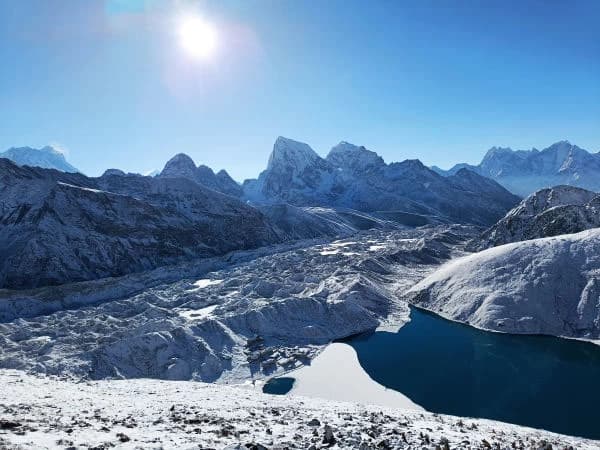
Gokyo Lakes Trek (14 Days): Famous for turquoise glacial lakes and the Ngozumpa Glacier. Difficulty: Strenuous

3 High Passes (18-20 Days): The "Ultimate Challenge" for seasoned trekkers. Crosses Renjo La, Cho La, and Kongma La

Our Verdict: Choose the Classic EBC for the most reliable route and world-famous landmarks

Advanced AMS Prevention & Safety Protocols

We reduce altitude sickness (AMS) risks by 40% through medical-grade monitoring.

"Pole-Pole" Pacing: Our Sherpa guides use expert pacing to allow your heart and lungs to adapt

Daily Oximeter Checks: We track your SpO₂ (Blood Oxygen) every morning and evening

Hydration Rule: Drink 4L of water daily. We recommend garlic soup—a local secret for oxygen absorption

Action Plan: We carry oxygen cylinders and have immediate descent protocols for moderate to severe symptoms

2026 Visa & Insurance Requirements

Official entry requirements for your Nepal expedition.

Nepal Visa: $50 USD for 30 days. Obtain via "Visa on Arrival" or the online eVisa portal

Mandatory Insurance: Your policy must specifically cover 6,000m helicopter evacuation. We verify all insurance documents 48 hours before departure to ensure your safety

Permits Included: We handle the Khumbu Pasang Lhamu Permit and Sagarmatha National Park entry

Book Your Everest Base Camp Trek 2026 Today

Thrill Himalaya Treks offers transparent pricing, experienced guides, and personalized service for your Everest Base Camp trekking experience. Contact us for Everest Base Camp trek 2026 dates.

Everest Base Camp Trek - 14 Days FAQs

In 2026, a standard 14-day package ranges from $1,300 to $1,600 USD. This typically includes permits, guides, porters, domestic flights, and accommodation. Luxury or helicopter-return packages can cost $2,500 to $4,500+.

The staple is Dal Bhat (rice and lentils), which is "power food" with free refills. You can also find pasta, pizza, eggs, and pancakes.

Absolutely. You can rent high-quality down jackets and sleeping bags in Thamel for about $1–$3 USD per day.

Down jacket, -20°C sleeping bag, moisture-wicking layers, broken-in hiking boots, polarized sunglasses, 20,000mAh power bank, and a high-quality headlamp.

Do I need a -15°C sleeping bag for the trek?Yes. Even though tea houses provide blankets, they are not enough for the sub-zero temperatures at Gorak Shep (5,164m).

standard, safe itinerary takes 12 to 14 days. This includes necessary acclimatization days in Namche Bazaar and Dingboche to prevent altitude sickness.

The "Golden Windows" are Pre-monsoon (March to May) for flowers and climbing activity, and Post-monsoon (late September to November) for the clearest mountain views.

It is considered Moderate. You don't need to be an athlete, but you should be able to walk 5-7 hours a day on uneven, uphill terrain.

You need two main permits:

Khumbu Pasang Lhamu Rural Municipality Permit (approx. $25 USD).

Sagarmatha National Park Entry Permit (approx. $30 USD).

Yes. As of 2026, the Nepal Tourism Board strictly enforces that all foreign trekkers must be accompanied by a licensed guide in national parks for safety and environmental protection.

The standard altitude of Everest Base Camp is 5,364 meters (17,598 feet). However, most trekkers also climb nearby Kala Patthar, which reaches 5,545 meters (18,192 feet) for the best view of the summit.

The classic round-trip distance from Lukla to EBC and back is approximately 130 kilometers (80 miles).

The trek traditionally starts and ends at the Tenzing-Hillary Airport in Lukla. From Kathmandu, you will either fly directly to Lukla or take a drive-and-flight combo via Ramechhap.

The South Base Camp is located in the Solukhumbu District of Nepal within the Sagarmatha National Park. There is also a North Base Camp in Tibet (China), but the Nepal side is the primary destination for trekkers.

Cancellations are common due to fog or high winds. We always recommend adding 2 buffer days to your travel plans to avoid missing your international flight.

The limit is strictly 15 kg (33 lbs) total per person (10 kg for your duffel bag and 5 kg for your carry-on). Excess weight is charged extra if the plane allows.

To reduce air traffic congestion at Kathmandu’s international airport, most Lukla flights during the peak seasons (Spring/Autumn) are diverted to Manthali Airport in Ramechhap.

It requires a 4 to 5-hour drive from Kathmandu. Thrill Himalaya provides private or shared transport leaving around 1:00 AM to catch the early morning flights to Lukla.

Early signs include headaches, loss of appetite, dizziness, and difficulty sleeping. If these occur, you must inform your guide immediately.

Should I take Diamox for the Everest Base Camp trek?Many trekkers take Acetazolamide (Diamox) as a preventative measure. We recommend consulting your doctor before your trip.

The "Golden Rules" are: Walk slowly, drink 4 liters of water daily, eat enough calories, and never skip acclimatization days.

Only if you specifically purchase high-altitude coverage (up to 6,000m). Standard travel insurance often excludes this. Thrill Himalaya requires proof of this insurance before trekking.

Focus on cardio and leg strength. Start hiking, swimming, or using a stair-climber 3-4 months before your trip. Try walking in your trekking boots to break them in!

Expect to walk 5 to 8 hours daily, depending on the elevation gain and the specific day's itinerary.

They are simple mountain lodges. You’ll have a twin-sharing room with two beds. Toilets are usually shared (squat or Western), and common areas are heated by a central stove in the evenings

We highly recommend staying vegetarian. Meat is carried up by porters or yaks without refrigeration, increasing the risk of food poisoning.

No. You must use purification tablets/drops or a filtered water bottle (like LifeStraw). Bottled water is available but discouraged to reduce plastic waste.

Yes, Airalo/Ncell/NTC work in many spots. You can also buy "Everest Link" Wi-Fi cards, though the signal becomes slower and more expensive as you go higher.

Charging costs $2 to $5 USD per device. A gas-heated hot shower costs $5 to $7 USD. These prices increase with altitude.

Budget $30 to $50 USD per day for "extras" not included in packages, such as Wi-Fi, hot showers, device charging, snacks, and specialty coffees.

Tipping is a standard practice. We recommend budgeting roughly 15% of your trek cost (approx. $150–$200 USD total) to be shared between your guide and porter.

A shared helicopter flight from Gorak Shep to Lukla or Kathmandu costs between $500 and $800 USD per person, depending on group size and availability.

Yes, but it is extremely cold (reaching -20°C). Many tea houses close, but the trails are empty and the skies are crystal clear. Only recommended for experienced trekkers.

July brings heavy rain, leeches, muddy trails, and frequent flight cancellations. Clouds usually obscure the mountain peaks during this time.

Lower altitudes: 10°C to 20°C (day) / 0°C to 5°C (night).

Above 4,000m: 5°C to 10°C (day) / -10°C to -20°C (night).

Surprisingly, no. Due to the massive shoulder of Mt. Nuptse, the actual summit of Everest is hidden from the base camp. You get the iconic summit view from Kala Patthar or the Everest View Hotel in Namche.


Booking online with a reputable local agency like Thrill Himalaya ensures your permits and flights are secured in advance. While "walk-in" rates in Kathmandu might seem cheaper, they often lack the 2026 safety guarantees and permit pre-clearance required by new laws.

Climbing the summit ($40k–$100k) involves a $15,000 permit fee (new for 2026), months of logistics, high-altitude Sherpa support, oxygen cylinders, and specialized safety gear, whereas trekking stays on established trails with tea house support.

With Thrill Himalaya’s professional pacing and acclimatization, our success rate is over 95%. Failure is usually due to rushing and altitude sickness.

No. This is a "walking trek." No ropes, ice axes, or crampons are needed for the standard EBC route.

The EBC trek is a world-renowned high-altitude journey in the Khumbu region of Nepal. It leads adventurers to the base of the world's highest peak, Mount Everest, through Sherpa villages, ancient monasteries, and dramatic alpine landscapes.

Yes. Nights get very cold at higher stops like Dingboche, Lobuche, and Gorak Shep. Tea house blankets are not enough for most people. A -15°C sleeping bag keeps you warm and helps you sleep better, which supports acclimatization. You can rent one in Kathmandu if you do not want to buy.

Yes, many trekkers use Diamox (Acetazolamide) to reduce the risk of altitude sickness. We suggest you speak with your doctor before you travel. If your doctor approves it, you can carry it as a backup. Our Thrill Himalaya guide also monitors your symptoms daily and adjusts pace and acclimatization if needed.

A new regulation requiring any climber seeking an Everest summit permit to have previously summited a 7,000-meter peak in Nepal. Note: This does NOT apply to trekkers going to Base Camp.

This is a safety "turn-around" time for climbers. If they haven't reached a specific point by 2:00 PM, they must turn back to avoid being caught in deadly descending temperatures and darkness.

Camp 4 (approx. 8,000m) is where oxygen levels are insufficient to sustain human life for long. Note: Trekkers never go this high; Base Camp is safe.

Francys Arsentiev ("Sleeping Beauty") was a famous climber whose body remained on the mountain for years. In 2007, she was moved to a lower, non-visible location out of respect.

Need Help?
Feel free to call or WhatsApp our expert.
What Our Travelers Say?