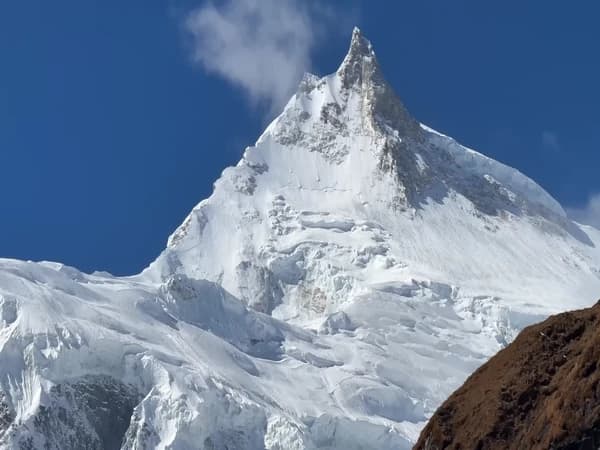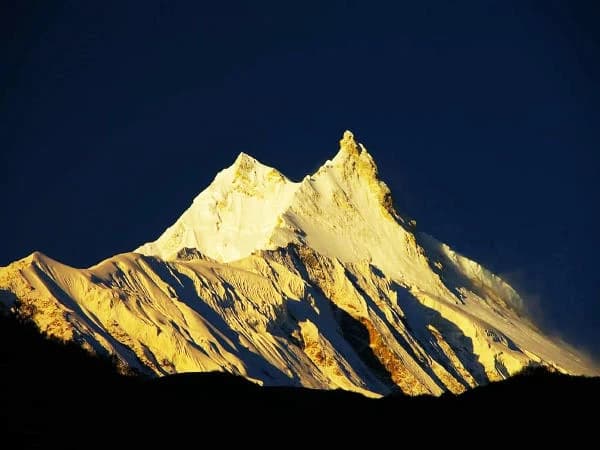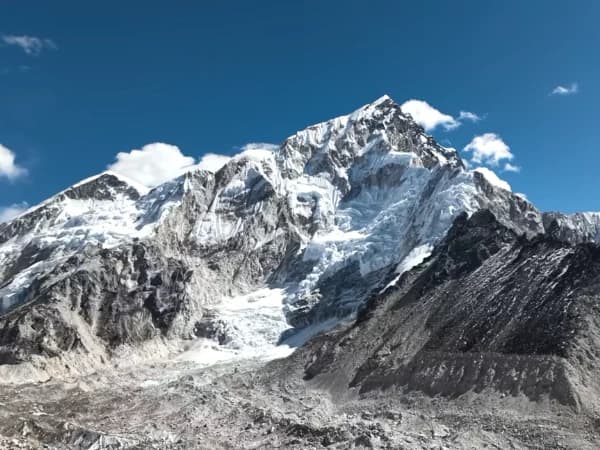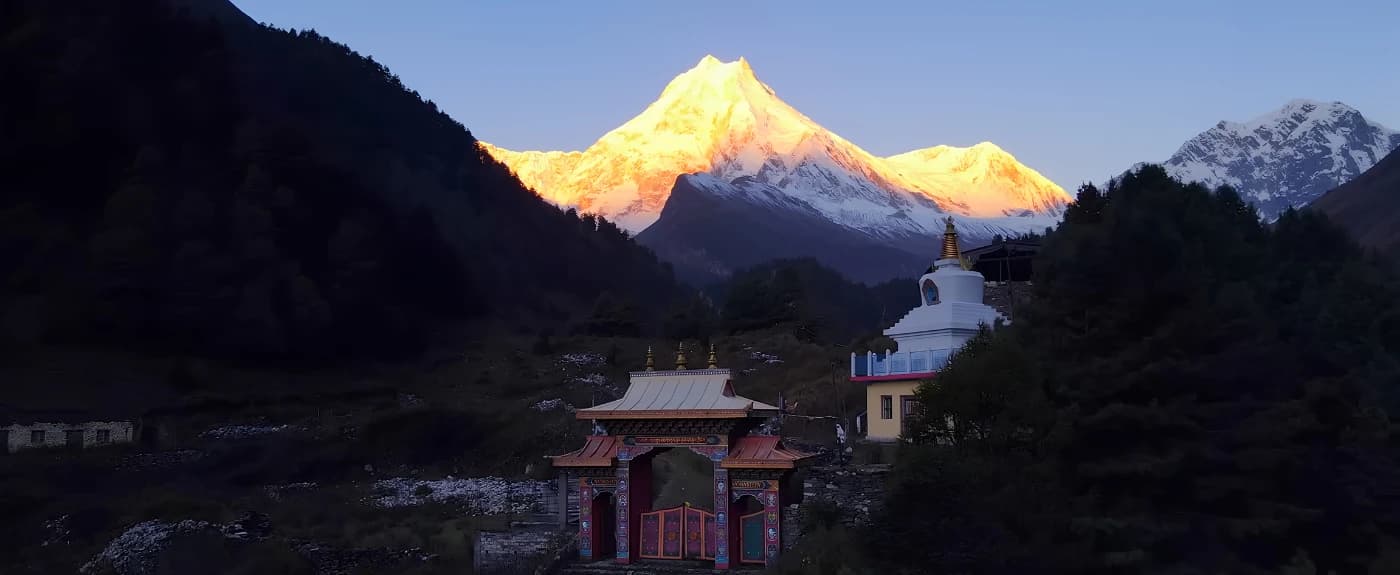
The Manaslu Circuit Trek takes you around the eighth-highest mountain on earth through a valley that began opening to foreign trekkers under restricted-area rules in the early 1990s. I have guided this route more times than I can count over 14 years in the Nepal Himalaya, and it still surprises me how few trekkers know what they are walking into: a living Tibetan Buddhist culture, a river gorge that climbs from subtropical farmland to a glacial pass above 5,000 m, and mountain views that rival Everest and Annapurna without the crowds.
This Manaslu Circuit Trek guide covers where the route came from, what the route actually looks like day by day, the culture you will walk through, the mountains you will see, and everything you need to know before you book, including permits, difficulty, cost, and the best season to go. Distances, altitudes, and permit fees below are approximate and vary by exact itinerary, side trips, and season, so always confirm current figures with your agency before departure.
Manaslu Circuit Trek at a Glance
The Manaslu Circuit Trek is a 14 to 18 day teahouse trek in the Gorkha and Manang districts of Nepal, circling Mount Manaslu (8,163 m) via the Budhi Gandaki valley and crossing Larkya La Pass (approximately 5,160 m). It requires a Restricted Area Permit and a licensed guide. As of the March 2026 update, solo foreign trekkers may apply for the permit through a registered Nepal trekking agency, and a licensed guide remains mandatory.
| Quick Fact | Detail |
|---|---|
| Trek duration | 14-day Kathmandu-to-Kathmandu package (Thrill Himalaya standard), 12 to 18 days depending on operator |
| Max altitude | Larkya La Pass, approximately 5,160 m |
| Trek grade | Strenuous / high altitude |
| Region | Gorkha and Manang districts, western Nepal |
| Start / end point | Soti Khola to Dharapani (or Besisahar) |
| Permits needed | Restricted Area Permit (RAP), Manaslu Conservation Area Permit (MCAP), Annapurna Conservation Area Permit (ACAP) |
| Guide requirement | Government-certified guide mandatory; since March 2026, solo trekkers may obtain the RAP through a registered agency accompanied by a licensed guide |
| TIMS card | Not required on the Manaslu route |
| Best seasons | March to May (spring), September to November (autumn) |
| Accommodation | Teahouses and guesthouses throughout |
Ready to walk this route? Check dates and availability on our Manaslu Circuit Trek 14 Days package page, or message us on WhatsApp at +977 9851017941 for a personalized quote within 24 hours.
What Makes the Manaslu Circuit Trek Special?
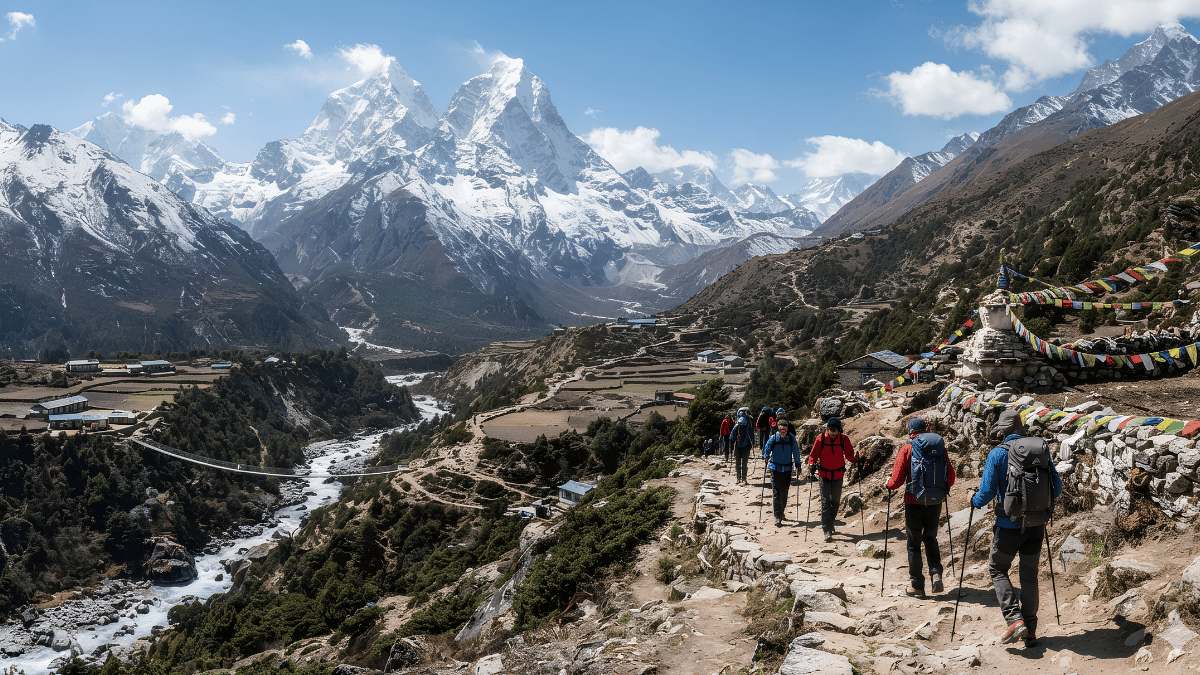
What makes the Manaslu Circuit Trek special is the combination of a low trekker count, an intact Tibetan Buddhist culture, and direct views of an 8,000 m peak from close range. Unlike Everest Base Camp Trek or the Annapurna Circuit Trek, Manaslu remained closed to foreign trekkers until restricted-area rules opened the valley in the early 1990s, because it sits on a sensitive stretch of the Nepal-Tibet border. That history kept the villages, monasteries, and daily rhythms of the Nubri and Tsum valleys largely untouched by mass tourism.
You will walk through terraced rice paddies at 700 m, cross the same swaying suspension bridges that supply mules and porters, and sleep in villages where farming, yak herding, and Buddhist practice still shape daily life. Then, in the space of about ten days, the trail climbs more than 4,000 vertical meters to a high alpine pass surrounded by glaciers.
History of Mount Manaslu and the Manaslu Region
Manaslu's history as a trekking destination is short, but the region's cultural history goes back centuries. The mountain's name comes from the Sanskrit word "manasa," meaning intellect or soul, which is why it is sometimes called the "Mountain of the Spirit" locally. A Japanese expedition achieved the first successful summit of Manaslu in 1956, a climb well documented in mountaineering records, and Japanese climbers have kept a strong historical connection to the peak ever since.
The Manaslu Circuit Trek became accessible to foreign trekkers as a restricted trekking area in the early 1990s, when the Nepal government opened the Budhi Gandaki valley under special permit rules. Restricted status means the government limits numbers, requires a licensed guide for every trekker, and collects a higher permit fee than open areas like Annapurna or Everest.
That restriction is a major reason the region's culture has been preserved and the trail has stayed free of the dense, lodge-every-hundred-meters development seen on some other Nepal trekking routes.
Manaslu Culture, Buddhist Heritage and Traditional Villages
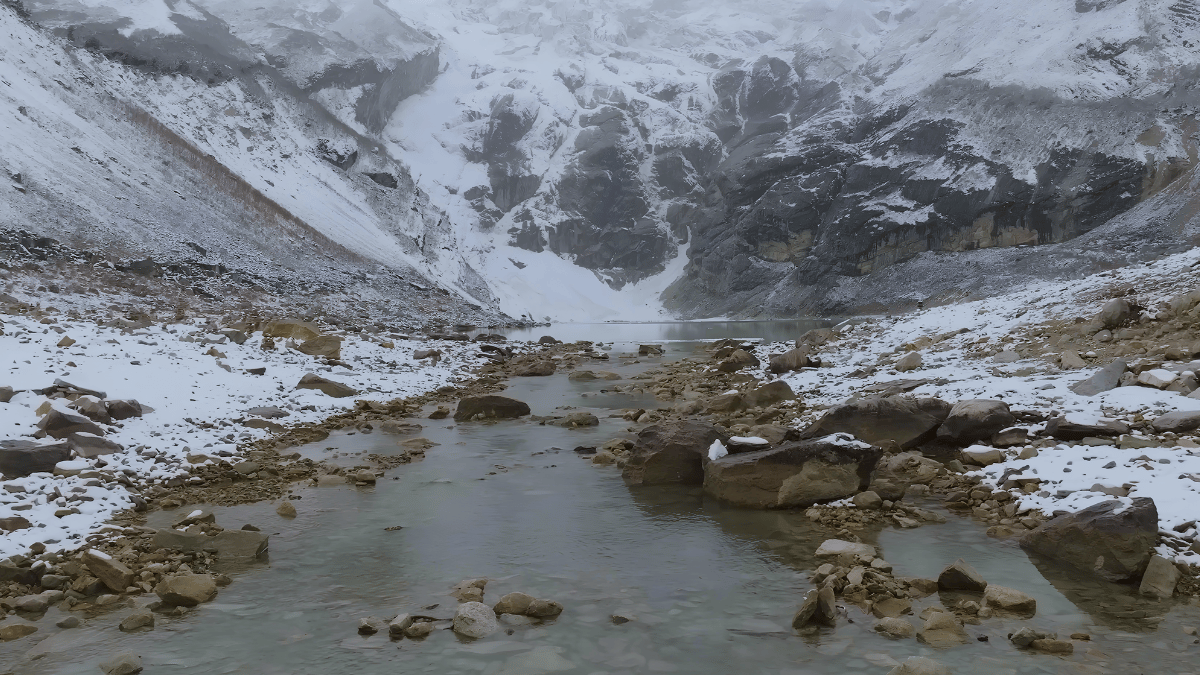
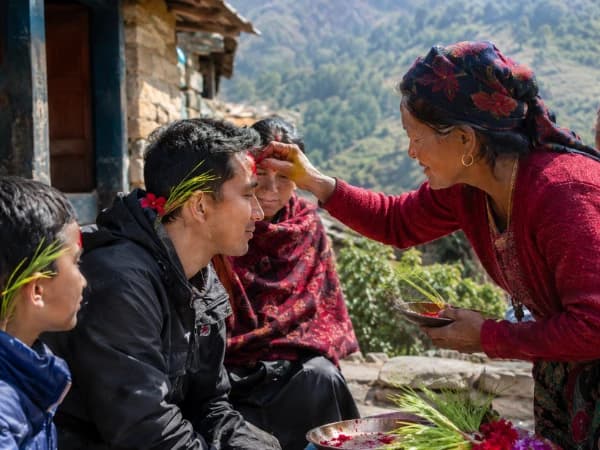
Manaslu culture is shaped by the Nubri and Tsum communities, ethnic groups with strong Tibetan ancestry who settled this valley generations ago as it sat directly on a trans-Himalayan trade route to Tibet. As you climb above Jagat, Nepali Hindu influence gives way to Tibetan Buddhist practice: you will pass mani walls, chortens, and prayer flags strung across the trail, and hear monastery horns at dawn in villages like Lho and Sama Gaun.
Samagaun (Sama Gaun) is the cultural heart of the trek. This is the largest village on the route, settled this valley generations ago, including those on the nearby Tsum Valley Trek or Birendra Lake, a glacial lake fed directly by the Manaslu glacier. Samdo, higher up, is the last permanent settlement before Larkya La and still trades with Tibetan communities across the border pass above the village.
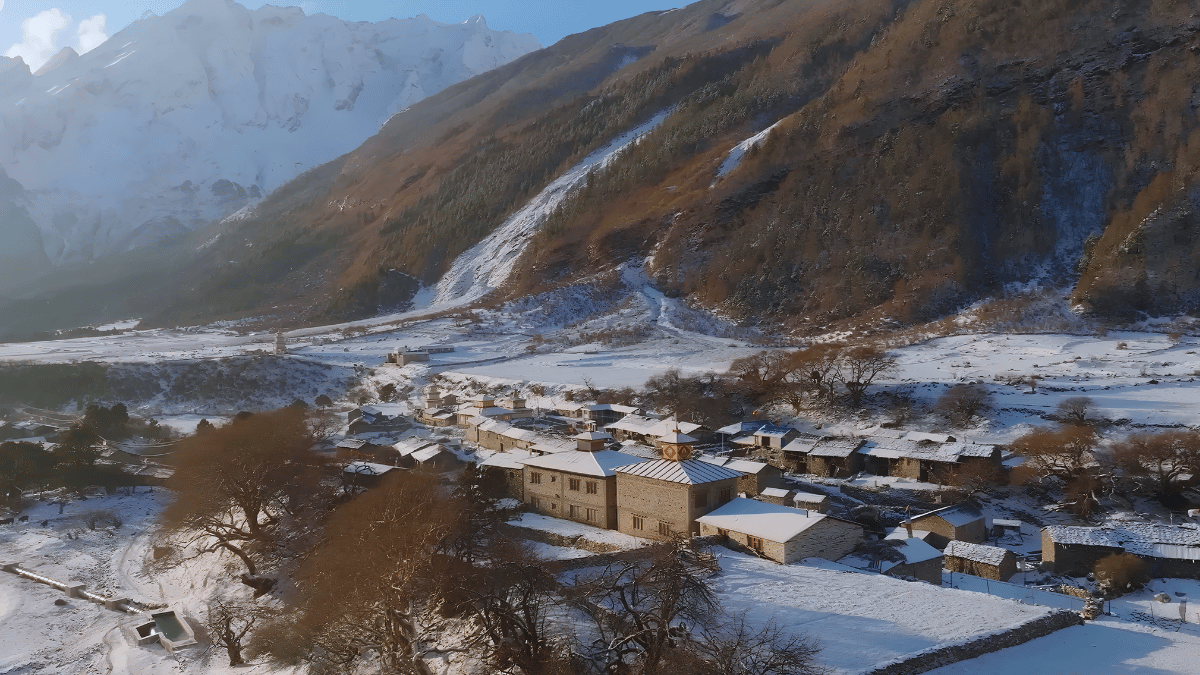
You will also pass:
- Lho village, home to the Ribung Monastery, one of the most photogenic gompas on the route
- Prok and Bihi, smaller villages showing older-style Tibetan architecture with flat stone roofs
- Mani walls and chortens, always passed on the left in accordance with Buddhist tradition
- Local festivals, including Lhosar (Tibetan New Year) if your dates align with February or March
This is a region where trekking tourism supplements, rather than replaces, traditional life. Most teahouse owners also farm, herd yaks, or trade, which means your money goes directly into a community economy rather than a resort-style tourism industry.
Manaslu Circuit Trek Route: From the Budhi Gandaki Valley to Larkya La Pass
The Manaslu Circuit Trek route follows the Budhi Gandaki river from the lowland town of Soti Khola up to the high alpine terrain around Larkya La Pass, then descends into the Manang district near the Annapurna Circuit. The full trekking route covers approximately 177 km and gains over 4,400 m in elevation from start to finish; exact distance varies with your chosen starting point, ending point, and any side trips.
14-Day Manaslu Circuit Trek Itinerary (Kathmandu to Kathmandu)
This is our standard 14-day package structure at Thrill Himalaya, covering 11 active trekking and transfer days, 1 built-in acclimatization day, and a buffer day for flight or road delays before your departure.
| Day | Route | Overnight Altitude |
|---|---|---|
| 1 | Drive Kathmandu to Machha Khola (via Soti Khola) | 900 m |
| 2 | Trek Machha Khola to Jagat | 1,340 m |
| 3 | Trek Jagat to Deng | 1,860 m |
| 4 | Trek Deng to Namrung | 2,630 m |
| 5 | Trek Namrung to Lho | 3,180 m |
| 6 | Trek Lho to Samagaun | 3,530 m |
| 7 | Acclimatization day in Samagaun (Manaslu Base Camp or Birendra Lake side trip) | 3,530 m |
| 8 | Trek Samagaun to Samdo | 3,860 m |
| 9 | Trek Samdo to Dharamsala (Larkya Phedi) | 4,460 m |
| 10 | Cross Larkya La Pass (approx. 5,160 m) to Bimthang | 3,720 m |
| 11 | Trek Bimthang to Dharapani | 1,960 m |
| 12 | Drive Dharapani to Kathmandu (via Besisahar) | 1,400 m |
| 13 | Buffer day in Kathmandu (contingency for delays; free day otherwise) | - |
| 14 | Final departure | - |
.webp)
Exact overnight stops can shift by a village depending on trail conditions, teahouse availability, and your group's pace. We build one acclimatization day into the itinerary as standard and recommend against compressing this schedule, since the stretch from Samdo over the pass is the highest-risk section of the entire trek.
See the complete day-by-day breakdown on our Manaslu Circuit Trek 14-Day Itinerary guide.
Crossing Larkya La Pass
Larkya La Pass sits at approximately 5,160 m and is the technical and physical crux of the Manaslu Circuit Trek. You leave Dharamsala before sunrise, typically between 4:00 and 5:00 AM, to cross the pass while the snow is still firm and before afternoon wind picks up. The climb to the pass takes 3 to 4 hours over glacial moraine and snow, and the descent to Bimthang on the other side is long, often 4 to 5 hours, dropping over 1,400 m in a single day. It is a demanding day, but the payoff is a 360-degree view of Himlung Himal, Cheo Himal, Kang Guru, and Annapurna II from the pass itself.
The Best Mountain Views on the Manaslu Circuit
Mountain views on the Manaslu Circuit Trek build steadily from the moment Manaslu itself first appears above Namrung. This is not a trek where you see one dominant peak; it is a trek where an entire wall of 6,000 m and 7,000 m peaks accompanies you for over a week.
| Mountain | Height | Best Viewpoint |
|---|---|---|
| Manaslu (Kutang) | 8,163 m | Samagaun, Manaslu Base Camp, Larkya La approach |
| Himalchuli | 7,893 m | Jagat to Deng section |
| Ngadi Chuli (Peak 29) | 7,871 m | Namrung to Lho |
| Cheo Himal | 6,820 m | Larkya La Pass |
| Himlung Himal | 7,126 m | Larkya La Pass, Bimthang |
| Kang Guru | 6,981 m | Bimthang to Dharapani |
| Annapurna II | 7,937 m | Larkya La Pass (far view) |
The single best mountain view of the whole trek, in my experience, is standing at Larkya La Pass itself at sunrise: Manaslu behind you, Himlung and Cheo Himal ahead, and the Annapurna range visible in the distance on a clear day.
What to Know Before Trekking Manaslu: Difficulty, Altitude, Permits and Best Time
Is the Manaslu Circuit Trek Difficult?
The Manaslu Circuit Trek difficulty requires good preparation and is not suitable for first-time trekkers with no hiking background. You will walk 5 to 7 hours a day for up to 12 consecutive days, with two demanding sections: the narrow, exposed trail between Jagat and Namrung, and the Larkya La Pass crossing above 5,000 m. If you have completed a moderate trek before, such as Poon Hill or a shorter Annapurna trail, and you can commit to a structured cardio and strength routine for 8 to 10 weeks before departure, you are a realistic candidate for this trek.
Who this trek is for:
- Trekkers with prior high-altitude or multi-day hiking experience
- Those with good baseline cardiovascular fitness
- Trekkers with genuine interest in Buddhist culture over resort-style comfort
- Anyone willing to train for 8 to 10 weeks before departure
Who this trek is not for:
- First-time trekkers with no altitude or multi-day hiking experience
- Trekkers wanting hotel-standard comfort every night
- Anyone unable to commit to a pre-trek fitness routine
We say this directly because an honest difficulty assessment protects you on the mountain, not because we want to discourage you. If you have a pre-existing cardiac, respiratory, or other medical condition, consult a qualified doctor before booking any high-altitude trek, since only a medical professional can assess your individual fitness to trek.
Manaslu Circuit Trek Altitude and Acclimatization
Altitude is the real risk factor on this trek, not technical terrain. You climb from 900 m to over 5,000 m over 9 to 10 trekking days. Our itinerary includes one dedicated acclimatization day in Samagaun (3,530 m), and we brief every group on the standard rule: climb high, sleep low, and report any headache, nausea, or dizziness to your guide immediately rather than pushing through it. Thrill Himalaya guides are trained in early recognition of Acute Mountain Sickness (AMS) and carry standard first-aid and altitude-monitoring equipment on every trek.
Manaslu Circuit Trek Permits
You need three separate permits to trek the Manaslu Circuit, and none of them can be arranged as a solo walk-in traveler without a licensed agency, because the Restricted Area Permit legally requires you to trek with a government-certified guide. Check our breakdown of Manaslu Circuit Trek permits for full fee details.
| Permit | Required Section | Notes |
|---|---|---|
| Manaslu Restricted Area Permit (RAP) | Jagat to Sama Gaun/Bhimtang | Fee varies by season (higher Sep-Nov, lower other months) and is charged per week; only arranged through a registered agency |
| Manaslu Conservation Area Permit (MCAP) | Full Manaslu section | Separate fee from the RAP, charged per entry |
| Annapurna Conservation Area Permit (ACAP) | Dharapani side, exit route | Separate fee, required for the exit route through Manang |
| Local municipality fee | Collected at Jagat (Chumnubri Rural Municipality) | Varies |
Permit fees and rules change periodically, so treat the figures above as a planning guide rather than a fixed price; we confirm exact current fees for you at the time of booking.
A licensed guide is mandatory on this route. As of the March 2026 regulation update, solo foreign trekkers may apply for the Manaslu Restricted Area Permit through a registered Nepal trekking agency, provided they are accompanied by a licensed guide; the previous rule requiring a minimum of two trekkers per group has been removed. A TIMS card is not required on the Manaslu route, unlike many other Nepal treks. We handle all three permits directly for every Thrill Himalaya client, so you do not need to visit any government office yourself.
Best Time for the Manaslu Circuit Trek
The best time for the Manaslu Circuit Trek is autumn (late September to November) and spring (March to May), when skies are clear and Larkya La Pass is most likely to be snow-free enough for a safe crossing.
- Autumn (Sep-Nov): the most popular and most reliable season, with stable weather and the clearest mountain views following the monsoon
- Spring (Mar-May): warmer at lower elevations, rhododendron blooms in the mid-hills, good visibility though slightly hazier than autumn
- Winter (Dec-Feb): possible for experienced trekkers with proper gear, but Larkya La can close due to heavy snow; fewer teahouses stay open
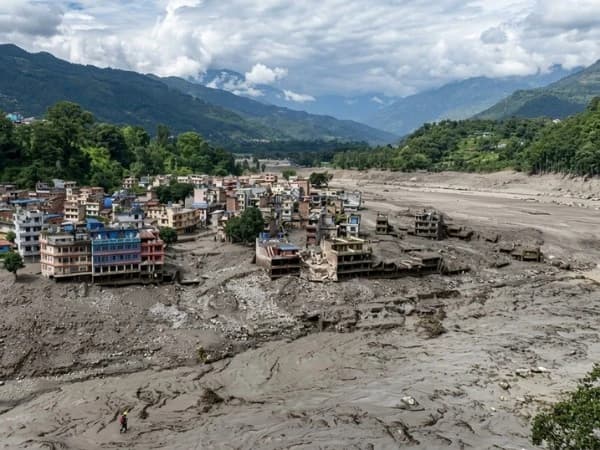
- Monsoon (Jun-Aug): not recommended; the Budhi Gandaki valley is prone to landslides and leech-heavy trails, and cloud cover blocks mountain views
Manaslu Circuit Trek Cost, Accommodation and Packing
What Does the Manaslu Circuit Trek Cost?
Manaslu Circuit Trek pricing varies by season, group size, transport, accommodation standard, porter arrangement, and included services. Restricted area permit fees, which are higher in peak season, make up a meaningful share of the total cost compared to open-area treks like Annapurna or Everest. Ask any agency exactly what is included in their quoted price; permit fees, guide and porter costs, and the number of included meals vary significantly between operators, and a low headline price often hides these gaps.
For current prices and a complete inclusion list, see our Manaslu Circuit Trek 14 Days package page.
Accommodation and Food
You stay in teahouses and basic guesthouses for the entire trek, with simple twin-share rooms and shared bathrooms below Samagaun, becoming more basic above Samdo. Expect dal bhat, noodle soups, momos, and hot drinks at every lodge; menus become more limited the higher you climb, and hot showers usually carry a small extra charge above Samagaun.
What to Pack for the Manaslu Circuit Trek
Layering is the priority, since you move from subtropical valley heat to alpine cold in under two weeks.
- Insulated down jacket rated for at least -15°C for the Larkya La crossing
- Waterproof, broken-in hiking boots with ankle support
- Trekking poles (essential for the Larkya La descent)
- Sleeping bag rated to -15°C or colder
- Water purification tablets or a filter (limited bottled water access above Sama Gaun)
- Headlamp with spare batteries (for the pre-dawn pass crossing)
- Sun protection: hat, sunglasses, high-SPF sunscreen for snow glare
Is the Manaslu Circuit Trek Safe?
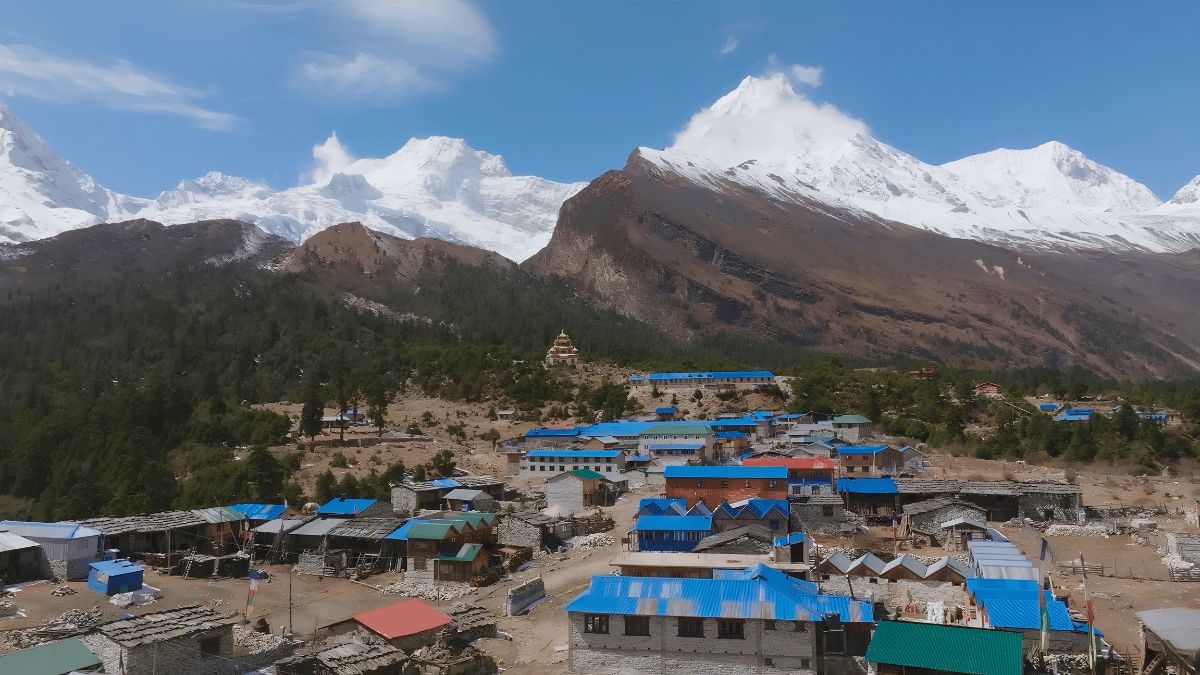
The Manaslu Circuit Trek is safe when done with a licensed guide, proper acclimatization, and realistic pacing, but it carries genuine risk from altitude and a remote trail with limited rescue access. There is little to no road access beyond Machha Khola, and helicopter evacuation from near Larkya La depends entirely on weather conditions and can be delayed.
Before you book, confirm your travel insurance explicitly covers high-altitude trekking and helicopter evacuation up to at least 6,000 m, and check the policy's exclusions carefully; we are happy to review your policy wording against the trek's altitude profile before departure. Every Thrill Himalaya guide is government-certified and trained in early AMS recognition and evacuation protocol, and the guide makes the final call on turning back or descending if a trekker shows symptoms, over any group's preference to continue.
Manaslu Circuit vs Annapurna Circuit: Which Should You Choose?
| Factor | Manaslu Circuit Trek | Annapurna Circuit Trek |
|---|---|---|
| Trekker crowds | Low, restricted-area limits | Moderate to high |
| Culture | Tibetan Buddhist, Nubri/Tsum, less commercialized | Mixed Hindu/Buddhist, more developed |
| Max altitude | 5,160 m (Larkya La) | 5,416 m (Thorong La) |
| Road access | Little to no road access above Machha Khola | Partial road access reduces trek days |
| Permit cost | Higher (Restricted Area Permit) | Lower (open ACAP area) |
| Guide requirement | Mandatory | Recommended, not legally mandatory |
| Best for | Trekkers wanting solitude and untouched culture | Trekkers wanting more teahouse variety and flexibility |
Both are exceptional treks. We usually recommend Manaslu to clients who have already done one moderate Himalayan trek and want a quieter, more culturally immersive experience on their next trip.
Frequently Asked Questions About the Manaslu Circuit Trek
Is the Manaslu Circuit Trek harder than Everest Base Camp?
Yes, most trekkers find the Manaslu Circuit Trek physically harder than Everest Base Camp because it crosses a higher, more technical pass (Larkya La at 5,160 m) rather than ending at a base camp with no pass crossing.
Can I trek Manaslu without a guide?
No. The Manaslu Circuit Trek requires a government-certified guide because it passes through a government-designated restricted area; this is a legal requirement, not an agency policy.
Do I need a TIMS card for the Manaslu Circuit Trek?
No, a TIMS card is not required for Manaslu. You need the Restricted Area Permit, Manaslu Conservation Area Permit, and Annapurna Conservation Area Permit instead.
How many days does the Manaslu Circuit Trek take?
Most itineraries, including ours, run 14 days from Kathmandu to Kathmandu, though some operators offer 12-day or 18-day versions depending on pace and included rest days. See our full guide on Manaslu Circuit Trek duration.
What is the maximum altitude on the Manaslu Circuit Trek?
The maximum altitude is approximately 5,160 m at Larkya La Pass, reached around day 10 of a standard 14-day itinerary.
Can beginners do the Manaslu Circuit Trek?
We do not recommend this trek for complete beginners. It suits trekkers with at least one prior multi-day or high-altitude hike and a solid fitness base built up over 8 to 10 weeks of training.
What is the best month to trek Manaslu?
October and November offer the most reliable weather and clearest views, followed by April and May in spring.
Plan Your Manaslu Circuit Trek With Thrill Himalaya Treks
We are a government-registered trekking agency based in Thamel, Kathmandu (NTB Reg. No. 3303/81/82, TAAN member), and I spent 14 years guiding treks across Nepal, including the Manaslu Circuit, before founding Thrill Himalaya Treks. We hold TripAdvisor Travelers' Choice 2026 status with a 5.0 rating across our reviews, and we handle your permits and guide arrangements directly as part of every booking. Learn more about us and why choose us for your expedition. After you send an enquiry, we aim to reply within 24 hours with a tailored itinerary, transparent pricing breakdown, and answers to any medical or fitness questions before you commit to a deposit.