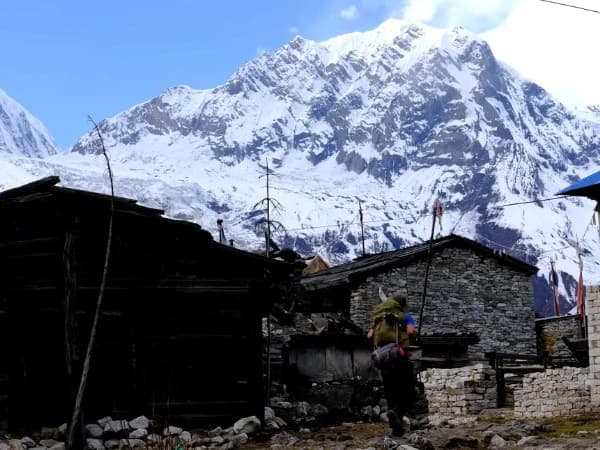
Nepal has no single best trek. It has a best trek for your dates, your fitness, how high you are prepared to sleep and what you want to see when you get there. Pick on those four things and the choice usually narrows to two or three routes very quickly.
As a starting point:
- About a week, first trek, low altitude: Ghorepani Poon Hill or Mardi Himal.
- 10 to 13 days, a big mountain at the end: Annapurna Base Camp or Langtang Valley.
- Two weeks and ready for real altitude: Everest Base Camp or Gokyo Lakes.
- Two weeks, previous trekking experience and a high pass: Manaslu Circuit or Annapurna Circuit.
- Everest views without the Lukla flight: Pikey Peak.
The comparison table below puts all nine routes side by side. After it, we explain how to weigh your days, fitness and budget, then look at each route in turn, including who should choose something else.
Nepal Trek Comparison at a Glance
Everest Base Camp, Gokyo, Manaslu and the Annapurna Circuit all take you above 4,400 metres to sleep; the other five stay at or below 4,130 metres.
|
Trek |
Trekking days (typical package from Kathmandu) |
Highest overnight |
Highest point |
Difficulty |
Typical guided package (USD per person) and budget assumptions |
Best suited to |
|
Everest Base Camp |
11–13 (14–16) |
Gorak Shep, 5,164 m |
Kala Patthar, about 5,644 m |
Challenging |
About 1,300–2,500; return Lukla flights, two Khumbu permits, food and charging costs rise with altitude |
Fit walkers with two weeks who want the classic Everest trek |
|
Annapurna Base Camp |
6–9 (9–13) |
Annapurna Base Camp, 4,130 m |
Annapurna Base Camp, 4,130 m |
Moderate |
About 600–1,300; road or flight to Pokhara, ACAP and TIMS |
First-timers who want a big mountain without extreme altitude |
|
Annapurna Circuit |
8–13 (12–18) |
Thorong High Camp, 4,880 m (or Thorong Phedi, 4,540 m) |
Thorong La, 5,416 m |
Challenging |
About 800–1,800; jeep sections, optional Jomsom flight, ACAP and TIMS |
Fit trekkers who want a high pass and changing landscapes |
|
Manaslu Circuit |
10–12 (13–16) |
Dharamsala (Larke Phedi), 4,460 m |
Larke La, 5,106 m |
Challenging |
About 1,000–2,200; weekly Restricted Area Permit, two conservation permits, long jeep access |
Experienced trekkers who want a quieter, remote circuit |
|
Langtang Valley |
6–8 (7–10) |
Kyanjin Gompa, 3,870 m |
Tserko Ri, about 4,984 m (optional) |
Moderate |
About 500–1,200; drive from Kathmandu, national park permit and TIMS |
A week-long trek close to Kathmandu with no flights |
|
Mardi Himal |
4–6 (5–8) |
High Camp, about 3,580 m |
Upper viewpoint, about 4,200 m |
Moderate |
About 300–750 (usually from Pokhara); ACAP and TIMS |
Short trips with close ridge views |
|
Ghorepani Poon Hill |
3–4 (4–7) |
Ghorepani, about 2,860 m |
Poon Hill, 3,210 m |
Easy to moderate |
About 250–700; Pokhara access, ACAP and TIMS |
Families, first treks and limited time |
|
Gokyo Lakes |
10–12 (12–15) |
Gokyo, about 4,790 m |
Gokyo Ri, about 5,357 m |
Moderate to challenging |
About 1,100–2,100; same flight and permit costs as Everest Base Camp |
Everest views with fewer people than the base camp trail |
|
Pikey Peak |
5–7 (6–9) |
Pikey Base Camp, about 3,640 m |
Pikey Peak, 4,065 m |
Moderate |
About 450–1,000; long drive into Solukhumbu, simple lodges |
Everest panoramas without Lukla flights |
How to read this table: trekking days run from the first trailhead to the last. Package days add arrival, departure and transport days in and out of the mountains. Published altitudes vary between maps by 10 to 100 metres, so treat them as close guides. Difficulty assumes a reasonably fit adult walking five to seven hours a day. Prices are the range of published 2026 package prices from Nepal-based operators for a guided teahouse trek, checked on 2 November 2026; see the budget section below for what they usually include.
How to Choose the Right Trek in Nepal
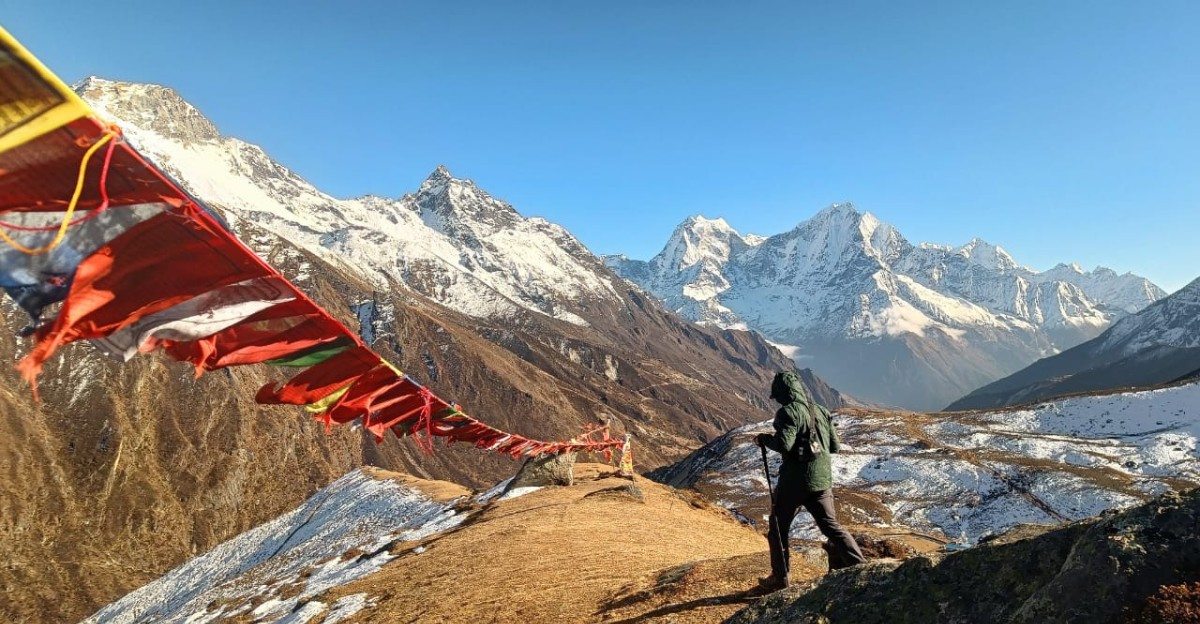
Start with the number of days you actually have on the ground in Nepal, then rule out routes that sleep higher than you are ready for. Budget and scenery usually decide between whatever is left.
Available days, including arrival and contingency time
A trek's advertised length is rarely the whole trip. Work out your total like this:
- Trekking days for the route (see the table).
- Arrival and departure: at least one day in Kathmandu at each end. International flights get delayed, and you will want a night's sleep before a 5 am start.
- Transport days: Manaslu, Langtang and Pikey Peak each begin with a long drive. Annapurna routes usually need a day to reach Pokhara.
- Contingency: add one or two spare days for flight-dependent routes. Lukla flights are often delayed by weather, and in the main seasons most leave from Manthali airport in Ramechhap, a four to five hour drive from Kathmandu, rather than from Kathmandu itself.
If your total comes to less than 10 days, Everest Base Camp, Gokyo, Manaslu and the full Annapurna Circuit are hard to do without rushing the ascent. That is when Poon Hill, Mardi Himal, Langtang or a shorter Annapurna Base Camp itinerary make more sense.
Fitness, previous experience and altitude exposure
Two separate things make a trek hard: the physical work, and the altitude. Fitness helps with the first but does not protect you from altitude illness, which can affect anyone.
The physical side is about stamina rather than speed. Most trekking days involve five to seven hours of walking on uneven stone trails and steps, repeated for one or two weeks. Pass days on Manaslu and the Annapurna Circuit can run to eight to ten hours. Training on hills or stairs with a loaded daypack, on consecutive days, is better preparation than gym sessions alone.
Altitude is the bigger planning factor. The CDC's travel health guidance recommends that, once above 3,000 metres, you raise your sleeping altitude by no more than about 500 metres a day and add an extra acclimatisation day for every further 1,000 metres. Good itineraries are built around that pace, which is why the higher routes take longer. Group the routes by where you sleep:
- Below 3,000 m: Ghorepani Poon Hill.
- 3,500 to 4,200 m: Mardi Himal, Pikey Peak, Langtang Valley, Annapurna Base Camp.
- 4,400 m and above: Gokyo Lakes, Manaslu Circuit, Annapurna Circuit, Everest Base Camp.
If you have a heart or lung condition, or have had altitude illness before, speak with your doctor before choosing a route in the higher groups.
Budget and preferred accommodation
The biggest differences in cost between routes come from five things:
- Transport: return flights to Lukla cost far more than a road transfer to Pokhara or Syabrubesi.
- Permits: Manaslu's Restricted Area Permit is charged per week in US dollars and costs much more than the flat national park or conservation area fees on most other routes.
- Length: every extra day adds lodging, meals and staff wages.
- Group size: private treks for one or two people cost more per person than shared departures.
- Altitude: meals, hot showers, charging and wifi get more expensive the higher and more remote the lodge.
The price ranges in this guide come from published 2026 package prices of Nepal-based operators for guided teahouse treks, checked on 2 November 2026. They are per person and usually assume two or more trekkers sharing a room. Most packages include permits, a licensed guide, lodge accommodation, meals on the trail and transport to and from the trailhead; many also include a porter and hotel nights in Kathmandu. They usually exclude international flights, your Nepal visa, travel insurance, drinks, hot showers, charging, wifi and tips. Solo trekkers pay more per person. Always compare what is included, not just the headline price.
Accommodation on all nine routes is in teahouses: family-run lodges with simple twin rooms and a shared dining room heated by a stove. Lodges on the Everest and Annapurna Base Camp trails are generally better equipped than those on Manaslu or Pikey Peak. If comfort matters a lot, the Everest region has the widest choice of upgraded lodges at lower altitudes.
Scenery, culture, crowds and travel style
- Close-up giants: Everest Base Camp and Annapurna Base Camp take you right into the mountains.
- Wide panoramas: Poon Hill, Mardi Himal, Gokyo Ri and Pikey Peak are viewpoint treks.
- Culture: the Khumbu is Sherpa country; Manaslu's upper valleys have strong Tibetan Buddhist roots; Langtang is home to Tamang communities; Gurung villages line the Annapurna foothills.
- Crowds: in October and November, the Everest Base Camp, Annapurna Base Camp and Poon Hill trails are busy. Manaslu, Pikey Peak and Langtang are noticeably quieter.
- Roads: jeep tracks now reach far up the Annapurna Circuit and the start of the Manaslu Circuit. If walking on a road bothers you, factor that in.
Everest Base Camp Trek
What makes it distinctive: you walk up the Khumbu valley through Sherpa villages, past Namche Bazaar and Tengboche monastery, to the foot of the Khumbu Icefall. The summit of Everest is not visible from base camp itself; the classic close view comes from Kala Patthar, a rocky hill above Gorak Shep, usually climbed before sunrise.
Who it may suit: fit walkers with about two weeks who want Nepal's best-known trek and are prepared for several nights near or above 5,000 metres.
Who should consider an alternative: if a weather-delayed flight would wreck your plans, look at Pikey Peak or the Everest Base Camp route via Salleri, which replaces the inbound Lukla flight with a drive. If October crowds put you off, Gokyo Lakes covers similar country with fewer people. If you are short on days but set on base camp, a helicopter return removes the walk out.
Typical itinerary: most packages run 14 to 16 days from Kathmandu, with 11 to 13 trekking days from Lukla and back. That normally includes two acclimatisation days, at Namche Bazaar and Dingboche. In spring and autumn, plan for an early drive to Ramechhap for the Lukla flight, and keep one or two spare days in Kathmandu at the end.
Difficulty and altitude: the trail is not technical, but the altitude is serious. You typically spend two nights above 4,900 metres, at Lobuche and Gorak Shep (5,164 m). Days above Dingboche are short in distance but slow, and nights are cold well into spring.
Cost: return Lukla flights are the largest single transport cost, plus the Sagarmatha National Park and Khumbu Pasang Lhamu Rural Municipality permits. Most guided 14-day packages from Nepal-based operators cost about USD 1,300 to 2,500 per person. Budget packages start nearer USD 1,200, and luxury lodges or a helicopter return can take the total above USD 3,500. Return Lukla flights alone are roughly USD 440 to 550 of the package price.
Plan it further:Everest Base Camp Trek · Everest Base Camp Trek via Salleri · Everest Base Camp Trek with Heli Return · How to prepare for Everest Base Camp
Annapurna Base Camp Trek
What makes it distinctive: the trail climbs through Gurung villages and rhododendron forest into the Annapurna Sanctuary, a glacial basin enclosed by Annapurna I, Machhapuchhre and Hiunchuli. You reach a mountain amphitheatre while sleeping no higher than 4,130 metres.
Who it may suit: first-time trekkers, families and anyone who wants a real high-mountain destination in under two weeks without a mountain flight.
Who should consider an alternative: the route involves long flights of stone steps, especially around Chhomrong, which is hard on knees. Langtang Valley has gentler gradients. In late winter and spring, the section between Deurali and Machhapuchhre Base Camp can be exposed to avalanche risk after heavy snow, and trekkers are sometimes held back until it clears.
Typical itinerary: 6 to 9 trekking days from the road head near Pokhara, or 9 to 13 days from Kathmandu. Roads now reach higher villages, so shorter versions are possible; adding Poon Hill extends the trek by one or two days.
Difficulty and altitude: moderate. Expect steep climbs and descents rather than sustained high altitude. Only one or two nights are spent above 3,500 metres.
Cost: usually lower than Everest because you reach the trailhead by road. You need the Annapurna Conservation Area Permit (ACAP) and a TIMS card. Guided packages typically cost about USD 600 to 1,300 per person for 7 to 12 days, depending on length, group size and whether a porter is included.
Plan it further:Annapurna Base Camp Trek · 6-Day Annapurna Base Camp Trek for Beginners · Annapurna Base Camp Trek difficulty
Annapurna Circuit Trek
What makes it distinctive: the circuit follows the Marsyangdi valley north, crosses Thorong La at 5,416 metres, and drops into the dry, Tibetan-style landscape around Muktinath, a temple site sacred to Hindus and Buddhists. Few treks change scenery as much in a fortnight.
Who it may suit: fit trekkers who want a high pass and a gradual ascent. The long approach through Manang gives the body time to adjust.
Who should consider an alternative: jeep roads run along much of the route, and some days share the valley with traffic. If you want unbroken walking trail, Manaslu is closer to what the circuit used to be. If a possible pass closure would ruin your trip, Annapurna Base Camp has no pass to cross.
Typical itinerary: 8 to 13 trekking days, or 12 to 18 days from Kathmandu. The range depends on how far you drive before starting, whether you add Tilicho Lake, and whether you exit from Jomsom by road or flight.
Difficulty and altitude: the pass day is the crux. You leave Thorong High Camp (4,880 m) or Thorong Phedi (4,540 m) before dawn to cross before the afternoon wind rises, then descend about 1,600 metres to Muktinath. Heavy snow can close the pass for a day or more.
Cost: moderate. Jeep transfers and an optional Jomsom to Pokhara flight are the main variables, along with ACAP and TIMS. Guided packages from Nepal-based operators mostly cost about USD 800 to 1,800 per person for 12 to 18 days; international tour companies often charge more.
Plan it further:Annapurna Circuit Trek
Manaslu Circuit Trek
What makes it distinctive: the circuit loops around Manaslu (8,163 m), the world's eighth-highest mountain, through the Budhi Gandaki gorge and the Tibetan Buddhist villages of Nubri. Because it is a restricted area, every trekker must travel with a licensed guide through a registered agency, which keeps numbers well below the Everest and Annapurna trails. It is also one of the regions our founder, Pravin Baniya, guides personally.
Who it may suit: trekkers with at least one previous multi-day trek, ideally with some altitude experience, who want a remote route with a high pass and are comfortable with basic lodges.
Who should consider an alternative: if this would be your first time above 4,000 metres, Annapurna Base Camp or Langtang is a gentler introduction. If lodge comfort matters, the Everest and Annapurna Base Camp trails are better equipped.
Typical itinerary: a full day's drive from Kathmandu to Machha Khola, then 10 to 12 trekking days to Dharapani, where the route joins the Annapurna Circuit, and a drive out. Packages usually run 13 to 16 days and include acclimatisation at Samagaun (about 3,530 m) and often Samdo (about 3,860 m). The Tsum Valley can be added as a side trip of roughly a week.
Difficulty and altitude: challenging. The pass day starts before dawn at Dharamsala (4,460 m), crosses Larke La (5,106 m) and descends to Bimthang, typically 8 to 10 hours on the move. The drives in and out are long and rough.
Cost: permit costs are higher than on most routes. The Restricted Area Permit is charged per week in US dollars and rises from September to November, and you also need the Manaslu and Annapurna conservation area permits. Guided packages typically cost about USD 1,000 to 2,200 per person for 13 to 16 days. Permits account for roughly USD 150 to 280 of that, depending on the season and the number of days you spend in the restricted zone.
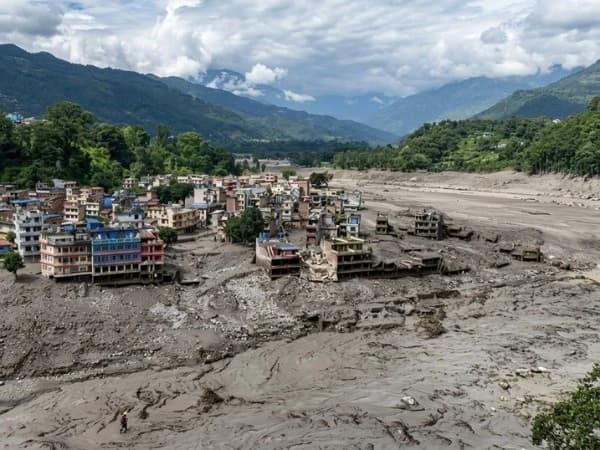
Plan it further:Manaslu Circuit Trek · Manaslu Circuit Trek with Tsum Valley · How difficult is the Manaslu Circuit Trek? · Manaslu Circuit Trek after the Budhi Gandaki flood
Langtang Valley Trek
What makes it distinctive: Langtang is the closest major trekking valley to Kathmandu, reached by road with no flight. The trail climbs from forest to open yak pastures and Tamang villages beneath Langtang Lirung, ending at Kyanjin Gompa. Langtang village was rebuilt after the 2015 earthquake, and walking through it is a sobering part of the trek.
Who it may suit: travellers with about a week who want mountain scenery and village life without flights or very high nights.
Who should consider an alternative: if your goal is a famous 8,000-metre peak up close, choose Everest or Annapurna Base Camp. The road to Syabrubesi is slow and can be disrupted by landslides early in the season.
Typical itinerary: 6 to 8 trekking days from Syabrubesi and back, or 7 to 10 days from Kathmandu. You can extend it to Gosaikunda lakes.
Difficulty and altitude: moderate. You sleep no higher than about 3,870 metres at Kyanjin Gompa. Optional day climbs to Kyanjin Ri (about 4,773 m) or Tserko Ri (about 4,984 m) are steep and add real altitude, but you sleep lower.
Cost: one of the lower-cost multi-day treks, with road transport, a Langtang National Park permit and a TIMS card. Guided packages typically cost about USD 500 to 1,200 per person for 7 to 10 days.
Plan it further:Langtang Valley Trek distance and route
Mardi Himal Trek
What makes it distinctive: a ridge trek east of the Annapurna Sanctuary that climbs above the forest onto open grassland, with Machhapuchhre and Mardi Himal close in front of you. It is a newer route with smaller lodges and a quieter feel than its neighbours.
Who it may suit: anyone with five to eight days who wants big views without sleeping above 4,000 metres. It also links well with Annapurna Base Camp.
Who should consider an alternative: the upper ridge is exposed in bad weather, and the few lodges at High Camp fill quickly in peak season. If you want the gentlest possible trek, choose Poon Hill.
Typical itinerary: 4 to 6 trekking days from near Pokhara, or 5 to 8 days from Kathmandu.
Difficulty and altitude: moderate. The hardest part is the early climb from High Camp (about 3,580 m) to the upper viewpoint at about 4,200 metres, with an optional extension towards Mardi Himal Base Camp. You descend the same day.
Cost: lower, with road access from Pokhara, ACAP and TIMS. Guided packages typically cost about USD 300 to 750 per person for 5 to 7 days, usually priced from Pokhara.
Plan it further:Mardi Himal Trek · Annapurna Base Camp and Mardi Himal Trek
Ghorepani Poon Hill Trek
What makes it distinctive: a short loop through Gurung and Magar villages to Poon Hill (3,210 m), where the sunrise lights up Dhaulagiri, Annapurna South and Machhapuchhre. In March and April the rhododendron forests below Ghorepani are in flower.
Who it may suit: first-time trekkers, families with children used to walking, and anyone with only four to seven days.
Who should consider an alternative: Poon Hill is a viewpoint trek, so the mountains stay at a distance. Mardi Himal gets you closer for a similar effort. In October and November the sunrise hilltop is crowded.
Typical itinerary: 3 to 4 trekking days from the road near Pokhara, or 4 to 7 days from Kathmandu. It can be extended to Annapurna Base Camp.
Difficulty and altitude: easy to moderate. The long stone staircase up to Ulleri is the toughest section. You sleep at about 2,860 metres in Ghorepani, below the level where altitude illness usually becomes a concern.
Cost: the lowest of the nine routes, with road access from Pokhara, ACAP and TIMS. Expect about USD 250 to 350 per person for a 4-day guided trek from Pokhara, or USD 500 to 700 for a 6 to 7-day package that includes Kathmandu.
Plan it further:Ghorepani Poonhill Trek
Gokyo Lakes Trek
What makes it distinctive: instead of following the main trail to base camp, you turn up the Dudh Koshi valley to a chain of turquoise glacial lakes beside the Ngozumpa Glacier. From Gokyo Ri (about 5,357 m) you see Everest, Lhotse, Makalu and Cho Oyu in one view, which many trekkers rate above the view from Kala Patthar.
Who it may suit: trekkers who want Everest-region scenery and altitude with fewer people. It is also a strong option if base camp itself is not your goal. Fit, experienced trekkers can link Gokyo and base camp over the Cho La pass.
Who should consider an alternative: if standing at Everest Base Camp is the point of your trip, choose that trek. Gokyo relies on the same Lukla flights, so the same weather delays apply.
Typical itinerary: 10 to 12 trekking days from Lukla and back, or 12 to 15 days from Kathmandu, with acclimatisation at Namche Bazaar and usually a short day or rest at Machhermo.
Difficulty and altitude: moderate to challenging. You sleep at about 4,790 metres in Gokyo, and the climb up Gokyo Ri is steep, usually two to three hours up.
Cost: similar structure to Everest Base Camp: Lukla flights plus the Sagarmatha National Park and Khumbu Pasang Lhamu permits. Guided packages typically cost about USD 1,100 to 2,100 per person for 12 to 14 days.
Plan it further:Gokyo Lake Trek · Everest Three Passes Trek
Pikey Peak Trek
What makes it distinctive: a quieter trek in the lower Solukhumbu, below the Everest region's main trail, through Sherpa villages and monasteries. From the summit of Pikey Peak (4,065 m) you see a long line of the eastern Himalaya, Everest included.
Who it may suit: trekkers who want Everest views and Sherpa culture without the cost and uncertainty of Lukla flights, and who prefer quiet trails to famous ones.
Who should consider an alternative: Pikey Peak is a viewpoint, not a walk into the high mountains. Lodges are simpler than on the main Khumbu trail, and the drive to the trailhead takes most of a day.
Typical itinerary: a long drive from Kathmandu into Solukhumbu, then 5 to 7 trekking days, or 6 to 9 days in total.
Difficulty and altitude: moderate. You sleep at about 3,640 metres at Pikey Base Camp and climb to the summit for sunrise, which can be very windy and cold.
Cost: lower to moderate, as road transport replaces flights. Ask us to confirm the local permits for your exact route. Guided packages typically cost about USD 450 to 1,000 per person for 6 to 9 days; a private jeep instead of shared transport makes the biggest difference.
Plan it further:Pikey Peak Trek
Which Trek Fits Your Travel Style?
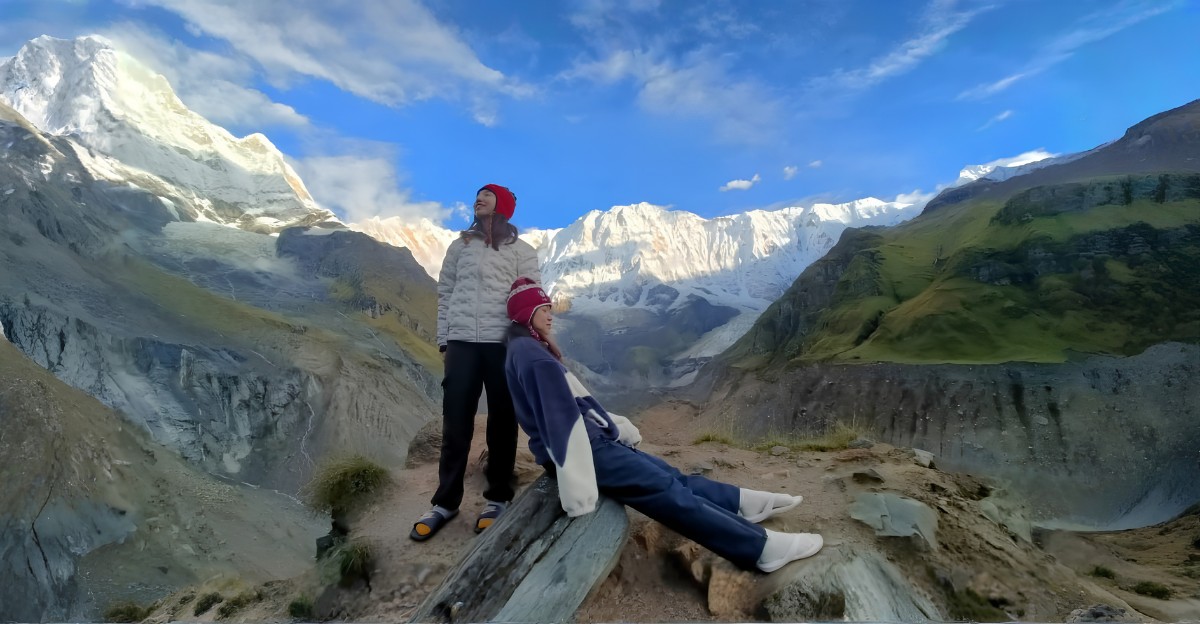
If you have read this far and still have three routes in mind, these four profiles should settle it.
First-time trekkers
Choose Ghorepani Poon Hill if you want to find out whether multi-day trekking suits you, or Annapurna Base Camp if you want a first trek with a proper high-mountain finish. Both use road access, have well-equipped lodges, and keep sleeping altitudes moderate. Everest Base Camp is possible as a first trek for fit people who accept the altitude and allow the full itinerary, but it is a bigger step.
Travellers with limited time
With a week or less, Poon Hill and Mardi Himal fit comfortably around a stay in Pokhara. Langtang Valley works if you would rather drive straight from Kathmandu. Avoid squeezing high routes such as Everest Base Camp or the Annapurna Circuit into fewer days by cutting acclimatisation; a helicopter return is a safer way to shorten an Everest trip than a faster ascent.
Trekkers seeking quieter routes
Manaslu Circuit is the strongest choice for experienced trekkers, because restricted-area rules keep numbers down. Pikey Peak and Langtang Valley are quieter options with lower altitude. Within the Everest region, Gokyo Lakes sees fewer people than the base camp trail.
Experienced hikers seeking a longer challenge
Manaslu Circuit and Annapurna Circuit both cross passes above 5,000 metres and reward previous experience. If you want more, Everest's Three Passes route, or base camp combined with Gokyo over Cho La, adds glacier crossings and several more nights at high altitude.
When to Trek in Nepal
Autumn and spring are the main trekking seasons for all nine routes; winter suits the lower treks, and the monsoon is the hardest time to trek.
|
Season |
Months |
What to expect |
Routes that suit it best |
|
Autumn |
Late September to November |
Most settled weather and clearest views; busiest trails and lodges |
All nine |
|
Winter |
December to February |
Cold nights, fewer people; snow can close Thorong La and Larke La |
Poon Hill, Mardi Himal, Pikey Peak, Langtang, Annapurna Base Camp (check snow conditions) |
|
Spring |
March to May |
Warmer days, rhododendrons in flower, haze building towards May |
All nine |
|
Monsoon |
June to early September |
Daily rain, cloud, leeches at lower altitudes, landslides on access roads, more Lukla delays |
Short routes for flexible travellers only |
Conditions are patterns, not promises: a clear October can still bring a storm, and snow can fall in any season above 4,000 metres. For month-by-month detail, see our guide to the best time to trek in Nepal.
Planning Your Trek: Permits, Guides and Preparation
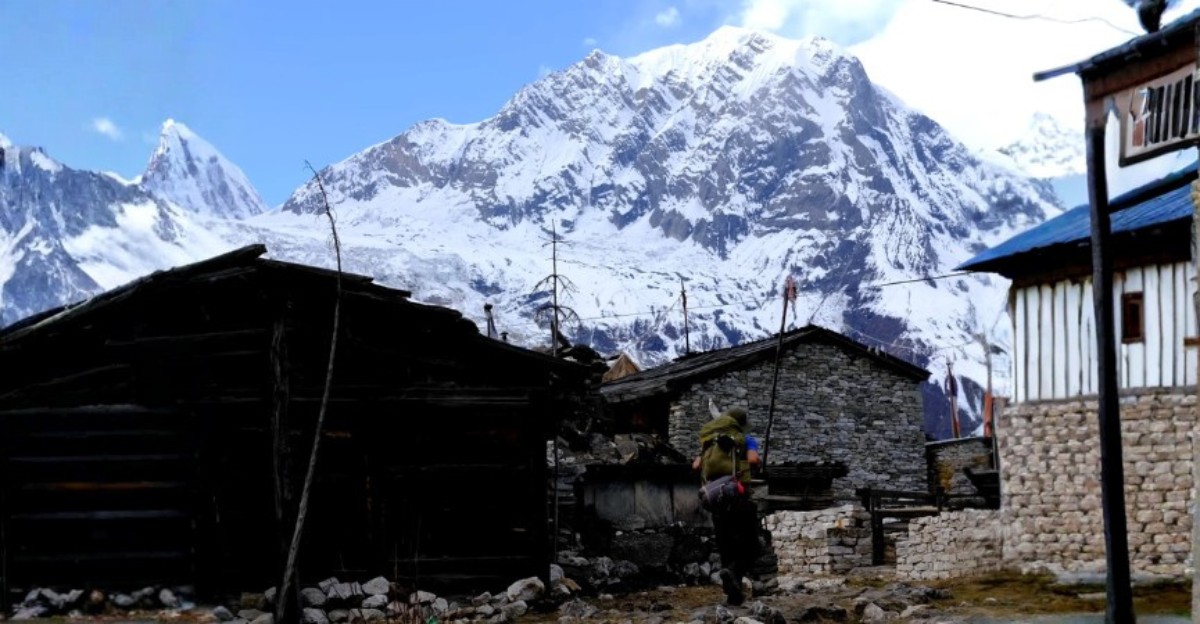
Most routes in this guide need two or three permits, and Nepal's rules require foreign trekkers in national parks, conservation areas and restricted areas to trek with a licensed guide arranged through a registered agency.
Permits by route
Figures below are the published 2026 rates for foreign nationals, checked on 2 November 2026. Fees change, so confirm them before you travel.
|
Route |
Permits needed |
Published fee (foreign nationals) |
|
Everest Base Camp, Gokyo Lakes |
Sagarmatha National Park; Khumbu Pasang Lhamu Rural Municipality |
NPR 3,000 each |
|
Annapurna Base Camp, Annapurna Circuit, Mardi Himal, Poon Hill |
Annapurna Conservation Area Permit (ACAP); TIMS card through your agency |
ACAP NPR 3,000; TIMS set by agency rules |
|
Langtang Valley |
Langtang National Park; TIMS card |
National park NPR 3,000 |
|
Manaslu Circuit |
Restricted Area Permit; Manaslu Conservation Area Permit; ACAP |
September to November: USD 100 for the first 7 days, then USD 15 a day. December to August: USD 75 for 7 days, then USD 10 a day. MCAP and ACAP NPR 3,000 each |
|
Pikey Peak |
Depends on route and local requirements |
Confirm when booking |
Restricted Area Permits can only be issued through a registered agency, so Manaslu needs to be booked in advance with your passport details. Our Manaslu Circuit Trek permits guide explains the process in full.
Guides
The licensed-guide rule has applied since 1 April 2023. Enforcement has varied between regions, but in restricted areas such as Manaslu it is strictly checked. A good guide does more than keep you legal: they manage the acclimatisation pace, read the weather on pass days and find you a bed in a full village. Porters are optional on most routes and make long days noticeably easier.
Preparation
- Training: build up to several consecutive days of four to six hours' walking with a daypack, including long descents.
- Health: see your doctor or a travel health clinic before any trek that sleeps above 3,000 metres.
- Insurance: check that your policy covers trekking to the highest altitude on your route and helicopter evacuation. Do not assume it does.
- Money: carry enough Nepali rupees for the trek. Card payments and ATMs are limited once you leave the main towns.
For a worked example of training and kit, see how to prepare for a trek to Everest Base Camp.
Frequently Asked Questions
What is the easiest trek in Nepal for beginners?
Ghorepani Poon Hill is the easiest of the well-known routes. It takes three to four trekking days, sleeps below 3,000 metres and starts by road from Pokhara. Mardi Himal is a slightly harder next step.
Which Nepal trek is best if I only have a week?
Poon Hill, Mardi Himal and Langtang Valley all fit into about seven days including transport. A short Annapurna Base Camp itinerary is possible if you are fit and start by road from Pokhara.
Is Everest Base Camp harder than Annapurna Base Camp?
Yes, mainly because of altitude. Everest Base Camp has nights above 4,900 metres and a highest point of about 5,644 metres at Kala Patthar. Annapurna Base Camp tops out at 4,130 metres, though its steep stone steps make some days physically tough.
Can I trek in Nepal without a guide?
Not legally, on any of the routes in this guide that lie in a national park, conservation area or restricted area. Since April 2023, foreign trekkers in those areas must hire a licensed guide through a registered agency.
Which trek is least crowded?
Of these nine, Manaslu Circuit and Pikey Peak are the quietest. Langtang and Gokyo are quieter than the Everest Base Camp, Annapurna Base Camp and Poon Hill trails in peak season.
Should I choose the Annapurna Circuit or the Manaslu Circuit?
Choose the Annapurna Circuit for better lodges, more flexibility and a gradual ascent. Choose Manaslu for fewer people and more walking trail, if you have previous trekking experience and accept higher permit costs.
How much does a trek in Nepal cost?
Published 2026 prices for guided teahouse packages range from about USD 250 per person for a short Poon Hill trek to about USD 1,300 to 2,500 for Everest Base Camp. Manaslu typically costs USD 1,000 to 2,200 because of its restricted-area permit, while Annapurna Base Camp and Langtang usually fall between USD 500 and 1,300. Transport, permits, length and group size explain most of the difference. Ask us for a written quote showing exactly what is included.
Find a Trek That Fits Your Trip
If you are still deciding between two or three routes, send us your travel dates, the number of days you have in Nepal and a line about your trekking experience. We will suggest the routes that fit and explain the trade-offs. When you are ready to book, we will confirm current availability, price and inclusions in writing.
Thrill Himalaya Treks is a Kathmandu-based agency in Thamel, registered with the Nepal Tourism Board and a member of the Trekking Agencies' Association of Nepal (TAAN).
- WhatsApp: +977 9851017941
- Email: [email protected]
Explore Our Trekking Packages
When you have a route or two in mind, each package page below shows the day-by-day itinerary, current price and what is included.
Everest region
- Everest Base Camp Trek: the classic route via Lukla and Kala Patthar
- Everest Base Camp Trek via Salleri: drive in to start, avoiding the inbound Lukla flight
- Everest Base Camp Trek with Heli Return: walk up, fly back to save days
- Gokyo Lake Trek: turquoise lakes and the Gokyo Ri viewpoint
- Everest Three Passes Trek: the region's toughest teahouse circuit
- Pikey Peak Trek: Everest views from the quieter lower Solukhumbu
- Everest Base Camp Trek with Island Peak Climbing: base camp plus a trekking peak
- Everest Base Camp Helicopter Tour: a same-day flight for travellers without trekking time
Manaslu region
- Manaslu Circuit Trek: the full loop over Larke La
- Short Manaslu Circuit Trek: the circuit on a tighter schedule
- Manaslu Circuit Trek with Tsum Valley: the circuit plus the hidden Tsum Valley
- Tsum Valley Trek: monasteries and villages without the high pass
- Manaslu Circuit Family Trek: a slower pace planned for families and teenagers
Annapurna region
- Annapurna Base Camp Trek and Annapurna Base Camp Trek – 10 Days: the classic sanctuary route
- Short Annapurna Base Camp Trek – 5 Days and 7 Days: for limited time
- 6-Day Annapurna Base Camp Trek for Beginners: a first trek with a big-mountain finish
- Annapurna Base Camp Trek with Family and Kids and for Seniors: gentler daily stages
- Annapurna Base Camp and Mardi Himal Trek: two routes in one trip
- Annapurna Circuit Trek: over Thorong La to Muktinath
- Mardi Himal Trek: a short ridge trek above Pokhara
- Ghorepani Poonhill Trek: sunrise over Dhaulagiri and the Annapurnas
Want something different? We can customise a trip around your dates and pace.